-
 Climate-threatened Fijian utopia rejects calls to relocate
-
Israel to give verdict on Netanyahu in pivotal election
-
 Bolsonaro's party says it recognizes Lula's election win in Brazil
-
$1m bounties, dawn arrests: Trump presses voter fraud campaign
-
 Meghan on TV menu for 'Junior MasterChef Australia'
-
Gasping for air: Borneo residents struggle as island burns

-
 South Korea's chip boom fuels forecast-beating third-quarter growth
-
Doha exhibition charts a millennium of Chinese maritime ceramics trade

-
 US-brokered truce begins in Ukraine city occupied by Russia
-
New Zealand ex-PM Ardern to teach leadership in Sydney
-
 Qatar launches Fashion and Crafts Council to connect talent with global markets
-
Ballon d'Or 'beyond wildest dreams' but Kane has plenty more to prove
-
 Jordan strikes militant groups in Syria after church attack
-
No envy, no secrets: How Spain's Gipuzkoa became football coaching hotbed

-
 FIA chief praises Middle East motorsport volunteers and officials
-
South Korea economy grows three times faster than expected in Q3
-
 Australia warns of 'unprecedented' AI threat
-
Al-Thawadi urges technology to deepen human connection through shared experiences

-
 Qatar Amir arrives in Moscow for eighth GECF summit
-
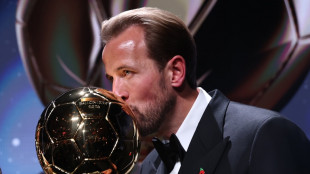
Ballon d'Or: Harry Kane's crowning moment
-
 Kane beats Yamal and Mbappe to taste Ballon d'Or glory
-
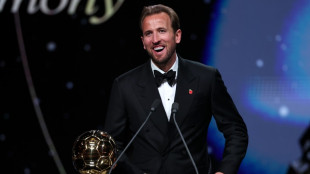
Harry Kane wins men's Ballon d'Or
-
 Ballon d'Or crowns Putellas's return to top of women's game
-
Lula win rattles Brazil markets over spending spree fears
-
 Godts stars as PSG beat Lyon to go top of Ligue 1
-
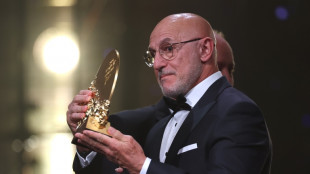
De la Fuente wins men's Ballon d'Or coach of year
-
 NBA inks deal with Kalshi and Polymarket, citing safeguards
-
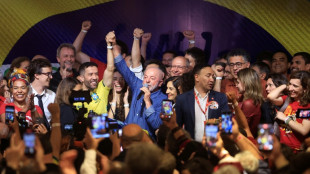
Trump slams 'rigged' Brazil election after ally loses to leftist Lula
-
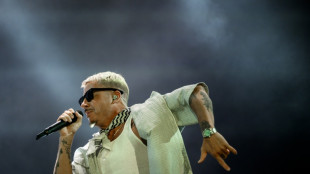 US rapper Macklemore launches 'Free Palestine Tour' after Ed Sheeran fallout
-
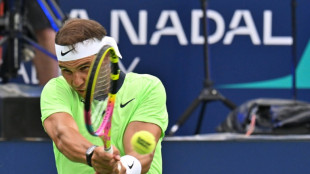
Nadal returns for Vegas hardcourt event
-
 Venezuela leader criticizes Machado over dramatic return from exile
-
Fainga'anuku named as loose forward for All Blacks northern tour

-
 Brazil markets battered after Lula win, AI in focus elsewhere
-
Anthropic points to AI dangers, soaring sales in IPO filing
-
 Lula savors Brazil win as Bolsonaro rejects result, markets tumble
-
Sinner to play rescheduled Saudi Six Kings in December
-
 Canadian youths ask court to impose binding climate protections
-
Brazilian lawmaker Andre Janones, Lula's social media 'general'
-
 Walter Koenig, who played original Chekov on 'Star Trek,' dies at 90
-
Swiss Ebola patient repatriated from Nigeria
-
 Netanyahu, rivals trade attacks over Iran as clock counts down to Israel vote
-
Nations far from a deal as UN nature talks enter final stretch
-
 Townsend urges Scotland to use Nations Championship as World Cup springboard
-
Brazil markets battered, tech in focus elsewhere
-
 Microsoft offers voluntary exit packages to 60,000 staff
-
French court adjourns trial over 2020 death of delivery driver
-
 S.Africa ambassador calls for talks with US over 'tense' ties
-
Serbian student movement eyes power after election triumph

-
 'Smells of freedom': Serbians hopeful after landmark election
-
Machado ready to meet Venezuela leader after shock return

Trump under pressure over Chinese AI surge
US President Donald Trump is under pressure to respond to the increasing success of Chinese AI models that many companies prefer to the more powerful, but pricier, US versions from Anthropic or OpenAI.
The issue came to the fore this week with the release of Kimi K3 by Moonshot, which White House officials say was developed by stealing the capabilities of Anthropic's most powerful model through a process called distillation.
The method is widely used across the industry, but US officials say Chinese firms have deployed it at scale to illicitly copy proprietary American systems.
Michael Kratsios, director of the White House Office of Science and Technology Policy, on Wednesday decried the practice and suggested that Moonshot had also circumvented US export curbs on powerful AI chips from Nvidia to build its products.
The Commerce Department's Bureau of Industry and Security is formally investigating Chinese firms such as Moonshot over their use of these chips, a spokesperson told The Information.
Treasury Secretary Scott Bessent this week threatened sanctions against China, amid reports the US is also weighing a ban or curbs on foreign-made open source models that are often built through distillation.
Earlier this year Anthropic sent letters to US lawmakers warning about the practice, formally accusing Chinese firms Moonshot, DeepSeek and MiniMax of industrial-scale distillation of its Claude models.
Illicit distillation "is IP theft and industrial espionage" and "a national challenge that creates serious national security risks for the United States and democratic allies," Sarah Heck, Anthropic's head of public policy, said on X.
Opponents of this hard line worry that a crackdown on distillation will also mean a ban on open source models.
Open source, or open-weight, models cost less and use source code that programmers can customize -- something that is especially appreciated by startups and companies that do not want to be beholden to models from Anthropic, OpenAI or Google that cost money and must be taken as is.
Even as an idea that has only been floated, the plan to block foreign-made open source models has drawn fierce objections from Silicon Valley, which has asked the White House to forgo it, saying it would unfairly reward the US AI giants, thwart competition and stick entrepreneurs with high prices for AI.
On Wednesday, a group of 179 startups wrote a letter to the Trump administration urging it to think twice against any outright ban or strict curbs on foreign-made models, saying this should only be considered for government use of the technology.
"Denying American startups access to models available abroad would stifle competition, entrench incumbents, and function as a tax on intelligence," the letter from the Little Tech Association said.
On Friday, industry heavyweights -- including Microsoft, Mistral, Perplexity and Meta -- also called for restraint, even in cases of illegal distillation.
They proposed addressing the issue through "a legal and commercial framework rather than broad restrictions."
-'Panic needs to stop' -
Some critics believe that OpenAI and Anthropic are trying to use the government and regulation to stop the emergence of this rival technology.
The two AI giants are under the microscope ahead of expected IPOs in coming months, with Wall Street taking a close look at their business performance ahead of their market debuts.
"The Kimi Panic needs to stop," said David Sacks, the White House's former AI policy chief, who still has the president's ear.
"As long as we don't sabotage ourselves with unnecessary rules, the US will continue to win," he said on X.
Weighing in on the debate firmly for the Chinese models was Jensen Huang, the CEO of Nvidia, whose company makes AI's core infrastructure, whether for open source companies or US-made proprietary ones.
American companies should "absolutely" be allowed to use Chinese AI models, he told Axios.
"These Chinese models are excellent. Open source models that are excellent should be used," he said.
T.Ziegler--VB