-
 Lionel Messi's father Jorge dies aged 68
-
Recovering Marchand to skip medleys at European swim champs
-
 Johnson reveals 'stress' of Grand Slam Track collapse, clarifies payment
-
MotoGP leader Martin speeds to British Grand Prix pole

-
 Defending champion Ferrand-Prevot out of Tour de France Femmes
-
Drone enters Bulgaria, explodes near pipeline at Romanian border: Bulgarian PM
-
 Wallabies squeeze past Japan to give Kiss a winning start
-
Arsenal sign Brazil midfielder Guimaraes from Newcastle

-
 Kyiv mourns recovery volunteer, whose life 'intertwined with the fallen'
-
Atletico will not sell Alvarez, says Simeone

-
 Only two vehicles earn perfect child-seat scores for 2026
-
Ford Fathom turns affordable electric pickup into reality

-
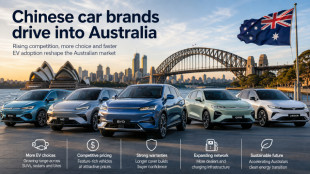 Chinese car brands reshape Australia’s automotive market
-
Lise Klaveness, the Norwegian thorn in Infantino's side

-
 Electric cars enter their most decisive generation yet
-
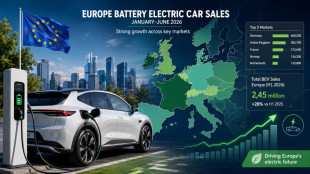
Europe’s electric car boom exposes a widening market divide
-
 Three Chinese carmakers enter the global automotive top 10
-
US Senate confirms Trump's ex lawyer as attorney general
-
 Ukraine's Zelensky visits Russian ally Serbia as Moscow pounds Kyiv
-
Tibet conference in Nepal pushed online
-
 Ukraine's Zelensky visits Russian ally Serbia for talks
-
Nocturnal 'coffee frog' discovered in Costa Rica
-
 Defending champion Shelton storms to Montreal win
-
India's 'cockroach' protest movement keeps heat on Modi
-
 Exodus: West Bank hardships drive out Palestinian Christians
-
Russia's only anti-war party eyes support boost at elections
-
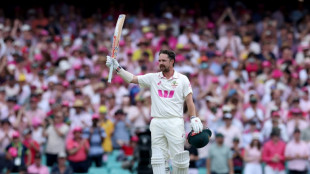 Travis Head wins Australian cricketer of the year gong
-
Canada tries to adapt to a future of wildfires
-
 Colombia's new president vows to 'defeat narco-terrorists'
-
Death of NBA forward Clarke ruled accident due to heroin, cocaine
-
 Call for Infantino to resign comes amid wave of support
-
Abelardo de la Espriella, Colombian president and flamboyant millionaire
-
 Trump ally Abelardo de la Espriella sworn in as Colombia president
-
Maradona's 'Hand of God' ball heads to US auction
-
 FIFA chief Infantino gets backing of South American football
-
Rybakina advances while Andreeva exits at Toronto
-
 Amazon behind massive private gas plant for new data centers
-
Shelton storms to Montreal win as title defence solidifies
-
 Apple and OpenAI escalate legal battle over devices
-
All Blacks need to improve says coach after opening win against Stormers

-
 All Blacks strike late to secure opening win against Stormers
-
Spain imposes border checks on Italy as migrant showdown grows
-
 Saudi Arabia, Turkey, Pakistan sign defence pact amid regional war
-
Bezzecchi smashes Silverstone track record in MotoGP qualifying

-
 Trump renews effort to remove US Fed Governor Lisa Cook
-
Rashid Khan takes six wickets as Afghanistan thrash Ireland

-
 Abelardo de la Espriella, the flamboyant millionaire taking power in Colombia
-
Flintoff quits England Lions role after Sydney Thunder appointment
-
 Germany holds security meeting over explosive drone amid Russia protest
-
Movement, El Vecino and RISE Partner to Launch First Digital Dollar Wallet for Mexican Remittances

UN resumes talks on high-seas treaty amid growing concerns
After four inconclusive sessions, UN member states on Monday resumed talks aimed at finally completing a treaty to protect the world's high seas, a vital yet fragile resource that covers nearly half the planet.
A host of NGOs and affected countries say the pact is urgently needed to improve environmental stewardship over the vast, yet largely unregulated area as it faces growing challenges.
But the Covid-19 pandemic slowed negotiations for two years, and a session in March that was supposed to have been conclusive made progress but ran out of time.
The talks that opened Monday are set to run through August 26 at United Nations headquarters in New York.
"Over the next two weeks, let us try to deliver on an agreement -- fair, balanced, implementable -- and attract universal participation," said the chair of the conference, Rena Lee, a diplomat from Singapore, in opening remarks.
Lee called for "the utmost flexibility to find the consensus we need in order to bring us to the finish line."
Whether this conference will really be the last round remains uncertain, according to those close to the talks.
Negotiators are "cautiously optimistic," said a source with the High Ambition Coalition, which groups some 50 countries led by the European Union.
The source told AFP that participants need to find a compromise between two "grand ideas": protecting the environment and regulating human activities on the one hand, while also guarding freedoms on the high seas.
The high seas begin at the border of nations' exclusive economic zones (EEZs), which by international law reach no more than 200 nautical miles (370 kilometers) from each country's coast, and are under no state's jurisdiction.
Even if the high seas represent more than 60 percent of the oceans -- and nearly half the planet -- they have long been largely ignored in favor of coastal zones, with protections extended only to a few vulnerable species. Only one percent of the high seas enjoys legal protection.
Yet, scientists have proved the importance of protecting oceanic ecosystems in their entirety. They produce half the oxygen humans breathe and help limit global warming by absorbing much of the carbon dioxide emitted by human activity.
They are seriously at risk, however, from the continuing rise in levels of carbon dioxide (which intensifies warming and makes ocean waters more acid), pollution and overfishing.
- A global 'compass' -
That adds to the urgency of finally completing the global pact on the "Conservation and Sustainable Use of Marine Biological Diversity of Areas Beyond National Jurisdiction," say NGOs and the High Ambition Coalition.
"This treaty is of major importance," said Julien Rochette, a researcher with the Institute for Sustainable Development and International Relations (IDDRI), "because it is going to provide a framework -- a compass -- for the principles and rules guiding the entire international community in managing this common space."
But the latest treaty draft still fails to resolve several thorny issues or to choose among diverse and contending options, such as the conditions for creating so-called Marine Protected Areas.
To James Hanson of Greenpeace, the future Conference of Parties (or COP, a decision-making body which includes all signatory states) must have the power to "create these Marine Protected Areas without having to defer to the existing bodies."
Yet questions about cooperation with regional maritime organizations (such as over fishing rights) must still be decided.
Also unresolved, Rochette told AFP, is whether the COP could ban certain activities on the high seas if a mandated environmental-impact study proves unfavorable, or whether a state could simply go ahead.
Another sensitive issue involves the allocation of potential profits from developing genetic resources in the high seas, where pharmaceutical, chemical and cosmetic companies hope to find miracle drugs, products or cures.
Such costly research at sea is largely the prerogative of the rich, but developing countries do not want to be left out of potential windfall profits drawn from marine resources that belong to no one. It remains unclear whether there has been substantial movement by key parties since the last round of talks, said Rochette.
He said those pressing hardest for agreement on this issue include the European Union, Australia, New Zealand and developing countries, while the strongest opposition comes from Russia and from countries concerned about fishing rights, including Iceland and Japan.
K.Brown--BTB