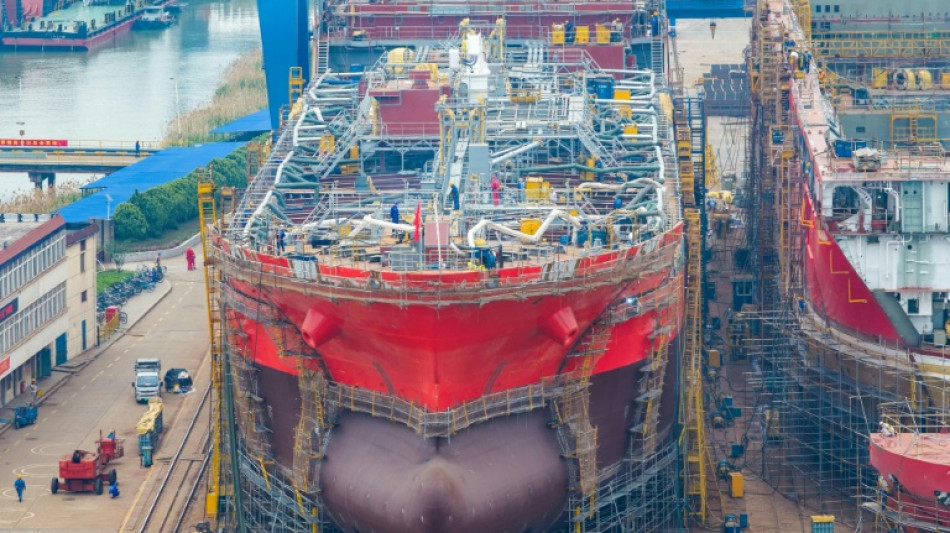
Huge state subsidies give China unfair edge over foreign rivals: OECD / Photo: © CN-STR/AFP

 US eyes offshore nuclear reactors

 The Sterling Announces Luxury Cocktail Lounge Concept and Investor Showcase in Orlando

 Inter Miami signs Brazil veteran Casemiro but MLS probes deal

 White House accuses China's Moonshot of stealing Anthropic AI

 Pogacar sweating on Yates's fitness ahead of Tour Queen stage

 Ukrainian soldiers and civilians welcome new army commander
 UK fintech Revolut valuation soars to $115 bn: source

 German FM, on Africa tour, eyes business ties amid US, China pressure
 Rubio says at ASEAN meeting he expects 'positive' US visit by China's Xi
 Philipsen wins Tour de France 17th stage
 DonnaPro Introduces AI-Trained Executive Assistants for European CEOs
 Happy birthday, George! UK prince becomes a teenager

 Oil prices jump on Mideast war, stock markets diverge

 US hits Iranian island, says war cost at $37.5 bn

 Metal mining's carbon footprint far larger than thought: study

 TokenInsight Q2 2026 Report: TradFi Momentum Lifts MEXC to No. 2 in Commodity Perpetuals

 Leonardo chief sees potential for Germany to join GCAP fighter jet project

 Louvre heist gallery reopens to public, but with nothing to steal

 Ukraine's new army chief: who is Mykhailo Drapaty?
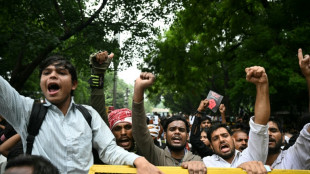 India student protests keep up pressure on Modi government

 Italian FA chief says in touch with Guardiola over coaching vacancy

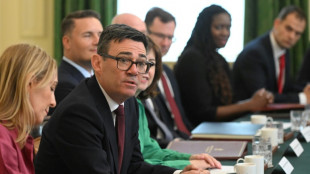 Cooler inflation hands new UK PM Burnham an early boost

 Bezos holds talks with group interested in buying Liverpool stake: reports

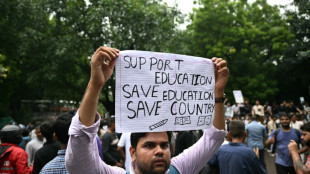 The student movement in India challenging Modi's government
 Danish fish fossil cliffs set to gain UNESCO status

Chinese companies in 15 key industrial sectors received vastly more state support than their international competitors between 2005 and 2024, according to an OECD report released on Monday.
The 15 sectors received $108 billion in 2024 alone, according to data compiled by the Organisation for Economic Cooperation and Development in its Manufacturing Groups and Industrial Corporations (MAGIC) database.
Between 2005 and 2024, it added, "Chinese firms received on average three to eight times more government support than firms based in the OECD, a conservative estimate."
"These subsidies were also considerably higher than the support received by firms based in non-OECD economies such as Brazil, India and Indonesia."
The Paris-based organisation of 38 member countries said its "conservative" estimate was based on disclosures by the biggest companies in the 15 sectors, which underpin entire segments of the global economy.
It considers direct subsidies, tax breaks and favourable loans from banks and public financial institutions -- at times below their base lending rates -- to be public support.
"For Chinese firms, almost 60 percent of their global market share gains can be explained by the subsidies they received," the OECD said.
Chinese firms have carved out huge market shares over 20 years in sectors such as solar panels, shipbuilding and steel, not because they are better than their US or European competitors but because of their unparallelled state support, it added.
- Effect of subsidies -
With subsidies, they have more financial leeway to invest in new production sites, more time to reach profitability and greater support against economic headwinds, according to the report.
This has led to overcapacity in some sectors, pushing down global prices to the detriment of other international players.
"Just like doping in sports, the risk is that subsidies help less productive players win unfairly at the expense of better, more innovative and more efficient ones," the OECD's Secretary-General Mathias Cormann told a press conference.
"Subsidies increased market share but that did not lead to significant gains in productivity or profitability," Cormann added.
"Firms won market share not by being more efficient or more innovative but by being more heavily subsidised."
The OECD looked at aerospace and defence; aluminium; car manufacturing; cement; chemicals; fertilisers; glass and ceramics; heavy machinery; semiconductors; shipbuilding; photovoltaic panels; steel; telecommunications equipment; rolling stock; and wind turbines.
Worldwide state support in these sectors reached its highest level since the 2008 financial crisis in 2023-24, amounting on average to 1.3 percent of companies' revenues in 2024.
The OECD noted that the peak observed in 2009 coincided with a severe global recession, which was not the case in 2023-24.
That "indicates the recent increase in industrial subsidies to be more structural", it added.
A.Kunz--VB