
-
 US eyes offshore nuclear reactors
-
Lebanon PM says Beirut working for 'complete Israeli withdrawal'

-
 The Sterling Announces Luxury Cocktail Lounge Concept and Investor Showcase in Orlando
-
EU conditionally clears Paramount bid for Warner Bros.

-
 Inter Miami signs Brazil veteran Casemiro but MLS probes deal
-
Philipsen snaps 'horrible' drought with Tour de France stage 17 victory

-
 White House accuses China's Moonshot of stealing Anthropic AI
-
US trial of Venezuela's Maduro set for June 2027
-
 Pogacar sweating on Yates's fitness ahead of Tour Queen stage
-
New UK PM Burnham gets early boost as inflation dips

-
 Ukrainian soldiers and civilians welcome new army commander
-
Samsung launches new, more expensive foldable smartphones

-
 UK fintech Revolut valuation soars to $115 bn: source
-
Philipsen ends 'horrible' drought with Tour de France 17th stage victory

-
 German FM, on Africa tour, eyes business ties amid US, China pressure
-
Hungary's Orban says graft case is 'pretext' to target his party
-
 Rubio says at ASEAN meeting he expects 'positive' US visit by China's Xi
-
South African tycoon Motsepe rules out presidential bid
-
 Philipsen wins Tour de France 17th stage
-
Trump threatens Iran bridges, power as payback for Hormuz attacks
-
 DonnaPro Introduces AI-Trained Executive Assistants for European CEOs
-
Germany's Merz replaces leader ousted over surrogacy row
-
 Happy birthday, George! UK prince becomes a teenager
-
CAF chief Motsepe backs Infantino despite criticism
-
 Oil prices jump on Mideast war, stock markets diverge
-
Evacuees from Spain's wildfire struggle with scale of devastation
-
 US hits Iranian island, says war cost at $37.5 bn
-
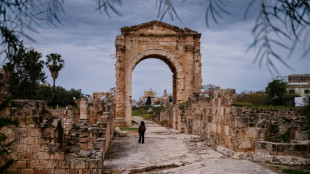
Ancient Lebanese city of Tyre added to heritage danger list
-
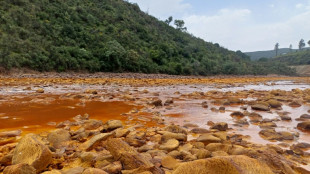 Metal mining's carbon footprint far larger than thought: study
-
Extreme heatwave grips Tunisia as wide power cuts fuel frustration
-
 TokenInsight Q2 2026 Report: TradFi Momentum Lifts MEXC to No. 2 in Commodity Perpetuals
-
'Beautiful game' provides Venezuelans with welcome distraction in wake of tragedy

-
 Leonardo chief sees potential for Germany to join GCAP fighter jet project
-
Oil prices surge on Mideast war, stock markets diverge
-
 Louvre heist gallery reopens to public, but with nothing to steal
-
Fury says 'best yet to come' ahead of Thailand fight

-
 Ukraine's new army chief: who is Mykhailo Drapaty?
-
Japan suffers heat 'disaster as cities hit by 'cruelly hot' days
-
 India student protests keep up pressure on Modi government
-
In Kazakhstan, emptying villages and overcrowded cities
-
 Italian FA chief says in touch with Guardiola over coaching vacancy
-
Hitler's Austrian birthplace transformed into police station

-
 Cooler inflation hands new UK PM Burnham an early boost
-
Mideast conflict lifts Brent back above $94, stocks give up gains
-
 Bezos holds talks with group interested in buying Liverpool stake: reports
-
Greece broils on year's warmest day as three-day heatwave peaks

-
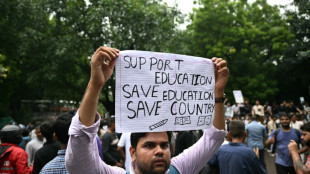 The student movement in India challenging Modi's government
-
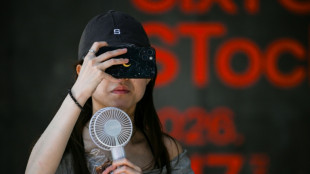
Japan cities 'cruelly hot' for first time
-
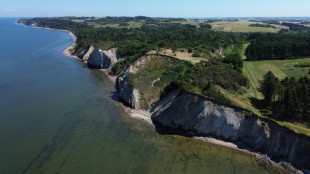 Danish fish fossil cliffs set to gain UNESCO status
-
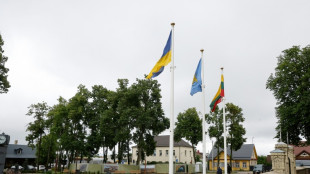
Lithuania moves Red Army graves to leave behind Soviet past
Colombia chooses president amid surge in guerrilla violence
Colombians voted Sunday in a presidential election that could shift the country's response to rising guerrilla violence, choosing between extending spluttering peace talks or turning to a hard‑right military crackdown.
Pre‑election polls showed left‑wing senator Ivan Cepeda leading, but facing a strong challenge from hard‑right lawyer Abelardo de la Espriella, a pro‑Trump outsider.
The vote is in part a referendum on Colombia's first-ever leftist government and his "total peace" initiative -- a policy of holding talks with dissident guerrilla groups.
Experts say guerrillas and other armed groups have used peace overtures to strengthen their positions and to produce record amounts of cocaine.
The campaign has been marked by car bombs, attack drones and the assassination of a leading presidential candidate.
De la Espriella -- self-styled as "The Tiger" -- wants to confront armed groups in the air, on land and at sea, echoing hard-line rhetoric behind recent right-wing wins in Latin America.
On Sunday, he called the election "the most important battle in the republic's history" and claimed he could pull off an outright win, avoiding the June 21 runoff that polls suggest will be necessary.
"This government really strengthened armed groups by being so soft," said Catalina Devia, a 42-year-old advertising executive and mother of two, who is considering emigrating if Cepeda wins.
- Fear of war returning -
Incumbent President Gustavo Petro is constitutionally barred from running and has backed Cepeda -- the son of a slain senator, killed by right-wing paramilitaries.
Cepeda derives much of his support from the popularity of his firebrand mentor, who famously clashed last year on social media with Trump over migration and Venezuela.
The two later buried the hatchet, with Petro welcomed at the White House in February.
Low-income voters particularly feel grateful to Petro for hiking the minimum wage, raising overtime pay and transferring 700,000 hectares of land to the poor.
"I like the direction the Petro government took," said Pedro Barragan, a 52-year-old teacher voting in central Bogota.
"I think we've done quite a lot in terms of education... protecting the environment, social justice, and defending human rights."
Whoever replaces Petro will have to reckon with an alphabet soup of criminal groups engaging in drug trafficking, illegal mining and extortion.
Cepeda's backers fear a right-wing victory would spark a return to decades of war between the state and armed groups.
- Right-wing rivals -
De la Espriella, who styles himself on El Salvador's iron-fisted President Nayib Bukele but looks to Argentina's Javier Milei on the economy, has vowed that guerrillas and drug-traffickers will face either "the grave or prison."
Third-placed conservative Senator Paloma Valencia, a close ally of kingmaker and former president Alvaro Uribe, also favors a militarized approach.
But she also canvassed centrist voters and to women anxious for Colombia to have its first female president.
"What Colombia needs is calm and education, nothing more," Maria Juliana Duque, a 44-year-old Valencia voter, said in Bogota, dismissing Cepeda and De la Espriella as twin "evils."
Eight hours of voting will end at 4:00 pm (2100 GMT), with results expected by around 6:00 pm (2300 GMT).
Despite worsening violence in rebel-held areas, election day was calm.
The government deployed 408,000 law enforcement officers to ensure security.
Colombia remains the world's largest cocaine producer, and the drug trade has much to answer for the worst violence in a decade.
Last year's killing of right-wing candidate Miguel Uribe, blamed on a leftist guerrilla group, has left many Colombians nervous about a return to the bad old days.
In late April, a bomb on a highway in the southwestern Cauca region killed 21 people, making it the deadliest attack against civilians in recent decades. The group responsible later claimed a "tactical error."
The next president needs to provide "some peace of mind, some peace, because the way things are, we're very anxious," said Maria Eugenia Motato, a 57-year-old housewife in Suarez, Cauca. "There's a lot, a lot of conflict."
P.Staeheli--VB