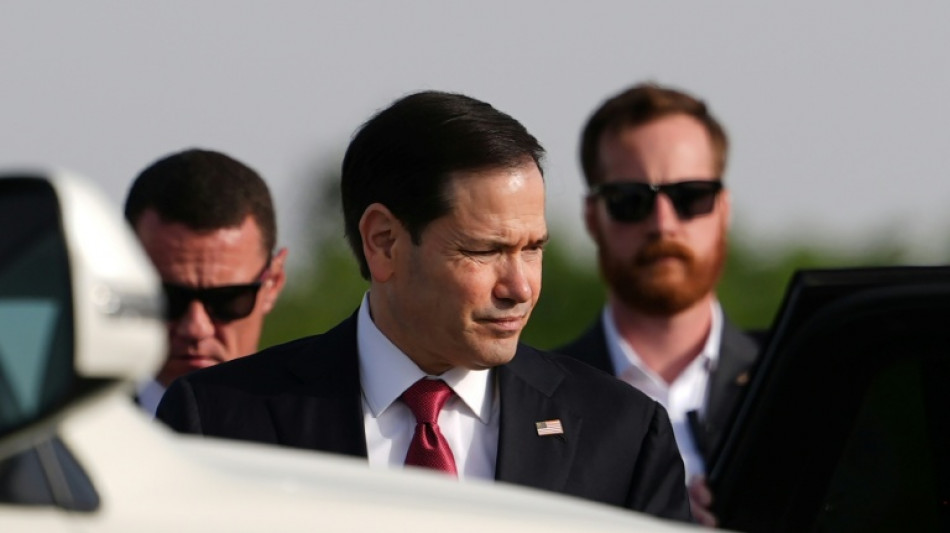
Rubio revives 'Quad' alliance in India, but staying power unclear / Photo: © POOL/AFP

 Tesla shares fall as Musk touts ambitious -- and costly -- plans

 Houthis claim Red Sea tanker strikes as US hits Iran again

 Wildfires ravage parts of southern France, Italy and Spain
 Alphabet beats expectations in second quarter, cloud revenue nearly doubles

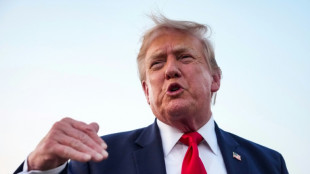 Trump threatens Iran infrastructure, Tehran vows 'eye for eye'

 US teen withdraws lawsuit against Meta over social media addiction
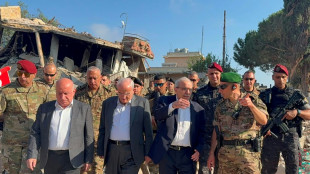 Lebanon PM says Beirut working for 'complete Israeli withdrawal'

 EU conditionally clears Paramount bid for Warner Bros.
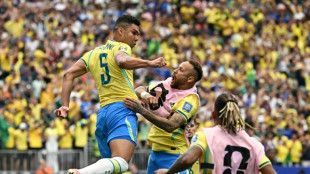
 Philipsen snaps 'horrible' drought with Tour de France stage 17 victory

 US trial of Venezuela's Maduro set for June 2027

 New UK PM Burnham gets early boost as inflation dips
 Samsung launches new, more expensive foldable smartphones

 Philipsen ends 'horrible' drought with Tour de France 17th stage victory

 Hungary's Orban says graft case is 'pretext' to target his party
 South African tycoon Motsepe rules out presidential bid

 Trump threatens Iran bridges, power as payback for Hormuz attacks

 Germany's Merz replaces leader ousted over surrogacy row
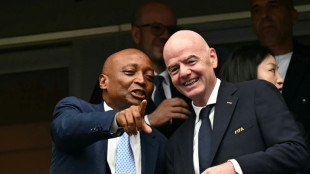 CAF chief Motsepe backs Infantino despite criticism

 Evacuees from Spain's wildfire struggle with scale of devastation
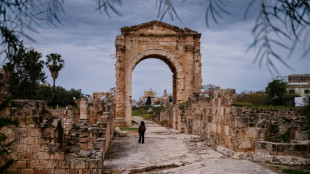 Ancient Lebanese city of Tyre added to heritage danger list
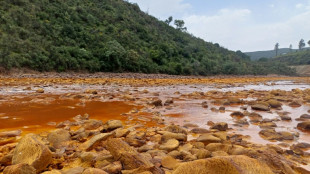
 Extreme heatwave grips Tunisia as wide power cuts fuel frustration

 'Beautiful game' provides Venezuelans with welcome distraction in wake of tragedy
 Oil prices surge on Mideast war, stock markets diverge

 Fury says 'best yet to come' ahead of Thailand fight

 Japan suffers heat 'disaster as cities hit by 'cruelly hot' days
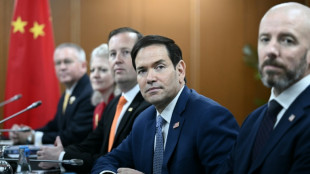
US Secretary of State Marco Rubio called Tuesday for a revival of joint cooperation with Australia, India and Japan -- the so-called Quad grouping viewed suspiciously by China -- following disagreement on Iran and questions over US commitment.
The meeting in New Delhi comes 10 days after US President Donald Trump paid a friendly state visit to China and spoke glowingly of the two powers working together as a "G2" -- a concept that the US allies who are concerned about Beijing's rise fear could shut them out.
Rubio took the symbolic step of meeting Quad foreign ministers in Washington within hours of being sworn in last year, and the four gathered again in Washington in July 2025.
But a Quad summit expected last year did not happen, with Trump not committing to travel to India for it, despite his predecessor Joe Biden's vow that the four-way leaders' summits would be "here to stay".
Meeting his counterparts in New Delhi, Rubio said the Quad has become "even more relevant and more important because of recent events around the world".
"Our goal collectively over the last year has been to turn this from a forum in which we meet and talk about problems, to one where we actually do something about it," he said, saying cooperation was progressing "pretty aggressively".
He said that the Quad should cooperate on securing the supply of critical minerals, a rare area in which the Trump administration has turned to the more traditional diplomacy of building networks with allies, alarmed at the dominance of China in resources key to the high-end technology sector.
Other areas of cooperation include freedom of navigation, humanitarian responses and energy security, Rubio said.
"Each of these four nations represented here today bring unique capabilities, that collectively we can bring to bear on some of the most significant problems facing the world," Rubio said.
- Disagreement on Iran -
Freedom of navigation has long been Washington's codeword for opposing China's assertiveness at sea, a particular concern for Japan.
But the United States has recently pointed to the principle as it tries to rally allies to counter Iran, which has exerted control over the strategic Strait of Hormuz in response to a US-Israeli war launched on February 28, sending global oil prices spiralling.
No US ally other than Israel has robustly supported the decision to attack Iran, enraging Trump, who has questioned the reliability of US partners, whom he had not consulted beforehand.
India's foreign minister, Subrahmanyam Jaishankar, said that the focus of the talks would be "the Indo-Pacific, which is the specific limit of the Quad".
Besides Iran, India has differed with the other Quad nations on Russia's invasion of Ukraine by refusing to sever its long-standing relationship with Moscow.
Australian Foreign Minister Penny Wong said there was much to focus on in Asia, due to its "deteriorating strategic environment and acute economic stress".
Australian Prime Minister Anthony Albanese is one of the few world leaders who has voiced some understanding for the Iran war, citing concerns about its disputed nuclear programme, but he has not assisted the war effort and Trump said he was "not happy with Australia".
Japan and India both historically have maintained cordial relations with Iran, although they grudgingly complied with US sanctions aimed at stopping all other countries from buying Iranian oil.
Japanese Foreign Minister Toshimitsu Motegi, holding a bilateral meeting with India on Monday, said it was important to address an "increasingly severe" global security situation.
"The world is faced with the most significant structural change in the post-World War II era, driven by a shift in the balance of power and the intensification of conflict and confrontation," Motegi said.
C.Bruderer--VB