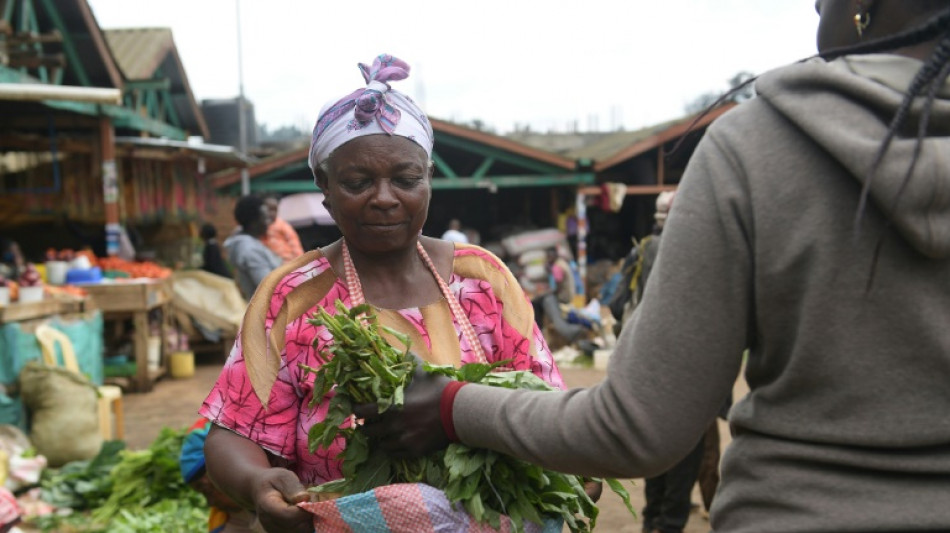
Kenya's 'mama mboga' pinning their hopes on the future president / Photo: © AFP

 Lionel Messi's father Jorge dies aged 68

 Johnson reveals 'stress' of Grand Slam Track collapse, clarifies payment

 Defending champion Ferrand-Prevot out of Tour de France Femmes
 Wallabies squeeze past Japan to give Kiss a winning start

 Kyiv mourns recovery volunteer, whose life 'intertwined with the fallen'

 Only two vehicles earn perfect child-seat scores for 2026

 Chinese car brands reshape Australia’s automotive market

 Electric cars enter their most decisive generation yet

 Three Chinese carmakers enter the global automotive top 10

 Ukraine's Zelensky visits Russian ally Serbia as Moscow pounds Kyiv

 Ukraine's Zelensky visits Russian ally Serbia for talks

 Defending champion Shelton storms to Montreal win

 Exodus: West Bank hardships drive out Palestinian Christians

 Travis Head wins Australian cricketer of the year gong

 Colombia's new president vows to 'defeat narco-terrorists'

 Call for Infantino to resign comes amid wave of support

 Trump ally Abelardo de la Espriella sworn in as Colombia president

 FIFA chief Infantino gets backing of South American football

 Amazon behind massive private gas plant for new data centers

 Apple and OpenAI escalate legal battle over devices

 All Blacks strike late to secure opening win against Stormers
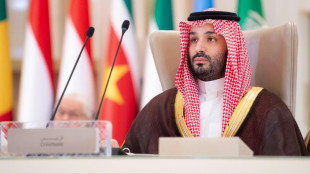 Saudi Arabia, Turkey, Pakistan sign defence pact amid regional war

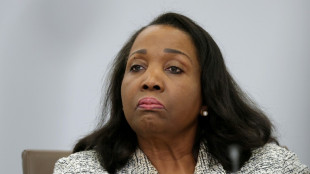 Trump renews effort to remove US Fed Governor Lisa Cook

 Abelardo de la Espriella, the flamboyant millionaire taking power in Colombia

 Germany holds security meeting over explosive drone amid Russia protest

Behind her makeshift stall in the Kenyan town of Eldoret, just a blue plastic sheet on the ground strewn with bunches of spinach and kale leaves, Agneta Muhonja Ambane's face is etched with fatigue.
The 68-year-old grandmother did not go home last night, fearing she would run into her landlord demanding rent that she can no longer afford to pay.
She says she preferred to spend the night out in the cold in a corner of the market in the Rift Valley town.
Ambane is a "mama mboga" ("mama vegetable" in Swahili), a term used for the women vendors found everywhere in markets or on roadsides across Kenya.
They sell small quantities of fruit, vegetables, beans or fried fish to eke out a living for their families.
Ambane has been selling vegetables since she was just eight years old.
"Now, life is hard, the cost of living is too high," she sighs.
Its economy already hammered by the Covid pandemic, Kenya now is suffering from skyrocketing prices for essential goods caused by the fallout from war in Ukraine.
Inflation hit 8.3 percent in July, the highest in five years, and the struggle of ordinary Kenyans to make ends meet was a hot-button issue in Tuesday's election.
- 'It's not possible' -
After casting their ballots, Eldoret's "mama mboga" now hope Kenya's new leader -- whoever it may be -- will stick to the bold promises made on the hustings.
Deputy President William Ruto, who was born in a village not far from Eldoret and is one of the two presidential frontrunners, has styled himself as the champion of "hustlers" struggling to make ends meet.
His rival Raila Odinga, the veteran opposition leader now backed by his longtime foe, the outgoing President Uhuru Kenyatta, has also pledged to improve the lot of the ordinary Kenyan.
For the "mama mboga" of Eldoret, the situation is desperate, their customers now increasingly scarce.
Ambane, who has 27 grandchildren, says her already meagre income is dwindling further.
"Sometimes, you make a profit of only 100 shillings (about 84 cents) in a day, what are you going to buy with 100 shillings?" she says, her arms crossed over her orange-checkered apron.
"Do you think it's possible to support my whole family with these vegetables? It’s not possible."
She breaks off as a customer asks for the price of spinach. A few words are exchanged and the woman leaves without buying.
"I told her 20 shillings (17 cents). She asked for 10, but I bought it for 15!" Ambane protests.
"When we get sick, we can't afford to go to hospital. You either prioritise having food in your stomach or go to hospital."
- Sell without profit -
At the end of a nearby street, Julia Chepchirchir says she has no choice but to sell her goods at a loss.
"Since Covid came, our business went down. We hope that after the elections everything will be good," says the 40-year-old single mother, her hair wrapped up in a pink scarf.
"Business is hard, we are trying to sell but people are not buying, money isn't circulating. We sell but without profit.
Chepchirchir, who lives with her children aged 20, 18 and 14, says she has had to change her diet and no longer eats ugali, the Kenyan staple dish made from maize flour.
"Maize flour is too expensive, I am forced to eat rice and potatoes."
"I no longer eat fish or meat," adds her neighbour, 35-year-old Gladys Nyaanga Yeno.
"We are just eating vegetables, but we can't afford tomatoes because they're too expensive. Sugar, soap, maize flour, everything has gone up."
"We need assistance from the government, we have to pay school fees, the rent, even some of our kids have become street children."
More and more Kenyans are angry at the political elite for failing to live up to their promises to help the "mwananchi", the grassroots citizen.
For some, this disenchantment was reflected in the relatively low election turnout of about 65 percent among Kenya's 22 million voters.
While Kenya is one of Africa's most dynamic economies, one third of the population lives in poverty and about 80 percent of the workforce is in the informal sector.
But, says Yeno, "we have no choice but to hope".
Ambane is more gloomy.
"If it goes on like this, old women like me will die because of the cost of living and the stress that comes with it," she says.
"Sometimes, I even think it's better that I die and rest. This is not the way a human being should live. And there are so many people going through the same thing."
J.Bergmann--BTB