Russia launches Iranian satellite amid Ukraine war concerns / Photo: © AFP/File

 MotoGP leader Martin soars to victory in British GP sprint race

 Mosimane set to succeed Broos as South Africa coach

 Drone enters Bulgaria, explodes near pipeline at Romanian border

 Paris orders e-scooter users to wear helmets, reflective gear
 Lionel Messi's father Jorge dies aged 68

 Johnson reveals 'stress' of Grand Slam Track collapse, clarifies payment

 Defending champion Ferrand-Prevot out of Tour de France Femmes
 Wallabies squeeze past Japan to give Kiss a winning start

 Kyiv mourns recovery volunteer, whose life 'intertwined with the fallen'

 Only two vehicles earn perfect child-seat scores for 2026

 Chinese car brands reshape Australia’s automotive market

 Electric cars enter their most decisive generation yet

 Three Chinese carmakers enter the global automotive top 10

 Ukraine's Zelensky visits Russian ally Serbia as Moscow pounds Kyiv

 Ukraine's Zelensky visits Russian ally Serbia for talks

 Defending champion Shelton storms to Montreal win

 Exodus: West Bank hardships drive out Palestinian Christians

 Travis Head wins Australian cricketer of the year gong

 Colombia's new president vows to 'defeat narco-terrorists'

 Call for Infantino to resign comes amid wave of support

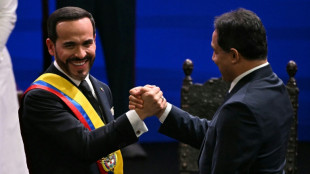 Trump ally Abelardo de la Espriella sworn in as Colombia president

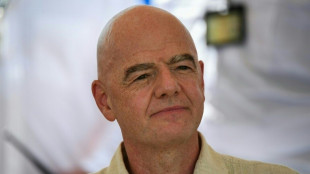 FIFA chief Infantino gets backing of South American football

 Amazon behind massive private gas plant for new data centers

 Apple and OpenAI escalate legal battle over devices

 All Blacks strike late to secure opening win against Stormers

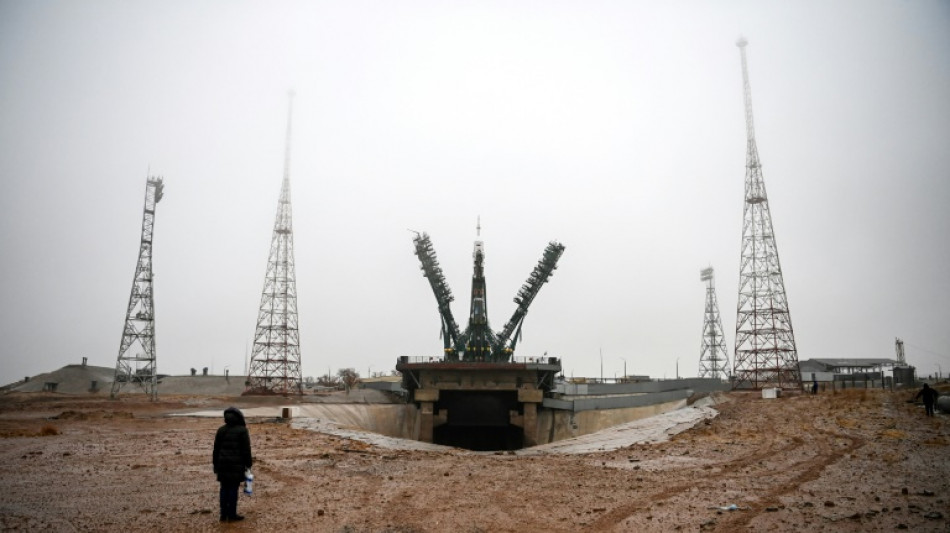
An Iranian satellite launched by Russia blasted off from Kazakhstan early Tuesday and went into orbit amid controversy that Moscow might use it to improve its surveillance of military targets in Ukraine.
A live feed from Russian space agency Roscosmos showed the launch of the Soyuz-2.1b rocket carrying the Khayyam satellite from the Russia-controlled Baikonur cosmodrome at the scheduled time of 0552 GMT.
The Russian mission control confirmed its subsequent entry into orbit.
Iran, which has maintained ties with Moscow and refrained from criticism of the Ukraine invasion, has sought to deflect suspicions that Moscow could use Khayyam to spy on Ukraine.
Last week, US daily The Washington Post quoted anonymous Western intelligence officials as saying that Russia "plans to use the satellite for several months or longer" to assist its war efforts before allowing Iran to take control.
But the Iranian Space Agency said on Sunday that the Islamic republic would control the Khayyam satellite "from day one".
"No third country is able to access the information" sent by the satellite due to its "encrypted algorithm," it said.
The purpose of Khayyam is to "monitor the country's borders", enhance agricultural productivity and monitor water resources and natural disasters, the space agency said.
In a pre-launch statement on Monday ISA praised "the high reliability factor of the Soyuz launcher".
"Due to Khayyam satellite's weight of more than half a ton and the very high success rate of the Soyuz launcher, the launch of the Khayyam satellite has been entrusted to Russia," the statement on the space agency's website noted.
As Moscow's international isolation grows under the weight of Western sanctions over Ukraine, the Kremlin is seeking to pivot Russia towards the Middle East, Asia and Africa and find new clients for the country's embattled space programme.
Russian President Vladimir Putin met Iranian counterpart Ebrahim Raisi and Supreme Leader Ayatollah Ali Khamenei in Tehran last month -- one of his few trips abroad since the invasion began.
- 'Long-term cooperation' -
Khayyam, apparently named after the 11th-century Persian polymath Omar Khayyam, will not be the first Iranian satellite that Russia has put into space -- in 2005, Iran's Sina-1 satellite was deployed from Russia's Plesetsk cosmodrome.
Iran is currently negotiating with world powers, including Moscow, to salvage a 2015 deal aimed at reining in Tehran's nuclear ambitions.
The United States -- which quit the landmark Joint Comprehensive Plan of Action or JCPOA under then-president Donald Trump in 2018 -- has accused Iran of effectively supporting Russia's war against Ukraine while adopting a "veil of neutrality".
During his meeting with Putin last month, Iran's Khamenei called for "long-term cooperation" with Russia, and Tehran has refused to join international condemnation of Moscow's invasion of its pro-Western neighbour.
Iran insists its space programme is for civilian and defence purposes only, and does not breach the 2015 nuclear deal, or any other international agreement.
Western governments worry that satellite launch systems incorporate technologies interchangeable with those used in ballistic missiles capable of delivering a nuclear warhead, something Iran has always denied wanting to build.
Iran successfully put its first military satellite into orbit in April 2020, drawing a sharp rebuke from the United States.
M.Odermatt--BTB