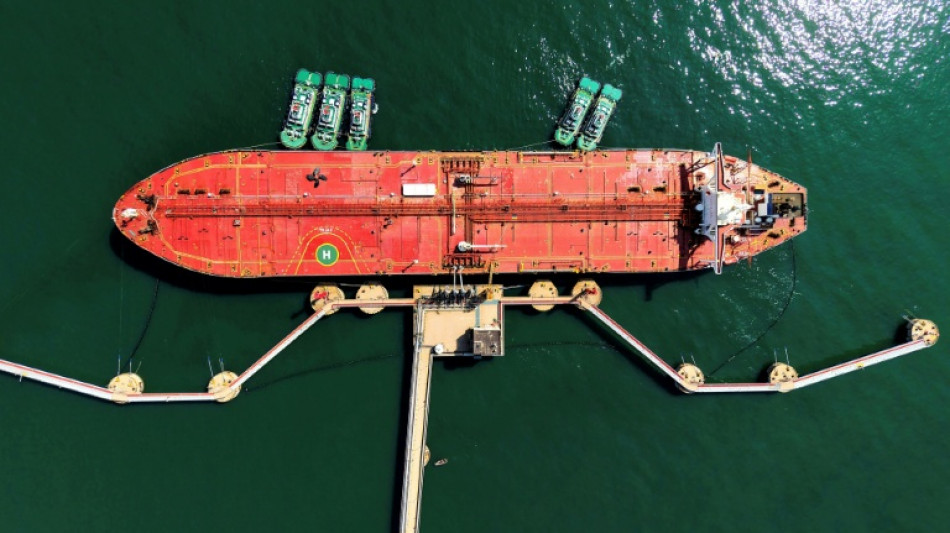
China's energy strategy pays off as Mideast war cramps supplies: analysts / Photo: © CN-STR/AFP

 US Senate approves $70 billion for Trump immigration crackdown

 France questions judicial system after girl's suspected murder

 Israel strikes Lebanese village after warning to several areas

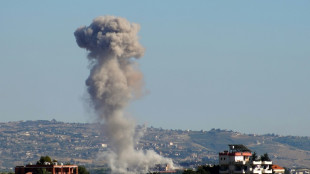 UN doubles appeal for Lebanon aid to nearly $640 mn amid Israel war

 Sooryavanshi, 15, in line for maiden India call-up: report

 Rescued orphaned elephant highlights Nigeria's conservation fight

 Turkmenistan's 'heavenly' horses at the heart of fervent state cult
 'Extremely intelligent' bear at large in Japan after hurting four

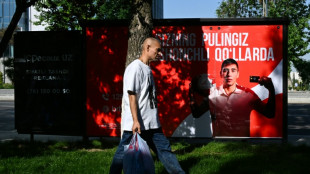 Uzbekistan's debut World Cup crowns surge in football popularity
 Kupcho seizes slim lead in US Women's Open at Riviera
 Game on: Trump set to attend game 3 of NBA Finals in New York

 Political blows fly ahead of Trump's White House UFC fight

 New York City's rules for AI in schools spark fury
 Australian far-right does U-turn on seizing foreigners' homes

 Kiss confident Reds can 'scare' Chiefs in Super Rugby playoff
 Clark, Spaun part of four-way tie for lead at Memorial tournament

 Anthropic calls for pause of global AI development

 LA Olympics boss Wasserman says will not step down over Epstein links
 Diallo gives Ivory Coast shock win over France

 Selfie-seeking fan banned for life by NBA after crashing Finals game

 German serial killer found guilty of murder of French schoolboy
 Dissing critics with humor, Hunter Biden finds social media stardom

 In open letter to Putin, Zelensky calls for meeting and ceasefire

 Pakistan upstage Australia for 2-1 ODI series win

 Liverpool appoint Spaniard Iraola as new boss

China's long-term strategy of diversifying energy sources and building stockpiles is helping it weather disruptions from the Iran war, although some sectors still face major snags, analysts say.
China is a net importer of oil and more than half of its seaborne crude came from the Middle East last year, according to analytics firm Kpler.
The conflict triggered by Israel and the United States against Iran has halted almost all shipments from the Gulf area for six weeks now, with a shaky ceasefire deal struck this week extremely unlikely to lead to an immediate recovery.
However, Beijing's long-running prioritisation of energy security has left it well-prepared for such shocks, analysts told AFP.
A "general concern about the geopolitical situation" in recent years has spurred Chinese leaders to ensure sufficient storage construction and stockpiling of strategic reserves, said Muyu Xu, senior oil analyst at Kpler.
Those efforts mean China now sits in a far better position than several of its Asian neighbours, such as Japan and the Philippines, she said.
But so far Beijing has not been "in a rush" to initiate releases from its substantial strategic reserves, said Xu.
- 'Vindicated' -
This is partly because China's decades-long mission to diminish its traditional reliance on coal and fossil fuels is beginning to flourish.
The large-scale efforts to transition to renewable energy mean "China is relatively well placed" to deal with the current situation, said Lauri Myllyvirta, co-founder of the Centre for Research on Energy and Clean Air.
Wind, solar and nuclear capacity has been added to China's populous coastal provinces, while improved grid infrastructure carries electricity to them from inland.
"There would be much more oil and gas imports needed to power those provinces" otherwise, said Myllyvirta.
While dependencies still exist -- including in the vast manufacturing sector -- renewable energy is "helping a lot on the margin", he said.
Li Shuo, director of the China Climate Hub at the Asia Society, told AFP that the current energy crisis "vindicates China's long-standing 'all-of-the-above' strategy".
President Xi Jinping is seeking to leverage the renewables build-out even further as geopolitical turmoil mounts.
State broadcaster CCTV aired a segment on Monday in which Xi was quoted as calling for accelerated construction of a "new energy system" to safeguard energy security, although it did not mention the Middle East war.
- 'Teapot' trouble brewing -
For Beijing, the "more serious risk" is not immediate energy shocks but a potential global economic downturn caused by the conflict, the Asia Society's Li said.
Some sectors will inevitably feel the pinch, presenting new hurdles for leaders struggling to jumpstart sluggish activity.
Among them are "teapot" oil refineries -- small, private outfits that have historically benefited from access to sanctioned Iranian and Venezuelan crude acquired at a discount.
The loss of Iranian crude could be a death knell for many of these operations, which are mainly concentrated in the eastern province of Shandong and are already reeling from Washington's military intervention in Venezuela this year.
Beijing likely has "mixed feelings" about that, Kpler's Xu told AFP.
On the one hand, teapots account for around one-fifth of China's refining capacity, also providing substantial employment, she said.
However, their lax environmental standards, less predictable tax generation and competition with state-owned giants means that their shutting down is "not entirely bad news for China", said Xu.
Chipmaking, which Xi has declared a strategic priority, is another sector likely to encounter challenges as the Strait of Hormuz remains shut.
Qatar is one of the world's few large-scale producers of helium -- vital for semiconductor manufacturing -- and supplies have ground to a halt since the war began.
The chemicals industry could also face "significant pressure" from the disruption, Michal Meidan from the Oxford Institute for Energy Studies wrote in a recent report.
On a national level though, she said, "the impacts can be smoothed out".
"While the economy will not be immune to higher prices and reduced economic activity, stakeholders are already taking pre-emptive measures in case the disruption is protracted," she wrote.
T.Suter--VB