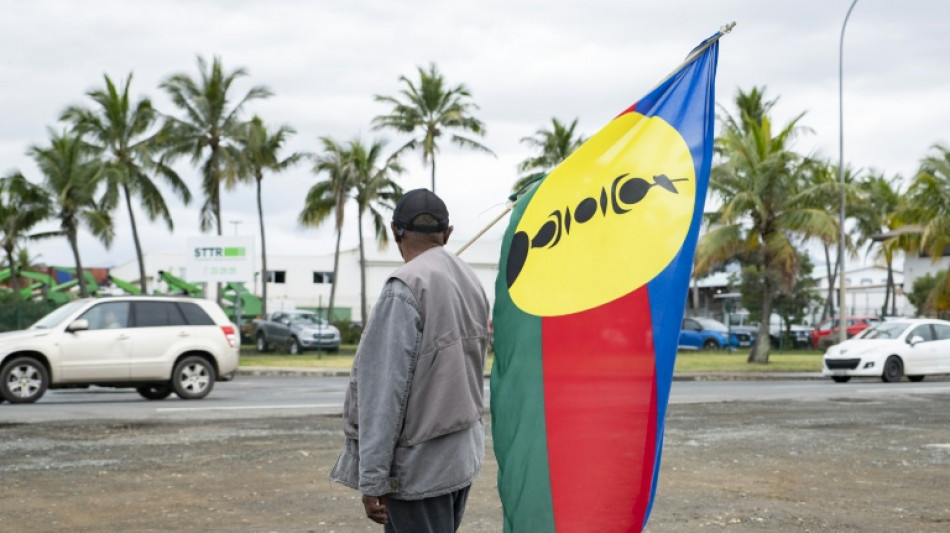
France considers reform for New Caledonia / Photo: © AFP

 Putin rules out imminent Zelensky meeting

 Zverev eases past Mensik to reach second French Open final

 England collapse gives New Zealand hope in first Test
 Argentine rock legend Carlos 'Indio' Solari dies at 77
 Russian economy has not collapsed, Putin says at key forum
 AI fever spreads, but are markets masking economic cracks?

 MEXC Lists YOM (YOM) with 200,000 YOM and 40,000 USDT in Airdrop+ Rewards
 Strong US job growth beats expectations in May, firming recent gains

 'No hope': Indian crew stranded off Turkey for months
 From Siberia to French Open final, Andreeva living 'dream'

 Leclerc beats Hamilton as Ferrari shine in Monaco F1 practice
 Lawsuit seeks to stop US 'third-country' deportations to Eq.Guinea
 Celtic fans oppose potential Keane move over Israel stay
 Feared global hunger crisis 'coming to pass' as Mideast war lingers: UN
 Macron blasts 'unacceptable' lapses over girl's suspected murder

 Sea drone explodes in the Romanian port of Constanta, no casualties
 Nearly 1.5 million displaced in Haiti: UN

 Former France rugby coach Saint-Andre eyes making history with Aix
 France probes judicial 'dysfunction' after girl's suspected murder
 Serena Williams' comeback to continue in Berlin

 Norway crown princess put on waitlist for lung transplant
 US Senate approves $70 billion for Trump immigration crackdown
 France questions judicial system after girl's suspected murder
 Israel strikes Lebanese village after warning to several areas

 UN doubles appeal for Lebanon aid to nearly $640 mn amid Israel war
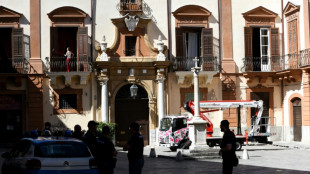
France's parliament on Thursday rejected a law to grant New Caledonia partial statehood, a reform the government hoped would bring stability to the overseas territory.
Here's what to know.
- Where is New Caledonia? -
New Caledonia, an archipelago that is home to some 270,000 people, lies between Australia and Fiji in the Pacific.
It is one of several French overseas territories left over from colonial times that have limited autonomy.
British explorer Captain James Cook named it New Caledonia in the 18th century, saying it reminded him of Scotland.
France seized the archipelago in 1853, initially using it as a penal colony. It then declared it an overseas territory in 1946, giving its inhabitants French citizenship.
It is rich in nickel, a key ingredient for manufacturing stainless steel and making batteries that power electric vehicles.
- Who lives there? -
Indigenous Melanesians known as Kanaks make up around 40 percent of the population, according to a 2019 census, followed by descendants of European settlers known as Caldoches and other newer residents.
Around a third of Kanak households live below the poverty line, whereas less than 10 percent of non-Kanak families do, the census shows.
- Who wants independence? -
Tensions have blighted the archipelago's modern history, starting in 1878 when an insurgency against land dispossession and the colonial order left 200 Europeans and 600 rebels dead.
Clashes between Kanaks and Caldoches in the 1980s culminated in Kanak separatists mounting an attack and hostage-taking in 1988, when six police officers and 19 militants were killed.
A landmark deal between France and opponents and supporters of independence followed in 1998, giving the islands more autonomy.
The voter roll has been frozen since then.
Three referendums on independence in 2018, 2020 and 2021 have returned a majority in favour of staying with France. But pro-independence groups boycotted the third held during the Covid pandemic.
The independence movement retains support, particularly among the Kanaks.
- What happened in 2024? -
Unrest broke out in 2024, leaving 14 people dead, after a planned update to give voting rights to thousands of non-Indigenous long-term residents.
Kanaks feared this would leave them in a permanent minority, crushing their chances of winning independence.
- What's the reform? -
In a bid to ease tensions, French officials and a delegation of New Caledonian pro-independence and anti-independence representatives in July last year reached an agreement to create a "State of New Caledonia" within the French Republic.
The so-called Bougival Accord provides for the creation of a Caledonian state with Caledonian nationality to be enshrined in France's constitution.
But under the agreement, which needs approval from the French parliament and New Caledonia residents, there will be no further referendums on independence.
What is more, New Caledonia residents who arrived after 1998 are to be allowed to vote, provided they have lived 10 years on the archipelago.
New Caledonia's main pro-independence group -- the Socialist Kanak National Liberation Front (FLNKS) -- wants to scrap the accord, which it says makes achieving full sovereignty too difficult.
- What's next? -
France's right-leaning Senate has approved the reform, but the lower house of parliament on Thursday rejected it, complicating it coming into law.
The left had said they could not approve it if the FLNKS did not, while far-right parliamentary leader Marine Le Pen has said the bill is "dangerous for national unity".
Naima Moutchou, France's minister for overseas territories, has warned a motion to reject the bill would bring negotiations "years backwards".
burs-ah/ekf/giv
P.Keller--VB