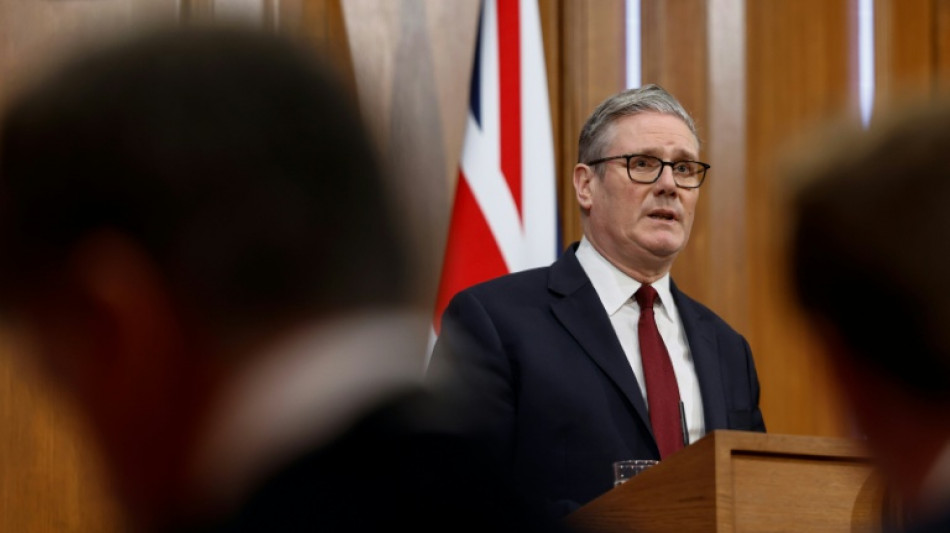
Western allies push back on Trump call for NATO help to reopen Hormuz / Photo: © POOL/AFP

 Heatwave hits more than half of France's population

 Former England keeper Earps agrees to join London City Lionesses

 Olympic hurdles medallist Bascou suspended for doping
 Pegula sinks Keys to reach Berlin Open semis
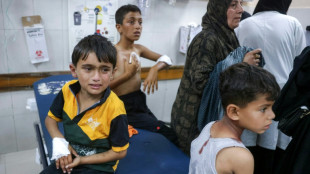 Gaza ceasefire a 'deadly illusion': UNICEF
 S.Africa anti-migrant hate loses team African support at World Cup

 European robotics start-ups go up against Chinese heavyweights

 Japan's men told to clean at home, not just the World Cup

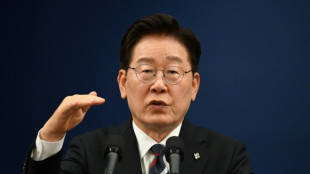 South Korean leader says told Trump sanctions on North are 'ineffective'
 Stocks rally falters, oil rises as US-Iran talks postponed
 Indonesia to capture last-known wild Bornean rhino for IVF

 USA, Australia eye World Cup knockout rounds, Brazil in action

 Iran to lodge complaint with FIFA over World Cup restrictions
 New Zealand minister defends fishers after two orcas killed in net

 Seoul record leads most Asian markets higher, crude extends losses

 Burnham wins key UK poll, paving way for bid to challenge PM Starmer

 'Pico' Lopes -- Cape Verde defender's journey from Ireland to World Cup
 'Pretty special': captains eye Super Rugby glory in clash of top seeds

 Ivory Coast's Diomande living World Cup dream, dealing with tragedy
 Australia seek 'respect' from US amid World Cup 'layup' row
 Japan doctor-turned-author moots amputations to ease care crunch

 Fossils challenge assumptions on how animals adapted to land
 Canada romp to first World Cup win, Switzerland thump Bosnia
 Venezuela govt, opposition hold US-backed talks on democratic transition
 Horror injury overshadows Canada's first World Cup win
NATO allies and other Western nations pushed back Monday on US President Donald Trump's demand that alliance members help reopen the Strait of Hormuz, the critical conduit for crude oil that Iran has effectively closed.
UK Prime Minister Keir Starmer said London was working with allies to craft a "viable" plan to reopen the waterway, but ruled out a NATO mission, while Berlin insisted it was "not NATO's war".
Polish Foreign Minister Radoslaw Sikorski noted the country's president had already "ruled out the participation of the Polish Armed Forces in this operation" as Spanish Defence Minister Margarita Robles said Madrid was "absolutely not" mulling a military contribution.
The lukewarm response from European capitals came after Japan and Australia voiced similar sentiments earlier Monday, with Canberra noting it would not be sending a navy ship to the Strait of Hormuz.
Trump over the weekend called on countries including China, France, Japan, South Korea and Britain to send warships to escort tankers through the strait, warning refusing would be "very bad for the future of NATO".
Oil prices have jumped after the strait was closed and Monday remained above $100 as the Iran war moved into a third week. The volatility further underlined the importance of ensuring safe passage for tankers through the vital transport route.
Starmer, who has faced stinging criticism from Trump over Britain's refusal to join the US and Israel in offensive attacks on Iran, told reporters he had discussed the waterway with the US leader Sunday.
"We're working with all of our allies, including our European partners, to bring together a viable collective plan that can restore freedom of navigation in the region as quickly as possible and ease the economic impacts," he said in Downing Street.
"Let me be clear: that won't be, and it's never been envisioned to be, a NATO mission," Starmer said, while also stressing Britain "will not be drawn into the wider war".
"That'll have to be an alliance of partners," he added of any Strait of Hormuz mission.
- De-escalation calls -
In Berlin, German Chancellor Friedrich Merz's spokesman said the conflict has "nothing to do with NATO".
"NATO is an alliance for the defence of territory" and "the mandate to deploy NATO is lacking" in the current situation, Stefan Kornelius told reporters.
Meanwhile German Defence Minister Boris Pistorius said there would be "no military participation" from his country, but added the country was prepared to support diplomatic efforts "to ensure safe passage through the Strait of Hormuz".
Following Trump's demand for military support, some other European countries sought to appear open-minded while remaining non-committal.
"We did not want this war. From day one, we have called for de-escalation," Denmark's Foreign Minister Lars Lokke Rasmussen told Danish media in Brussels before an EU foreign ministers' meeting.
"That said, I believe we need to keep an open mind and look at how we can contribute," he said, describing the situation as "very, very serious".
Lithuanian Foreign Minister Kestutis Budrys told reporters in Brussels "NATO countries should consider" a US request for help but cautioned "we need to see the entire operational environment and the capabilities with which we could contribute".
His Estonian counterpart struck a similar tone, saying Tallinn was "always ready for discussions with the US, including now regarding the situation in the Strait of Hormuz".
"However, this primarily means we need to understand the US' objectives and plans in the ongoing conflict," Markus Tsahkna added.
burs-jj/jkb/rmb
A.Zbinden--VB