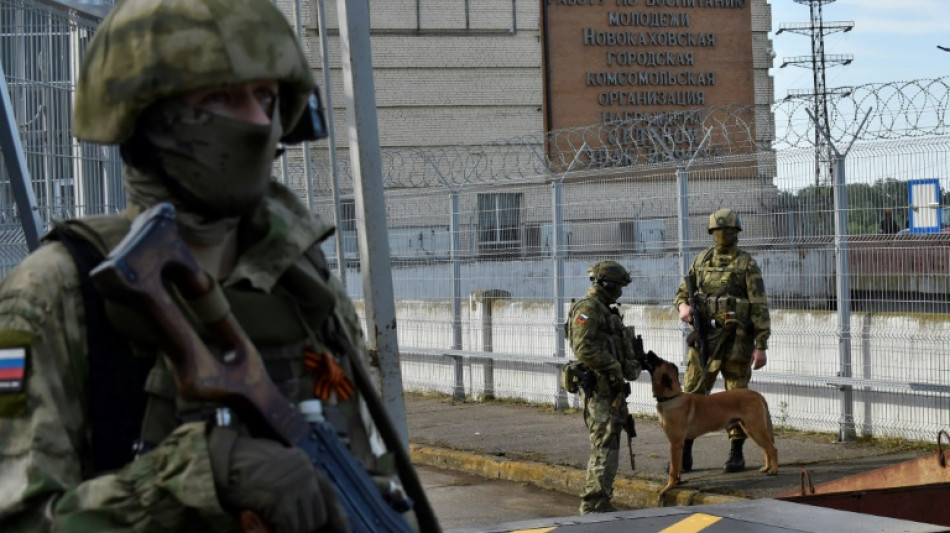
Grim fragments of life seep out from Russian-occupied Ukraine / Photo: © AFP

 Mount injury overshadows Man Utd draw with Paris Saint-Germain

 Ukraine denies targeting Bulgaria as drone explodes near pipeline
 Vollering grabs Tour de France lead in Nice
 Euros to showcase new TV guidelines on non-sexualisation of women athletes

 'Calm' Kiss savours first win as Wallabies boss
 Duplantis bids for fourth European title as stars align in Birmingham
 Ukraine warns of tough winter as Russia strikes kill 4 in Kyiv region
 Recovering Marchand to skip medleys at European swim champs
 MotoGP leader Martin speeds to British Grand Prix pole

 Drone enters Bulgaria, explodes near pipeline at Romanian border: Bulgarian PM
 Arsenal sign Brazil midfielder Guimaraes from Newcastle
 Atletico will not sell Alvarez, says Simeone

 Ford Fathom turns affordable electric pickup into reality

 Lise Klaveness, the Norwegian thorn in Infantino's side

 Europe’s electric car boom exposes a widening market divide

 US Senate confirms Trump's ex lawyer as attorney general
 Tibet conference in Nepal pushed online
 Nocturnal 'coffee frog' discovered in Costa Rica
 India's 'cockroach' protest movement keeps heat on Modi
 Russia's only anti-war party eyes support boost at elections
 Canada tries to adapt to a future of wildfires
 Death of NBA forward Clarke ruled accident due to heroin, cocaine
 Abelardo de la Espriella, Colombian president and flamboyant millionaire
 Maradona's 'Hand of God' ball heads to US auction
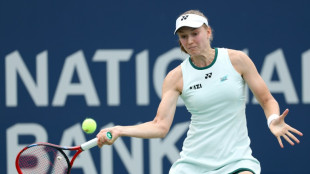 Rybakina advances while Andreeva exits at Toronto

Collapsed social services, financial woes and fear: only brief snippets filter out of the daily reality for Ukrainians in Russian-occupied territory.
Areas seized by Moscow since its invasion in February have been abruptly cut off from the rest of the country and communication with those left behind is often patchy.
Several people living in three regions captured by the Kremlin gave grim accounts of the hardships and poisonous atmosphere of suspicion for those living under Russia's new rule.
All have had their names changed to protect them from any retribution and AFP was unable to verify their accounts independently.
- Kherson -
Kherson in southern Ukraine became the first major city to be captured by Russia when it fell to the invading forces in the early days of the war.
Ukrainian forces are now looking to carry out a major counter-offensive to recapture the strategic region on the Black sea coast.
Oleksandr, 25, is a teacher in a village close to Kherson city:
"Liberating the city is one thing, but liberating the whole Kherson region is something else. The Russians have built up defensive positions deep behind the front lines," he told AFP.
"We know it won't happen now, but still have hope.
"The roads of the region are dotted with numerous checkpoints, and you can always hear bombing raids.
"There are many soldiers in the cities, in Kherson, Nova Kakhovka, many helicopters and planes fly over the area.
"In Kherson itself, it is very depressing. There is no more medicine at all and many elderly people have died because of lack of treatment.
"For the elderly, it's hell.
"If I had to describe the situation in one word, I would say 'difficult'.
"There is a total collapse of public services. The military and the new authorities tell us absolutely nothing, except that they are there forever.
"The ruble is not circulating. Passports are not being issued -- nobody wants them anyway."
Russia has declared the ruble the official currency in the areas it occupies and has started handing out Russian passports.
"Hyrvnias are circulating but there are big problems with cash.
"We have enough food, although there is very little delivery of humanitarian aid."
"Many people are left without work, and often only unskilled labourers are left.
"People who had money and good jobs in tech or communications left at the beginning. Everything stopped.
"In the first weeks of the occupation, a lot of activists were kidnapped. There were big demonstrations against the occupation, but after a month it stopped, because there is no internet, no communication.
"And all the activists are either hiding or have been kidnapped or killed, I don't know.
"If the Russians hear you speaking Ukrainian, they think you are a Nazi. They check social networks, tattoos, if you have Ukrainian symbols on your body, you are in trouble. I know that some people have had their tattoos removed."
- Lysychansk -
Antonina, 52, lives with her husband and adult daughter in the eastern town that was taken by Russian forces in early July after fierce fighting.
"There are no authorities in the town, no gas, no water, no electricity. We can't take a shower.
"There is very little humanitarian aid and still a lot of shelling.
"I don't know if it's possible to leave, in any case nobody has money for that. Salaries have not been paid for several months.
"The internet still works in some towns, like Svatove, which is an hour's drive away.
"Once a week, people who can do so go there to make personal calls, and calls for their neighbours who cannot travel.
"Some people make offers to go to Ukraine by private bus, $600 or $700 per person, through Russia and Belarus, but many people don't believe it, they are afraid of simply being taken to Russia."
- Balakliya -
Andriy and Tetyana are a couple of teachers from Balakliya in the north-eastern Kherson region, which has been under occupation since the beginning of March.
Their daughter Anna, who lives in Ukrainian territory, described their experiences from the infrequent conversations she has her parents.
"In the first months of the war, my parents continued to teach online. Then the internet was cut off.
"Then they called their students to give them homework. Then the phone was cut off. Now they are still officially teachers, but they don't get paid anymore.
"A lot of people have left. It was still possible at the beginning. Now it's not.
"My parents told me that in their four-storey building there are only two families left.
"Some of the people who stayed don't care about the country they live in -- they support the new (Russian-installed) authorities.
"Sometimes they provoke my parents by telling them that they will have to teach Russian from now on.
"My parents keep calm. At the beginning of the occupation, patriotic activists were kidnapped and even killed. Now everyone is quiet".
J.Horn--BTB