Post-uprising polls won't shake Nepal's delicate India-China balance / Photo: © AFP

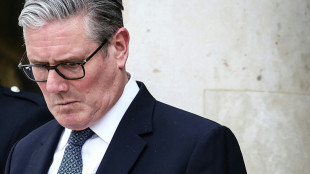
 UK's Starmer mulling 'political realities': senior minister
 France presses ahead with music festivals despite extreme heat
 Springboks recall 'outstanding' Papier for Nations Championship

 Bezzecchi out of Czech MotoGP after slapping steward

 FIFA draws criticism as Infantino clocks up air miles at World Cup
 Japan stroll to victory over Tunisia in World Cup's 1,000th game
 Trump blames 'terrible vandals' for Washington pool renovation woes

 Man charged over suspected anti-Muslim attacks in Edinburgh
 Britain's King Charles to reveal personal tax bill: reports

 Fly-half Love ready for All Blacks start after Super Rugby heroics
 Saudis seek to repeat Argentina World Cup 'miracle' against Spain

 Nagelsmann says Germany has higher ambitions than advancing to knockout stage
 US and Iran set for new talks after delay and deadly strikes

 Germany into World Cup last 32 after late comeback, Dutch thrash Sweden
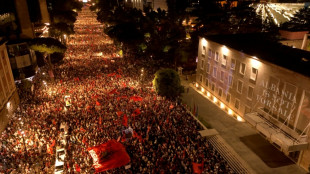 Albanian protests against Trump-linked resort swell

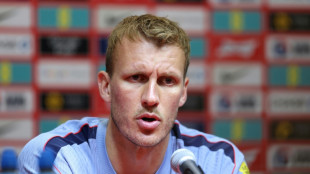 Burn dons cowboy boots as England unwind at World Cup

 France's Saliba says playing through the pain at World Cup
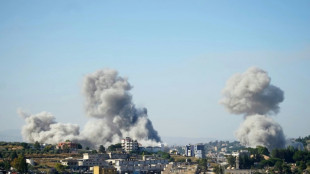
 Counter-terror cops probe suspected anti-Muslim 'attacks' in Edinburgh

 Clark begins with bogey as McIlroy charges at US Open
 Specter of military escalation hangs over Colombia vote

 Jamieson strikes as New Zealand eye series-levelling win despite Root heroics
 Netherlands thump Sweden in Houston to get World Cup liftoff

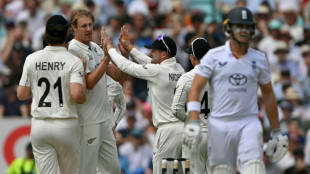 Jamieson strikes as New Zealand eye series-levelling win against England

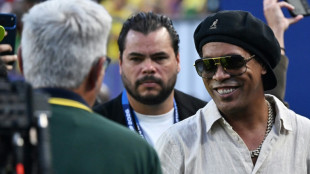 Ronaldinho coming out of retirement to join Italian 3rd division side
 Real Madrid say no contact with Bayern's Olise
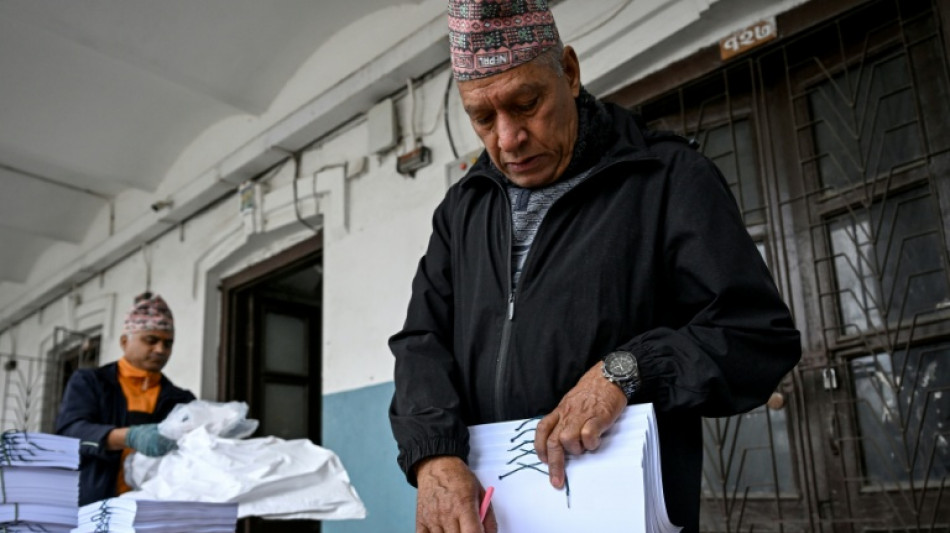
Nepal votes next week for the first time since deadly anti-corruption protests toppled the government, but analysts say any winner will likely maintain the delicate diplomatic balance between its two giant neighbours, India and China.
The landlocked Himalayan nation of 30 million people will elect a new government on March 5, six months after youth-led demonstrations brought down the administration of Marxist leader KP Sharma Oli.
Who will win is an open question, but Nepali journalist Sudheer Sharma said it will likely be "very difficult" for any single party to secure a majority, meaning longstanding political dynamics may continue.
"Nepal's relation with India or China depends on what type of coalition it will be and who will be the dominant power," said Sharma.
"The fundamentals of the relationship will not change, but some approaches might."
Younger candidates are campaigning on promises to overhaul a stagnant economy and remove an ageing political elite, while veteran politicians emphasise stability and security if returned to power.
Key investors and trading partners Beijing and New Delhi are watching closely, but analysts suggested that the new government will likely continue Kathmandu's pragmatic balancing act between the two powers, who compete for influence.
Nepal's largest trading partner is India, accounting for 63 percent of imports, or $8.6 billion, followed by China at 13 percent, or $1.8 billion, according to World Bank figures.
- 'Regular relationship' -
India has long considered Hindu-majority Nepal as a traditional ally, with open borders along the plains.
"Some issues are there, some problems are there, but the regular relationship should be stable," journalist Sharma said.
Retired Indian diplomat Rakesh Sood described New Delhi's ties with Nepal as "extensive", encompassing trade, tourism and hydropower.
Nepal is integrated with cross-border infrastructure in both directions: power lines from hydropower dams feed electricity to India, while China connects through its Belt and Road Initiative over the Himalayas via Tibet, and makes investments in airports and railways.
For nearly two decades, Nepal's political landscape was dominated by veteran leaders -- many of them former Maoist insurgents -- who took turns in power since the end of a 10-year civil war in 2006.
Last September's unrest erupted as youth protests against a brief social media ban, but was fuelled by far wider anger at economic stagnation and corruption.
Over two days, 77 people were killed, scores were injured, and hundreds of buildings were set on fire.
Oli, 74, forced out by the uprising, is seeking a return to power for a potential fifth term as prime minister.
He had a fractious relationship with New Delhi -- after taking office in 2024, he chose China for his first trip abroad, rather than the customary visit to India.
"In Nepal, the then leftist-led government had an uncomfortable relationship with India -- and that was overthrown," Sharma added.
- 'Balance ties' -
A new cohort of first-time candidates has emerged from the loosely organised Gen Z movement that helped drive the protests, young Nepalis seeking economic reform.
"Nepal's leadership, even if at times seemingly inclined to lean toward one power or the other, aims to balance ties with India and China," South Asia expert Michael Kugelman told AFP.
"It's hard to imagine that changing, even if there is a new influx of younger people in politics."
He suggested the status quo will likely remain, with China "comfortable with any type of political dynamic" in Kathmandu, including one with a younger profile, as long as it remains open to Beijing.
"A government with youth leaders would likely not take positions on relations with India and China that diverge much with the previous government," Kugelman said, suggesting that Nepali youth are "generally not hostile to China -- even if some would prefer less Chinese influence".
Both India and China have pumped in hundreds of millions of dollars in investments into Nepal, and both are backing voting preparations, with New Delhi sending vehicles to aid the Election Commission.
Kugelman said change may come if a new generation of politicians sweeps into power on an anti-corruption ticket and shakes up old practices of opaque funding for mega-projects.
"Young people in Nepal won't support Chinese or Indian actions that aim to shape Nepal's politics or put vast amounts of money in the hands of the government in ways that aren't transparent," he said.
P.Staeheli--VB