
The veteran 'insider' shaping Iran's nuclear policy
/ Photo: © AFP

 Democrats, Trump hold final rallies before midterm elections
 Japan urges US to enforce discipline after second Marine arrest
 'Remarkable' rookie Lendeborg scores 37 as Warriors beat Clippers
 ExxonMobil urged to re-think Papua New Guinea gas project

 Asian stocks mixed as tech sector struggles to rebound from selloff
 India's royals find new power in their past
 Irish bookshops help meet UK demand for Sally Rooney novels
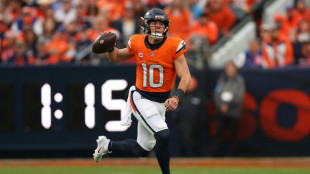 NFL Vikings suffer first loss while Broncos edge Chiefs
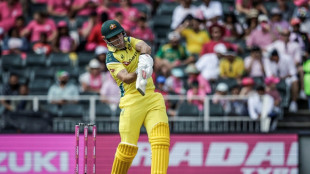 Host of fresh faces in Australia white-ball squads to face England
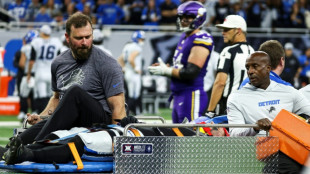 NFL linebacker Campbell to remain hospitalized overnight

 Chervon Names Thomas Scherer Vice President of Organizational Development - Sales, End User Marketing, and Service

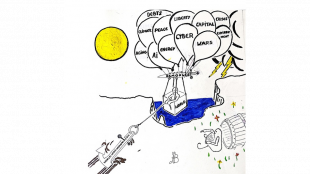 BEING rather than HAVING. A fascinating, practical STORY.
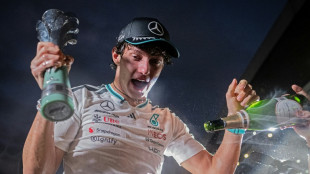
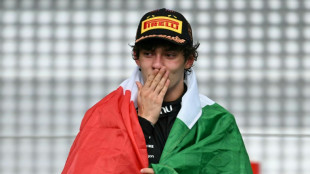 'Grateful' Antonelli becomes youngest Formula One world champion
 Four sporting prodigies who scaled the heights
 Six key races that made Kimi Antonelli a world champion
 Isa double sends Pau past Toulouse in Top 14
 NFL Lions linebacker Campbell carted off to hospital
 Iran warns new war could last longer after Trump threatens strikes
 Bulgarian president wins runoff vote as Black Sea attacks raise stakes
 Iraola instructs Liverpool players to dive after Arsenal penalty call
 Lazio pull clear at Serie A summit as Gattuso warns of vertigo
 Israel elections chief says inquiry into irregularities will not undermine result

 Vacherot beats Lehecka to clinch Basel title
 Buzzy Holmes doc wins slow Halloween box office in N. America
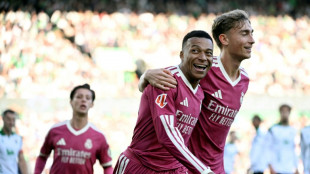 Mbappe strikes after China controversy as Real Madrid beat Santander
When US and Iranian negotiators meet on Thursday in Geneva, Iran's top security chief Ali Larijani will be Tehran's key player behind the scenes.
Adept at balancing ideological loyalty with pragmatic statecraft, Larijani will not attend the talks, but is central to Tehran's nuclear policy and strategic diplomacy.
At the end of January, Larijani was Tehran's choice to meet Russian President Vladimir Putin in Moscow, and this month he has met with Gulf officials trying to mediate in the stand-off with the United States.
Bespectacled and known for his measured tone, the 68-year-old is believed to enjoy the confidence of Iran's supreme leader Ayatollah Ali Khamenei, after a long career in the Islamic republic's military, media and legislature.
Weeks after the Iran-Israel war in 2025, he was appointed as head of Iran's top security body, the Supreme National Security Council -- a position he had held nearly two decades earlier -- coordinating defence strategies and overseeing nuclear policy.
He has since become increasingly visible in the diplomatic arena, travelling to Gulf states such as Oman and Qatar as Tehran cautiously restarted nuclear negotiations with Washington against the backdrop of massive US military deployments in the region.
- 'Canny operator' -
"He is now playing a more prominent role than most of his predecessors," said Ali Vaez, the International Crisis Group's project director for Iran.
"Larijani is a true insider, a canny operator, familiar with how the system operates and familiar with the supreme leader's inclinations."
Born in Najaf, Iraq in 1957 to a prominent Shiite cleric who was close to the Islamic Republic's founder Ayatollah Ruhollah Khomeini, Larijani's family has been influential within Iran's political system for decades.
Some of his relatives have been the targets of corruption allegations over the years, which they denied.
He holds a PhD in Western Philosophy from the University of Tehran.
A veteran of the Islamic Revolutionary Guard Corps during the Iran-Iraq war, Larijani later headed state broadcasting IRIB for a decade from 1994 before serving as parliamentary speaker from 2008 to 2020.
In 1996, he was appointed as Khamenei's representative to the Supreme National Security Council (SNSC). He later became secretary of the SNSC and chief nuclear negotiator, leading talks with Britain, France, Germany and Russia between 2005 and 2007.
He ran in the 2005 presidential elections, losing to populist candidate Mahmoud Ahmadinejad, with whom he later had disagreements over nuclear diplomacy.
Larijani was then disqualified from running for president in both 2021 and 2024.
Observers have viewed his return as the head of the SNSC as signalling a pragmatic turn in security management, reflecting his reputation as a conservative capable of combining ideological commitment with pragmatism.
A proponent of nuclear negotiations, Larijani supported the landmark 2015 nuclear deal with world powers which unravelled three years later after Trump withdrew the US from the accord.
In March 2025, ahead of five rounds of Iran-US nuclear talks which ended with the 12-day war with Israel, he warned that sustained external pressure could alter Iran's nuclear posture.
"We are not moving towards (nuclear) weapons, but if you do something wrong in the Iranian nuclear issue, you will force Iran to move towards that because it has to defend itself," he told state television.
After the conflict with Israel, he described Western concerns over Iran's nuclear programme as a "pretext" for broader confrontation, arguing that subsequent calls to address Iran's missile programme and regional role reflected shifting political demands.
He has repeatedly insisted negotiations with Washington should remain confined to the nuclear file and defended uranium enrichment as Iran's sovereign right.
"We want a speedy resolution to this issue," he said in a recent interview with Al Jazeera, referring to the talks with the US.
- 'Violent repression' -
He said a war between Iran and the United States was unlikely, as Washington would realise it had little to gain and much to lose from a conflict.
Larijani was among officials sanctioned by the US in January over what Washington described as "violently repressing the Iranian people", following nationwide protests which erupted weeks earlier due to the rising cost of living.
He recently acknowledged that economic pressures had "led to the protests", but blamed the violence which ensued on foreign involvement by the United States and Israel.
Vaez believes that Larijani's political calculus is shaped by long-term ambitions.
"He is an ambitious man who has eyes for higher office. Larijani certainly wants to become president," Vaez said.
"That creates two incentives, one is to preserve the system and second is to also not burn his cards."
P.Vogel--VB