
-
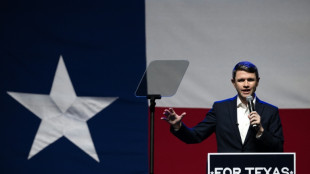 Democrats, Trump hold final rallies before midterm elections
-
African players in Europe: Defender Hakimi's historic hat-trick

-
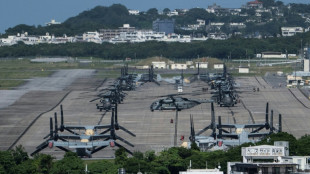 Japan urges US to enforce discipline after second Marine arrest
-
Struggling Slavia face Arsenal as grim record looms
-
 'Remarkable' rookie Lendeborg scores 37 as Warriors beat Clippers
-
Vikings suffer first loss while Broncos edge Chiefs in NFL

-
 ExxonMobil urged to re-think Papua New Guinea gas project
-
South Korea to double spending on AI and chips in 2027

-
 Asian stocks mixed as tech sector struggles to rebound from selloff
-
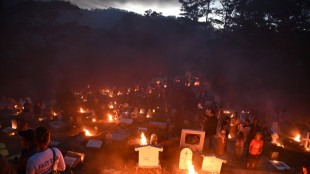
On All Saints' Day, Philippine mountain town honours dead with fire
-
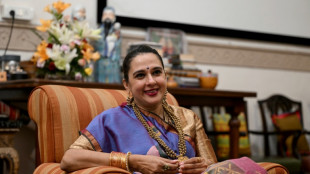 India's royals find new power in their past
-
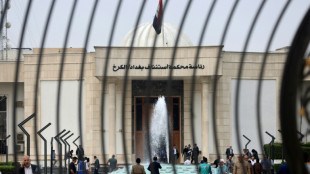
Years on from fall of IS, French jihadists face justice in Iraq
-
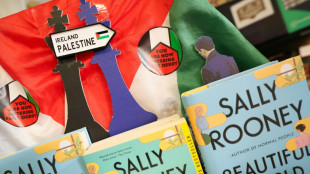 Irish bookshops help meet UK demand for Sally Rooney novels
-
Point of Law favourite at Australia's 'race that stops a nation'
-
 NFL Vikings suffer first loss while Broncos edge Chiefs
-
'Kid' Antonelli gets affectionate tributes from all quarters
-
 Host of fresh faces in Australia white-ball squads to face England
-
Hamilton accuses Leclerc of wrecking Ferrari hopes
-
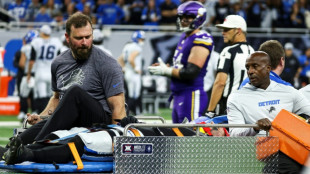 NFL linebacker Campbell to remain hospitalized overnight
-
Chervon Promotes Soobia Haroon to Vice President, Human Resources - NA

-
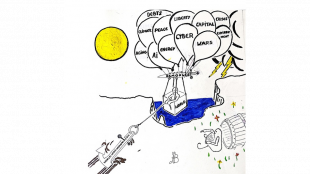 BEING rather than HAVING. A fascinating, practical STORY.
-
Chervon Names Thomas Scherer Vice President of Organizational Development - Sales, End User Marketing, and Service

-
 Chervon Names Jody Grimsley Senior National Account Manager
-
Pre-season F1 favourite Russell 'not up to the task'
-
 'Grateful' Antonelli becomes youngest Formula One world champion
-
Novak wins Mexico Open for first solo PGA Tour win
-
 Four sporting prodigies who scaled the heights
-
Fast and funny, Antonelli becomes Formula One's youngest king
-
 Six key races that made Kimi Antonelli a world champion
-
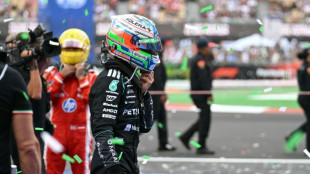
Antonelli becomes youngest Formula One world champion
-
 Isa double sends Pau past Toulouse in Top 14
-
Japan's Shimada wins Skate Canada in Grand Prix debut
-
 NFL Lions linebacker Campbell carted off to hospital
-
NFL Vikings suffer first loss while Allen sparks Bills win

-
 Iran warns new war could last longer after Trump threatens strikes
-
Antonelli title bid halted by red flag at Mexico GP
-
 Bulgarian president wins runoff vote as Black Sea attacks raise stakes
-
Shelton adds former Alcaraz coach Ferrero to team
Russia's Navalny poisoned with dart frog toxin: European states
Five European countries, including Britain, France and Germany, said Saturday that Russian opposition leader Alexei Navalny was killed by a "rare toxin" from a dart frog and that the Russian state was the prime suspect.
Navalny, a staunch critic of President Vladimir Putin, died in a Russian prison on February 16, 2024, while serving a 19-year sentence on charges widely seen as retribution for his opposition.
"The UK, Sweden, France, Germany and The Netherlands are confident that Alexei Navalny was poisoned with a lethal toxin," the countries said in a joint statement released at the Munich Security Conference.
According to the European states, a toxin found in the skin of South American dart frogs known as epibatidine was found on laboratory analyses of samples from his body.
"Russia claimed that Navalny died of natural causes. But given the toxicity of epibatidine and reported symptoms, poisoning was highly likely the cause of his death," said the statement.
"Navalny died while held in prison, meaning Russia had the means, motive and opportunity to administer this poison to him," the countries said.
Britain's foreign office said separately that "only the Russian state had the means, motive and opportunity to deploy this lethal toxin". It added: "We hold it (Russia) responsible for his death."
UK Prime Minister Keir Starmer hailed Navalny's "courage in the face of tyranny" in a social media post after the findings were published, slamming "Putin's murderous intent".
- 'Science-proven facts' -
Navalny's widow, Yulia Navalnya, said it was now "science-proven" that the Kremlin opponent had been murdered.
"Two years ago, I came on stage here and said that it was Vladimir Putin who killed my husband," Navalnaya said on the sidelines of the conference in Germany.
"I was of course certain that it was a murder... but back then it was just words. But today, these words have become science-proven facts," Navalnaya added.
Navalnaya last September said that laboratory analysis of smuggled biological samples found her husband was killed by poisoning.
"Today, beside his widow, the UK is shining a light on the Kremlin's barbaric plot to silence his voice," UK Foreign Secretary Yvette Cooper, who met Navalnaya while attending the Munich conference, said in a statement.
French Foreign Minister Jean-Noel Barrot paid "tribute" to Navalny after the findings.
"We now know that Vladimir Putin is prepared to use biological weapons against his own people to remain in power," Barrot said in a post on X.
Swedish Foreign Minister Maria Malmer Stenergard said: "I am proud that together we have been able to contribute to the truth coming out and that the evidence is now available to hold Russia accountable."
The Kremlin denies the charges.
- Chemical weapons watchdog -
Moscow has never fully explained Navalny's death, saying only that he fell ill and collapsed during a walk in his Arctic prison colony. Navalny and his foundation were considered "extremist" by the Russian authorities.
The European countries said they had reported Russia to the world's chemical weapons watchdog -- the Organisation for the Prohibition of Chemical Weapons -- over the finding.
"We are further concerned that Russia did not destroy all of its chemical weapons," the countries said, accusing Moscow of breaching the Chemical Weapons Convention.
Navalny was previously poisoned with the Soviet-era nerve agent Novichok in 2020 while campaigning in Siberia and was flown to Germany on an emergency evacuation flight, where he spent months recovering.
Jailed upon his return to Russia in January 2021, he was convicted on a series of charges, including "extremism", but continued to campaign against Putin and Russia's invasion of Ukraine from behind bars.
The charismatic anti-corruption campaigner had rallied hundreds of thousands across Russia in anti-Kremlin protests as he exposed the alleged ill-gotten gains of Putin's inner circle.
Putin's main political opponent, Navalny was the only opposition leader who was able to galvanise big protests in Russia.
Public displays of opposition to Putin inside Russia have become exceptionally rare since Russia invaded Ukraine in February 2022 and clamped down on dissenters and critics of the war.
burs-aks/jhb
A.Zbinden--VB