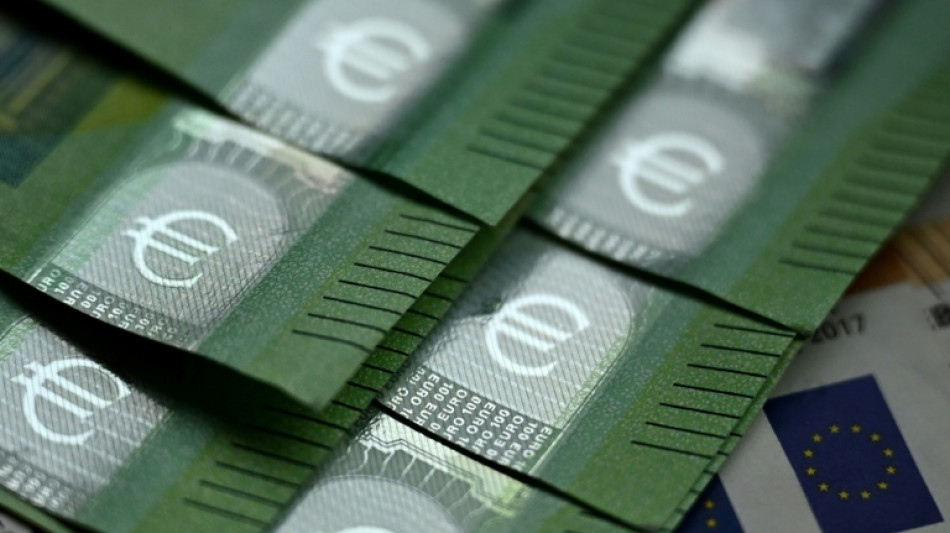
Macron wants more EU joint borrowing: Could it happen? / Photo: © AFP/File

 Wikipedia won't let AI edit articles, cofounder says

 Uncapped Coles named in England's T20 squad to face India

 Andy Burnham: 'King of the North' eyes Downing Street throne
 Dangerous 'heat stress' has surged worldwide, study shows
 Interstellar comet likely far older than Solar System: astronomers
 Man Utd secure land for proposed new 100,000-capacity stadium

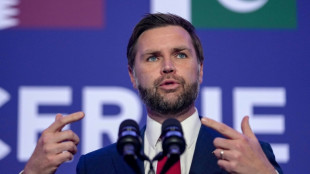 US suspends Iran oil sanctions, says nuclear inspectors to return

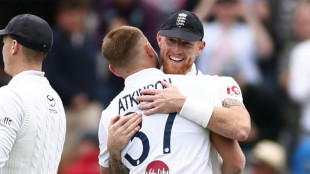 Stokes and Atkinson cleared by Cricket Regulator after nightclub incident

 Veteran Le Roy named new coach of Congo

 Germany's Schlotterbeck out of World Cup with ankle injury
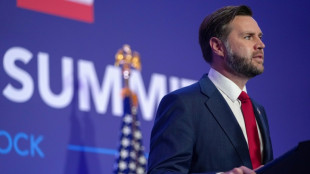
 Vance hails 'good foundation' for Iran deal after direct talks
 Leinster boss Cullen to step down at end of next season
 Oil falls on US-Iran progress; pound holds up as Starmer resigns
 France, Germany reach deal on arms maker KNDS, paving way for IPO

 France set for hottest day yet of heatwave
 Gaza's surfers seek solace in the sea

 EasyJet rejects £5 bn takeover offer from US equity firm

 Mediators hail 'progress' in US-Iran talks after lengthy opening session
 Coffee break: Starbucks Korea stores pause for training after 'Tank Day' fiasco

 Rare Philippine school shooting kills three teens, wounds seven

 Crude prices drop after 'positive' US-Iran talks

 Tuchel's England face defensive questions despite flying start at World Cup

 Not just a hideout: Sahel forests provide base for jihadists

 Africa faces child surgery crisis as key anaesthesia runs out

 J-Bay: S.Africa's surf mecca missing out on the global tour
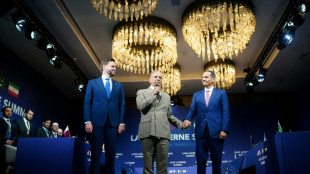
French President Emmanuel Macron has revived the idea of joint EU borrowing that has long been divisive in the European Union, although the bloc has shifted its position on the issue to head off several crises.
The EU has turned to common loans several times: to finance the post-Covid recovery, rearmament and aid to war-torn Ukraine.
But Macron repeated his long-standing call for more joint debt in an interview with several European newspapers released on Tuesday.
- From eurobonds to EU debt -
"Now is the time to launch a common borrowing capacity for these future expenditures, future-oriented eurobonds," the French president said, using a term that was once considered taboo in Europe because of the opposition of so-called frugal states like Germany and the Netherlands.
He has repeatedly made the appeal, saying it is a necessary move for Europe if it wants to invest more and ramp up its competitivity.
Eurobonds refer to common bonds issued by EU states, while joint borrowing is the catch-all term for debt issued with liability shared by governments.
Eurobonds have come up when Europe has faced major challenges.
They were proposed in 2010 during the eurozone crisis but were rejected at the time because they involved pooling national debts, which was categorically rejected by EU states with stronger finances.
Then it resurfaced in 2020 through "coronabonds" to finance the European economy devastated by the coronavirus pandemic.
This was again rejected for the same reason but in July 2020, EU states agreed to jointly borrow hundreds of billions of euros backed by the European Union budget rather than being the responsibility of individual member states.
- A solution used more and more -
Rather than eurobonds, joint debt is "becoming more and more standardised" especially since the loans to finance the coronavirus pandemic recovery, Nicolas Veron, co-founder of the Brussels-based Bruegel think tank, told AFP.
The EU had an 800-billion-euro ($960 billion) recovery fund to support states' economies hit hard, and help their green and digital transitions.
Europeans also resorted to EU borrowing last year for the SAFE (Security Action for Europe) scheme to provide EU countries with 150 billion euros of loans at lower rates to help them rearm.
And late last year, EU states agreed to provide a 90-billion-euro "reparations loan" to Ukraine through the issuance of bonds and the bloc will also pay the interest on the loan.
Veron said so far the EU has used the European budget and in particular unspent sums to provide guarantees that the debt will be repaid.
- Less division -
EU states' positions have changed and "become more fluid", Veron said.
France has seen its public finances substantially deteriorate, Germany is going on a bumper borrowing spree while countries previously on the brink of bankruptcy like Greece have spectacularly restored their finances.
But the European economy is lagging behind China and the United States, and EU leaders want to beef up the bloc's competitivity, and catch up with rivals in the fields of artificial intelligence, energy and defence.
And for this it needs extra investment of up to 800 billion euros a year, according to former European Central Bank chief Mario Draghi in his 2024 report on the EU economy that is guiding leaders on what steps to take.
"This doesn't mean there is consensus on common borrowing that Macron calls for, but the situation today is very open," Veron said.
But true to form, Germany slapped down Macron's suggestion.
"It is unacceptable to demand more money without implementing reforms" because "European debt is not free either", a German government source told AFP.
A.Ammann--VB