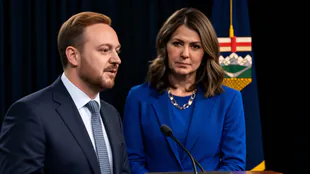
Uncertainty grows over when US budget showdown will end / Photo: © AFP

 Hong Kong court set to sentence activist Joshua Wong in security case

 Australia raises benchmark rate to highest level in 18 years

 'The Remarried Empress' Cast Discusses Bringing Fantasy Royal Drama to Life

 Asian stocks retreat as AI worries outweigh steep oil-price drop

 Hamad International Airport stages emergency drills during WATAN 2026

 Global failure to punish attacks leaves journalists at continuing risk

 Researchers Warn 'Bookkeeping Trick' Masks Beef Industry's Methane Emissions

 Climate Change Intensified Atlantic Hurricanes, Study Finds

 Qatar solar expansion opens scope for technical performance gains

A partial US government shutdown entered its third day on Monday amid growing uncertainty over Congress finding a path to quickly bring the 2026 budget deadlock to an end.
Despite the apparent impasse, Mike Johnson, speaker of the Republican-controlled House of Representatives, is expressing optimism that an agreement is imminent.
"We'll get all this done by Tuesday; I'm convinced," Johnson said on Fox News Sunday.
He described a vote to be held in the House on Tuesday that would approve a Senate-backed deal to reopen the government as little more than a "formality."
The speaker has a razor-thin majority in the House, however, and cannot afford to lose more than one vote on the Republican side. His margin was reduced even further on Monday with the arrival of a Democrat who won a special election in Texas.
The funding lapse followed a breakdown in negotiations driven by Democratic anger over the killing of two protesters in Minneapolis by federal immigration agents, which derailed talks over new money for the Department of Homeland Security (DHS).
Late Friday, the Senate passed a package clearing five outstanding funding bills to cover most federal agencies through September, along with a two-week stopgap measure to keep DHS operating while lawmakers negotiate immigration enforcement policy.
Several members of the extreme right-wing of the Republican Party are refusing to reopen negotiations on DHS funding, however, and are threatening to vote against the Senate-backed package on Tuesday.
"Democrats are now playing politics," Chip Roy, a Republican lawmaker from Texas, told Fox News Sunday, accusing them of taking DHS funding "hostage."
- 'Good faith' -
Republican defections could force Johnson to rely on Democratic votes to advance the funding bill and end the shutdown.
"I will say that we need good faith on both sides," he said Sunday.
If the House approves the Senate deal, lawmakers would then have just two weeks to negotiate a full-year DHS funding bill.
Both parties acknowledge these talks will be politically fraught, as Democrats are demanding new guardrails on immigration enforcement and conservatives are pushing their own policy priorities.
"We need a robust path toward dramatic reform," Democratic House minority leader Hakeem Jeffries told ABC News on Sunday.
Democrats in the House want changes to the way DHS conducts its immigration sweeps -- with heavily armed, masked and unidentified agents who sometimes detain people without warrants -- before voting on the spending package.
President Donald Trump has publicly endorsed the Senate deal and urged both parties to support it, signaling his desire to avoid a second lengthy shutdown in his second term, following a record 43-day stoppage last summer.
Shutdowns temporarily freeze funding for non-essential federal operations, forcing agencies to halt services, place workers on unpaid leave or require them to work without pay.
P.Staeheli--VB