
-
 Germany eyes longer working lives in pension reform plan
-
UK and markets await Burnham's economic plans
-
 Iran says won't allow UN inspectors at bombed nuclear sites
-
Heineken names new CEO after predecessor's shock departure

-
 Banned Vondrousova insists she has 'never doped'
-
Schools plan to close as UK braces for record-breaking heatwave

-
 UN chief urges AI firms to 'come clean' over environmental footprint
-
India startup head Kunal Shah appointed as new WhatsApp boss

-
 More records set to fall as deadly Europe heatwave drags on
-
Israel's 'deliberate targeting' of children part of ongoing Gaza 'genocide': UN probe
-
 England, Ghana eye last 32 as Portugal look for lift-off
-
Seoul's Kospi stock index tanks 10% to lead tech-fuelled Asia rout
-
 Sri Lanka troops to battle deadly dengue mosquitoes as cases rise
-
Iran says to oversee Hormuz as Swiss talks conclude
-
 Diaspora World Cup champions diversity over division
-
Guns, drones and doves: War reshapes Ukrainian jewellery scene

-
 Australia withholds Pacific climate fund reports over risk of diplomatic 'damage'
-
Kenya police violence victims say compensation promise a 'smokescreen'
-
 Indian startup head appointed as new WhatsApp boss
-
EU bets on digital euro to cut US tech addiction

-
 Antetokounmpo joining Miami Heat in blockbuster: reports
-
Fineanganofo rethinks Newcastle move after All Blacks call-up

-
 'Let's be realistic': Haaland cools Norway's World Cup expectations
-
Stocks fluctuate after Wall St sell-off, crude holds losses on peace talks
-
 Lightning, downpour, a two-hour delay: bad weather hits the World Cup
-
Ultra-reclusive Turkmenistan slowly opens up to tourists
-
 Two-goal Haaland fires Norway into World Cup last 32
-
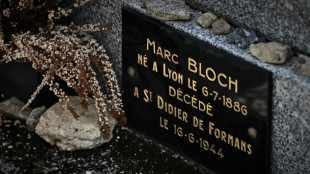
Marc Bloch, historian and Resistance hero, joins France's Pantheon greats
-
 Last one the best one? How Messi keeps doing it at World Cup
-
Ronaldo 'a role model' says Portugal coach after slow World Cup start
-
 Savea 'embraces challenge' of leading All Blacks towards World Cup
-
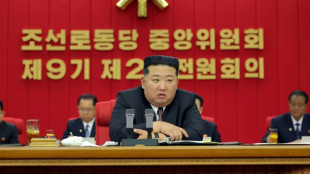
North Korea's Kim vows to accelerate military buildup
-
 Savea 'embraces challlenge' of leading All Blacks towards World Cup
-
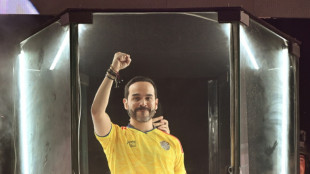
Latin America's resurgent right notches another win in Colombia
-
 Mbappe scores twice as France beat Iraq at World Cup after two-hour storm delay
-
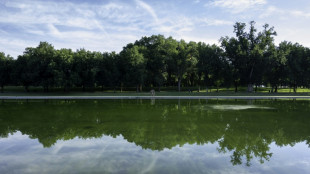
Trump threatens prison for damage to Washington Reflecting Pool
-
 France-Iraq World Cup game restarts after two-hour storm delay
-
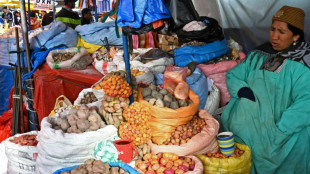
Shortages ease in Bolivia as protest roadblocks dismantled
-
 World Cup exploits of Maradona and Messi have Argentina fans in raptures
-
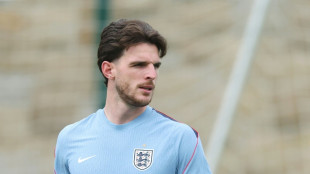
England 'can beat any opponent' at World Cup, says Rice
-
 'Boston Tea Party' compensation claim to be displayed at UK exhibit
-
Alvarez says 'best for everyone' if he leaves Atletico

-
 France-Iraq World Cup game suspended due to severe weather alert
-
Romanian parliament rejects liberal PM-designate
-
 US temporarily suspends Iran oil sanctions, says nuclear inspectors to return
-
Maduro ouster put Venezuela on 'the right path': interim leader

-
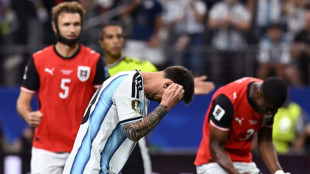 Missed penalty spurred 'very angry' Messi to World Cup history
-
Shooting in Montreal, Canada leaves three dead including suspect

-
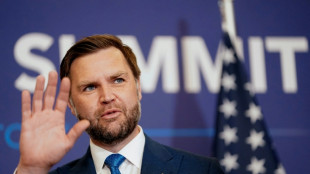 Oil falls as US waives Iranian sanctions and Nasdaq tumbles
-
Balogun chases 'inevitable' Messi in wild Golden Boot race

Tough-talking right-winger elected Costa Rica president
Right-wing political scientist Laura Fernandez won Costa Rica's presidential election on Sunday by a landslide, after promising to crack down hard on rising violence linked to the cocaine trade.
Fernandez's nearest rival, center-right economist Alvaro Ramos, conceded defeat as results showed the ruling party far exceeding the threshold of 40 percent needed to avoid a run-off.
With 81.24 percent of polling stations counted, the political heir of outgoing President Rodrigo Chaves had 48.94 percent of the vote compared to 33.02 percent for Ramos.
As soon as the first results were announced, members of Fernandez's Sovereign People's party erupted in celebrations around the country, waving blue, red and white-striped Costa Rican flags.
"Viva Rodrigo Chaves," some cheered, in a nod to Fernandez's mentor.
Appearing via video link at her party's official election night party in the capital San Jose, Fernandez, 39, thanked Chaves for giving her "the confidence to be president-elect of Costa Rica" and told him that his legacy was in good hands.
She added that she would "fight tirelessly" to ensure Costa Rica "continues on the path of economic growth, freedom, and above all, the progress of our people."
The country of 5.2 million people, famous for its white-sand beaches, has long been seen as an oasis of stability and democracy in Central America,
But in recent years, it has gone from transit point to logistics hub in the global drug trade.
Drug trafficking by Mexican and Colombian cartels have seeped into local communities, fuelling turf wars that have caused the murder rate to jump 50 percent in the past six years, to 17 per 100,000 inhabitants.
Fernandez cites iron-fisted Salvadoran President Nayib Bukele, who has locked up thousands of suspected gang members without charge, as an inspiration on how to tamp down crime.
Bukele was the first foreign leader to congratulate her.
Fernandez's win confirms a rightward lurch in Latin America, where conservatives have ridden anger with corruption and/or crime to win power in Chile, Bolivia, Argentina and Honduras.
- Attacks on the judiciary -
Chaves plucked Fernandez from relative anonymity to serve as planning minister and chief of staff.
In a conversation with her on Sunday night Chaves said he was confident that under her leadership "there will be neither dictatorship, nor communism."
Chaves presided over a sharp rise in violence but avoided blame by pointing the finger at the judiciary, saying it was too soft on crime.
Jessica Salgado, 27, said she voted for Fernandez as the continuity candidate, because she felt the government was on the right track, even if violence had increased.
"The violence exploded because they (the government) are going after the ringleaders, it's like dragging rats out of the sewer," Salgado told AFP.
Costa Ricans also voted for members of the 57-seat Legislative Assembly on Sunday.
Partial results showed Fernandez's party winning around 39 percent of the vote.
Her detractors fear she will try to change the constitution to allow Chaves to return as president after her four-year mandate ends.
Under the current constitution, he is barred from seeking re-election until he has been out of power for eight years.
Former president Oscar Arias, winner of the 1978 Nobel Peace Prize, warned on Sunday that the "survival of democracy" was at stake.
"The first thing dictators want to do is to reform the Constitution to stay in power," he said, alluding to Chaves.
Fernandez insists that she is committed to upholding Costa Rica's democratic tradition.
- Cocaine smuggling hub -
The drug trade has sucked in the high-density "precarios" (informal settlements) of cities such as the capital San Jose, where shootouts between rival drug gangs are increasingly frequent.
Fernandez has vowed to complete construction of a maximum-security prison modelled on Bukele's brutal Terrorism Confinement Center (CECOT).
She has also promised to stiffen prison sentences and to impose a Bukele-style state of emergency in areas worst hit by crime.
Bukele is a hero for many in Latin America, credited with restoring security to a nation traumatized by crime.
R.Flueckiger--VB