A year of Trump: US health policy reshaped in RFK Jr's image / Photo: © AFP

 Zimbabwe Senate approves bill to extend presidential term
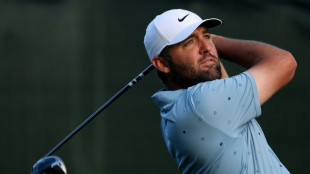
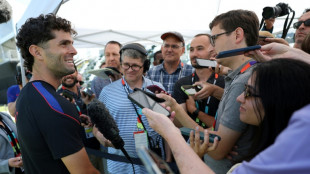 Pulisic fitness boost as US seek knockout momentum against Turkey
 Hantavirus outbreak should formally end on July 2: WHO

 Hong Kong arrests two for allegedly selling 'seditious' material
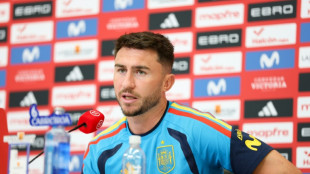
 US promises to protect Gulf states' interests in Iran talks
 Trials of two Ebola treatments to start in DRC next week: WHO
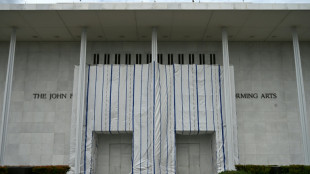 Judge asks why Kennedy Center covering facade after Trump's name removed
 Germany sinks troubled warship project in blow to naval ambitions

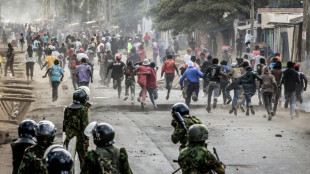 US health deals cause trouble for Kenya govt
 Socialism with a twist or crony capitalism? Cuban reforms spark debate
 'Inhumane': Gaza flotilla activists recount Israeli detention ordeal

 Spurs sign Dubravka as goalkeeper cover
 Stocks steady after tech rout, Brent falls below $75
 England captain Stokes 'man enough' to apologise for curfew breach
 England captain Stokes 'man enough' to apologise after curfew breach

 German naval ambitions suffer setback as warship order axed
 London police to extend use of live facial recognition, drones
 Europe swelters under record-breaking heatwave
 Iran says deal to end Mideast war 'declaration of US defeat'

 S.Korea chip giant SK hynix seeks $29 bn in Nasdaq listing: regulatory filing

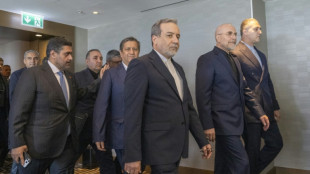 'Pragmatists' vs 'hardliners': Is Iran split over US deal?
 H5 bird flu detected in second Australia state
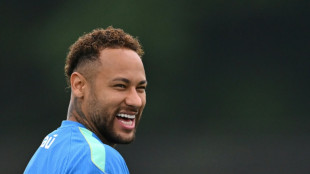 Brazil aim for last 32 as World Cup goes into hectic phase

 Necessity drives gold miners in DR Congo's Ebola epicentre
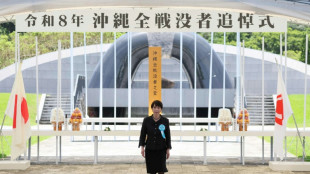 Japan PM heckled at WWII memorial

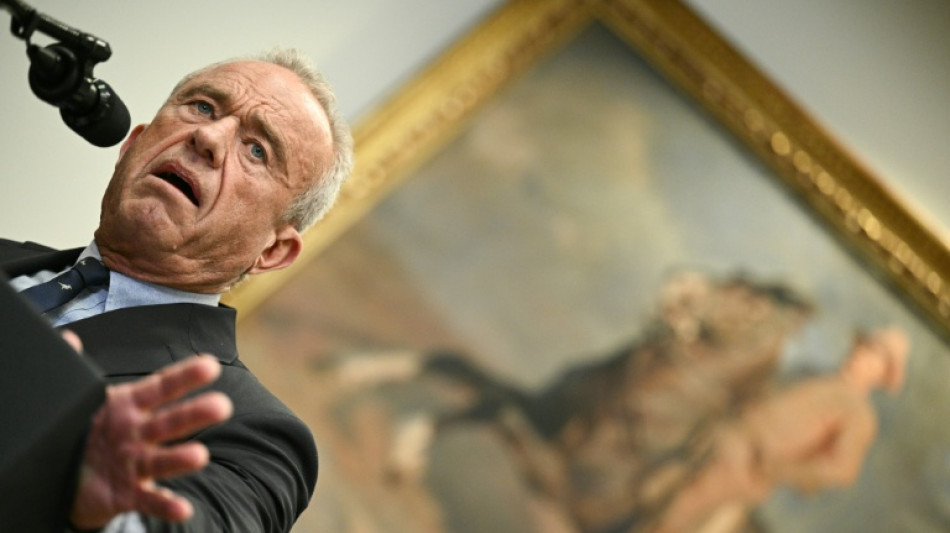
Robert F. Kennedy Jr has long been known for vaccine skepticism and fringe views that bled into conspiracy -- ideology he is now baking into the US public health system.
In only a year since Donald Trump returned to the White House, experts say his health secretary's reforms have stoked confusion over longstanding medical advice and diminished the global standing of US institutions, with potential ripple effects for decades.
"The impact is real. The impact is certainly being seen across the board. And I think the scariest part is, we're only in the first year," epidemiologist Syra Madad told AFP.
Former Democrat Kennedy -- who allied with Trump after his own 2024 presidential campaign sputtered -- has mostly won praise from his "Make America Healthy Again" (MAHA) movement.
But he has sparked outrage among medical groups, and some Republicans, with moves that have sown doubt about long-proven vaccine safety, slashed research funding, and weakened disease prevention programs, even as the US experiences its worst measles outbreak in years.
Kennedy stacked a key immunization advisory panel with figures whose anti-vaccine sentiment mirrors his own, and overhauled the pediatric schedule of shots to recommend fewer.
"I've never seen anything like this," said Lawrence Gostin, a Georgetown professor who has worked in public health law and policy for decades.
Kennedy governs "through hunch, instinct and social media, not through science," Gostin told AFP.
At a recent event celebrating the rollout of new federal dietary guidelines, Kennedy told a crowd of supporters that "trusting the experts is not a feature of science" but rather "a feature of tyranny."
"People in authority lie," the government official continued, adding that people must act as "the CEOs of our own health."
The sentiment is part of a broad effort to not only sow distrust but to prioritize "individual choice" over "population protection," said Madad, who is the biopreparedness officer for New York's municipal health and hospitals network.
- 'Dysfunctional' -
MAHA adherents have broadly praised Kennedy's initial efforts.
And some public health advocates have found cautious optimism in a limited number of federal health priorities, even if they criticized the methods.
Trump and Kennedy have sought to strike deals with pharma companies, urging them to voluntarily lower common drug prices along with appetite-suppressing medications.
And in a rare alignment with mainstream scientific consensus, the administration vowed to remove synthetic dyes from food -- primarily through voluntary compliance from industry.
But Scott Faber of the Environmental Working Group said he doesn't see such strategies panning out.
"There's a graveyard of voluntary industry initiatives that shows that handshake agreements and industry commitments are no better than the paper they're written on," Faber told AFP.
In the case of food coloring, Faber said those agreements were made possible because the Republican-leaning West Virginia in 2025 enacted a broad ban on synthetic dyes, setting a new standard.
Many nutritionists also met with enthusiasm new dietary guidelines that strongly discouraged added sugars and highly processed foods -- though an endorsement of red meat and full-fat dairy along with vague advice on limiting alcohol triggered worry.
Nutritionist Marion Nestle told AFP that within the wider political context, such advice carries less weight.
"Eating real food is not going to make America healthy again in the face of a public health system that is completely dysfunctional," she told AFP.
- 'Generational trauma' -
Americans, especially parents, have been left with conflicting information and confusion.
Pew Research Center polling showed 63 percent of Americans still have high confidence that childhood vaccines are effective at preventing severe illness. But it found uncertainty over safety testing, especially among Republicans.
Rebuilding confidence in medical institutions could be difficult, Madad said.
"This is going to be generational trauma."
Gostin said the United States has gone from a global leader in scientific innovation to a "laughingstock."
"It's impossible to overstate how much our reputation is dropped."
Researchers, he said, are leaving the government, the country or even the field -- potentially creating major gaps in the development pipeline for treatments of deadly diseases.
"There's every reason to have deep concerns about the future," Gostin said.
L.Maurer--VB