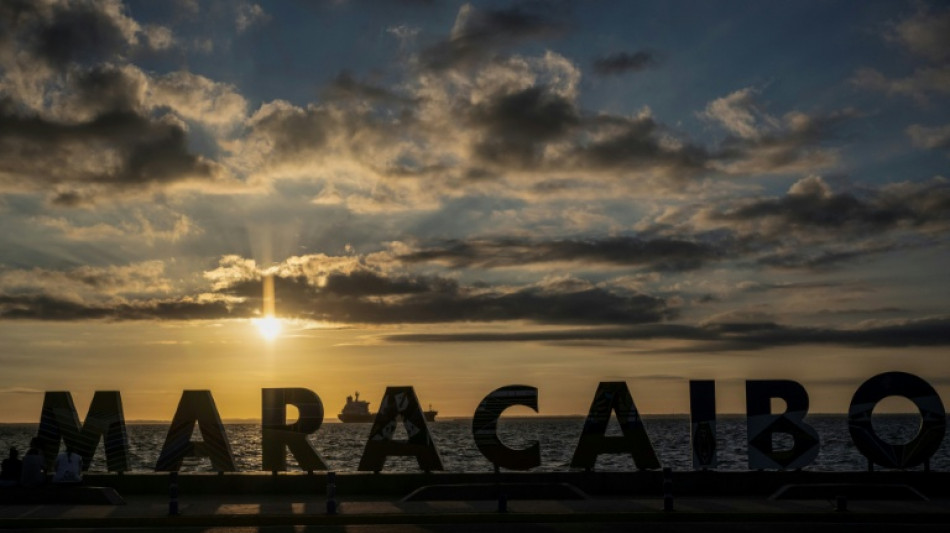
Confusion reigns over Venezuela's oil industry as US looms / Photo: © AFP

 Violence feared as Kenya marks protest anniversary
 Ukraine recovery summit opens, overshadowed by Kyiv-Warsaw row
 Chad sees influx of drone victims from Sudan

 'We shut up big mouths,' says South Africa's World Cup coach Broos

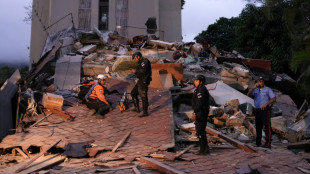
 Mothers search, men weep amid debris of Venezuela quakes

 South Africa stun South Korea to make World Cup history
 Clarke fears Scotland 'probably going home' after Brazil World Cup loss

 Secret cameras, mics and AI reveal rare Cambodia wildlife

 Bulgaria's milk farmers falter in former yogurt empire

 Trump opens US 250th birthday party with rally-style speech

 TotalEnergies awaits ruling in high-stakes climate trial
 Spice Girls' debut 'Wannabe' turns 30, amid reunion talk

 Nagelsmann feels Germany 'punished' for topping World Cup group

 Bosnia beat Qatar to reach World Cup knockout stages for first time
 Brazil advance at World Cup as Swiss, Canada reach last 32

 Morocco overcome historic Haiti goals to maintain World Cup momentum
 ICC judges sue Trump over 'draconian' sanctions

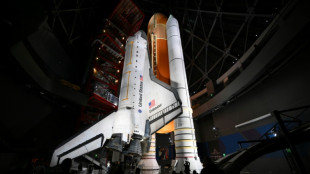 Space shuttle ready for new mission in California

 Tunisia coach Renard demands pride in final World Cup outing
 Switzerland, Canada advance as Brazil eye last 32

 Bosnia in strong position to reach last 32, Qatar out of World Cup

 Brent falls below $75 as Nasdaq drops for 3rd straight day
 Korda chases 3rd straight major at Women's PGA Championship
 Zimbabwe Senate approves bill to extend presidential term

 Pulisic fitness boost as US seek knockout momentum against Turkey

Between US demands for its crude, tankers threatened with seizure, storage tanks at overflow risk and bewildered local authorities, the outlook for Venezuela's oil industry has never been murkier.
In the country's key oil port at Maracaibo, on the northwestern border with Colombia, few tankers are waiting to either load or venture out into the Caribbean -- where American ships including the USS Gerald Ford, the world's biggest aircraft carrier, are waiting.
"They have oil that is stuck in Venezuela; they can't move it because of our quarantine and because it's sanctioned," US Secretary of State Marco Rubio said Wednesday.
"We are going to take between 30 and 50 million barrels of oil," he added. "We're going to sell it in the marketplace -- at market rates, not at the discounts Venezuela was getting."
What that means for Venezuela's oil prospects is anyone's guess, not least in the volatile political landscape after president Nicolas Maduro's seizure by US forces on narco-trafficking allegations.
But Washington is definitely banking on long-term control, according to Energy Secretary Chris Wright.
"We're going to market the crude coming out of Venezuela, first this backed-up stored oil, and then indefinitely," Wright said Wednesday.
- Tankers trapped? -
State-owned Petroleos de Venezuela (PDVSA) acknowledged Wednesday that it had entered "negotiations" to sell oil to the United States, on what it said would be the same terms as for other foreign customers.
"The process... is based on strictly commercial transactions under terms that are legal, transparent and beneficial for both parties," it said.
But the statement came as US forces seized two more tankers, after previously seizing two others after Maduro's capture.
Most shipping firms are holding back, either waiting at Maracaibo or avoiding it, even as a few tankers try to get past the US cordon.
Since Trump imposed a full oil embargo in 2019, Venezuela has relied largely on a "shadow fleet" to sell mainly to China, Russia and Iran, a prospect highly uncertain after the US incursion.
One tanker anchored in the Maracaibo bay on Wednesday, the Nord Star, is owned by Corniola and operated by Krape Myrtle, both based in Hong Kong and targeted by US sanctions.
"The shadow fleet is still operating, it's risky but it's getting out," one industry source based in Maracaibo told AFP.
- Uncertain potential -
But with most tankers blocked, storage tanks at Maracaibo are nearly filled to the brim, threatening devastating overflows even as derricks keep pumping to the south and east of the port's massive inland lake.
One operator, requesting anonymity, said local authorities "are ordering partner firms to cut output while waiting for tankers that will take the oil".
The partner firms, known as "co-enterprises", were created under former strongman leader Hugo Chavez to join forces with energy groups from China, Russia, Belarus and other allies.
Venezuela produces around one million barrels per day, above the 350,000 barrels immediately after Trump imposed a full oil embargo in 2019, though that was eased in 2023 after Russia's invasion of Ukraine.
But it remains far below potential for a country with the world's largest known oil reserves, and exploration suggests further huge fields could yet be found.
Caracas used to pump 3.5 million barrels daily but creaking infrastructure and scant investment make a return to that level unlikely in the short term -- unless Trump makes good on his pledge to get US energy groups back into the country soon.
Experts said it is likely that Trump will call and end to the US sanctions and embargo once his goals are met.
For David Smilde, a Latin America specialist at Tulane University in Louisiana, Venezuela has always wanted to sell oil to the US at market value, instead of "sanctioned oil at a big discount using ghost tankers".
In that sense, US companies coming into Venezuela would be "actually quite desirable", he said.
But if the the United States "really takes this oil and then does what it wants and maybe uses it to pay itself for the cost of an ongoing military operation, and none of it goes back to Venezuela ... that could cause a problem", he said.
D.Bachmann--VB