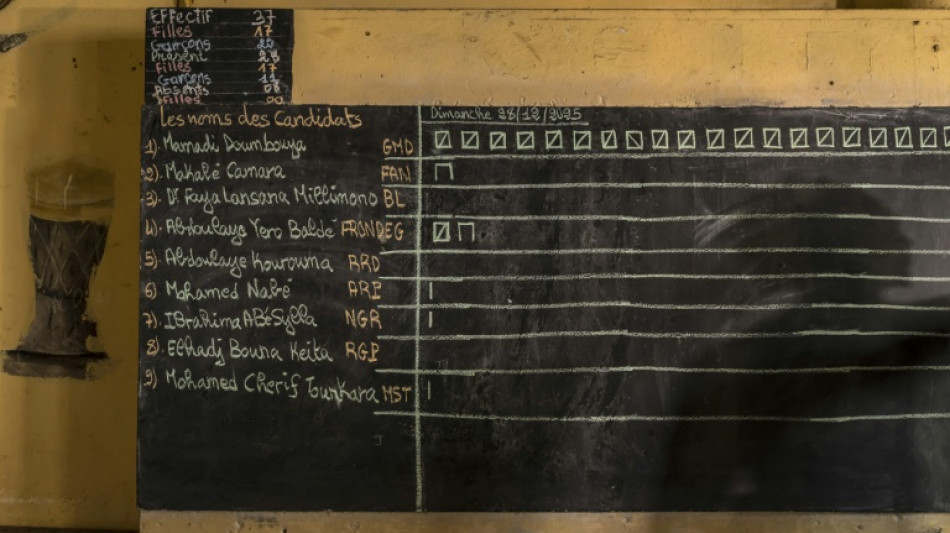
Guinea junta chief headed for victory in presidential vote / Photo: © AFP

 US says wants deal with Iran, but not 'at any price'
 US Supreme Court hands win to Bayer in weedkiller litigation
 Apple raises prices for MacBooks and iPads, as costs soar over AI
 UK suffers as heat breaks new June record
 Binance to suspend crypto services in several EU countries
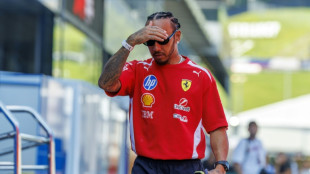 Hamilton reveals neck injury that hampered debut year with Ferrari
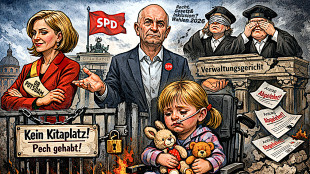 Noosha Aubel and Dietmar Woidke: How Potsdam Is Letting Down a Young Child with Profound Disabilities
 Greek families receive keepsakes of Holocaust victims
 Easyjet rejects latest takeover bid but leaves door ajar
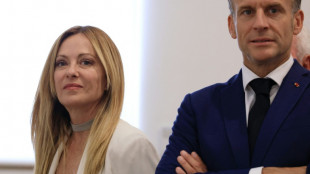 Macron hosts Meloni for Riviera talks after Trump rift
 US Supreme Court paves way for mass deportation of Haitians, Syrians
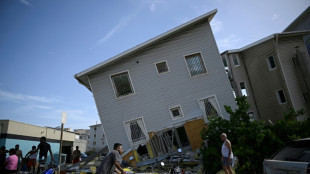
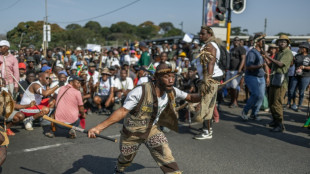 South Africa vows firm response to anti-migrant violence
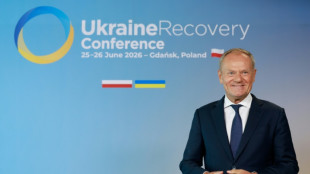 Poland, Ukraine hold key Gdansk conference without Zelensky

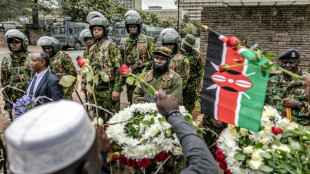 Massive police deployment blocks Kenya protest anniversary
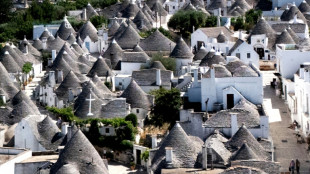
 Court orders TotalEnergies to account for clients' emissions
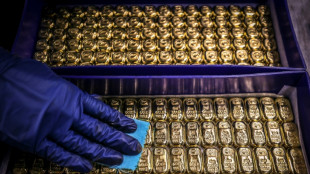 Stocks rally on renewed AI optimism, oil price declines
 Venezuela twin quakes kill at least 164 with many trapped under rubble
 IOC votes to continue ski mountaineering for 2030 Games
 Stocks rally on AI optimism after Micron's blowout forecast
 Tunisia's short-lived World Cup experience lays bare deep dysfunctions
 'Everything collapsed': Venezuela region hit hardest by quakes cries for help
 Kenya police turn out in force on protest anniversary
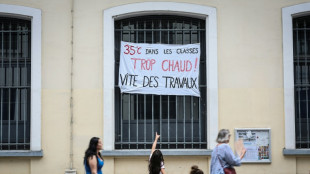
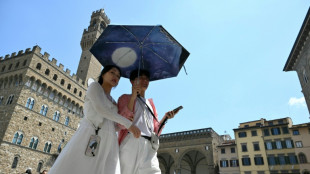 Baking heatwave gives Europe no respite

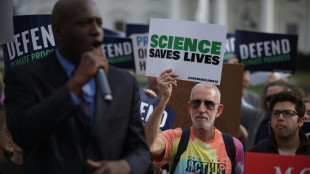 Trump climate pushback spurs courtroom battles, report says

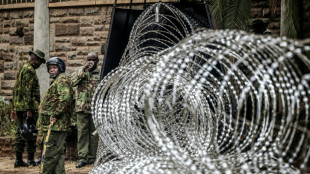 Kenya police in massive show of force on protest anniversary
Guineans voted in a presidential election Sunday with Mamady Doumbouya, a general who led the junta that seized power four years ago, the clear favourite, and the main opposition leaders barred from standing.
As the polling stations began to close from 1800 GMT, officials began counting the votes.
By running, the strongman reneged on a pledge not to stand for office and to hand the west African country back to civilian rule by the end of 2024.
Since seizing power in 2021, Doumbouya has cracked down on civil liberties, and protests have been banned while opponents have been arrested, put on trial or driven into exile.
Some 6.8 million people were eligible to choose between the nine approved candidates. Doumbouya, 41, is running as an independent.
Earlier, escorted by dozens of special forces personnel, the junta chief voted with his wife in a central district of the capital Conakry.
Dressed in a boubou and white cap, Doumbouya -- who did not hold any rallies during the campaign -- greeted supporters but made no statement.
AFP journalists saw a large security presence, including armoured vehicles, patrolling the capital's streets.
Security forces said they had "neutralised" members of an armed group with "subversive intentions threatening national security" on Saturday in the Conakry suburbs.
"I am here to fulfil a civic duty," Colle Camara, a 45-year-old teacher, told AFP, as he cast his ballot in what he hoped would be a "peaceful" election.
Doumbouya looked set to win in the first round of voting, against eight relatively unknown remaining rivals. Provisional results are expected within two days.
- Calm -
The opposition called for a boycott of the vote, in a country rich in minerals but where 52 percent of the population lives in poverty, according to World Bank figures.
Turnout in Conakry was steady at the polling stations visited by AFP journalists, but less than for a constitutional referendum in September.
"What's the point of getting worked up about going to vote when the outcome is already known in advance?" a voter in a suburb told AFP on condition of anonymity.
UN human rights chief Volker Turk said Friday the campaign had been "marked by intimidation of opposition actors, apparently politically-motivated enforced disappearances, and constraints on media freedom".
Foreign observers contacted by AFP said turnout was also down in other towns such as Labe in the north, Kankan in the east and southern N'Zerekore.
Guinea's electoral authority put overall voter participation at a provisional 85 percent shortly after voting ended.
"Voting began calmly, with no incidents or violence reported," observers from the West Africa Network for Peacebuilding (WANEP) said in a statement published around midday.
The vote, which fell on the same day as elections in the Central African Republic, caps a busy electoral year in Africa -- marked by authoritarianism and oppression, as well as wins for several longstanding leaders, including in Cameroon and Ivory Coast where the main rivals were also barred.
- 'Electoral charade' -
Guinea experienced a rare democratic transition with the 2010 election of Alpha Conde, its first freely elected president.
Doumbouya overthrew him in September 2021.
Guinea's new constitution allowed junta members including Doumbouya to stand for election and lengthened presidential terms from five to seven years, renewable once.
Unlike its neighbour Mali and nearby Burkina Faso and Niger, all of which are also under military rule, Guinea has maintained good relations with former colonial master France and other international partners.
Opposition leader and former prime minister Cellou Dalein Diallo has condemned the vote as "an electoral charade" aimed at giving legitimacy to "the planned confiscation of power".
He is one of three opposition leaders barred from standing in the vote by the new constitution.
Diallo was excluded because he lives in exile and his primary residence is not in Guinea. Former president Conde and ex-prime minister Sidya Toure, who also live in exile, are over the maximim age limit of 80.
In a social media video, Doumbouya touted his infrastructure achievements, promised to fight corruption and expressed his ambition to "make Guinea an emerging country".
D.Bachmann--VB