N.Macedonia weathers bruising path to uncertain EU future / Photo: © AFP

 ZXMoto leads China's charge to dominate the global motorbike market
 Top-ranked Sabalenka, Pegula stunned in Toronto fourth round
 Japan nuclear debate unnerves proponents of pacifism
 Spanish teen Jodar ousts eighth seed Lehecka at Montreal
 Angers mounts in US over vast network of car license plate cams
 Darderi to face Nakashima in Montreal quarter-finals
 Espresso power fires Darderi past Borges in Montreal

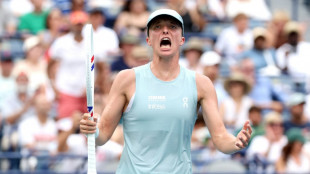 Shnaider upsets Pegula to book Toronto quarter-final with Swiatek
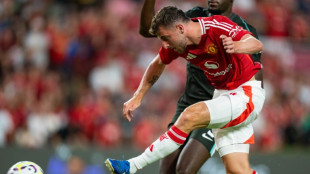
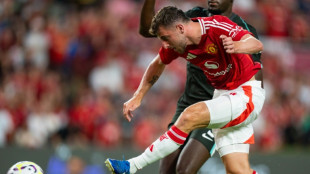 Mount injury overshadows Man Utd draw with Paris Saint-Germain

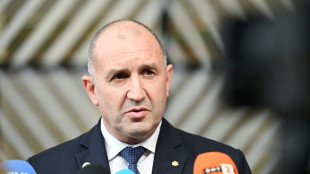 Ukraine denies targeting Bulgaria as drone explodes near pipeline
 Vollering grabs Tour de France lead in Nice
 Euros to showcase new TV guidelines on non-sexualisation of women athletes
 'Calm' Kiss savours first win as Wallabies boss
 Duplantis bids for fourth European title as stars align in Birmingham
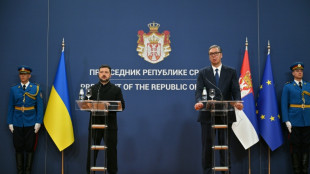 Ukraine warns of tough winter as Russia strikes kill 4 in Kyiv region
 Recovering Marchand to skip medleys at European swim champs
 MotoGP leader Martin speeds to British Grand Prix pole

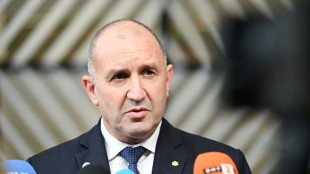 Drone enters Bulgaria, explodes near pipeline at Romanian border: Bulgarian PM
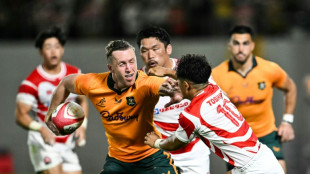
 Arsenal sign Brazil midfielder Guimaraes from Newcastle
 Atletico will not sell Alvarez, says Simeone

 Ford Fathom turns affordable electric pickup into reality

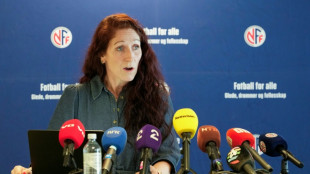 Lise Klaveness, the Norwegian thorn in Infantino's side

 Europe’s electric car boom exposes a widening market divide

 US Senate confirms Trump's ex lawyer as attorney general
 Tibet conference in Nepal pushed online
After years of setbacks, letdowns, and the change of its name, North Macedonia on Tuesday opened European Union membership talks even as unrest grows at home with a nationalist movement threatening to upend the process.
Over the weekend, the country's government announced it had reached a compromise with Bulgaria in a long-running dispute that had served as an effective roadblock to the onset of talks for EU membership.
On Tuesday, officials from North Macedonia take the first symbolic step in Brussels to kickstart the accession process with European Commission President Ursula von der Leyen announcing the launch of talks.
The 17-year journey has been bruising, sapping many in the country of any enthusiasm for joining the bloc, according to North Macedonia's President Stevo Pendarovski.
The president was among a chorus of political leaders who backed the recent French-mediated deal that paved the way for ending the deadlock with Bulgaria over historic grievances, which calls for constitutional changes among other measures.
The agreement was the latest in a long line of bureaucratic hurdles and political compromises for North Macedonia since it became a formal candidate to join the EU in 2005.
"From the standpoint of the procedure and the way that many in Europe -- especially Bulgaria in the past two years -- are treating us, it's a clear humiliation," Pendarovski told AFP during a recent interview in the capital Skopje.
- 'Soft spot' -
And even as Pendarovski lent his support to the agreement accepted over the weekend, he admitted that patience with the EU was wearing thin in his country and more widely in the Balkans.
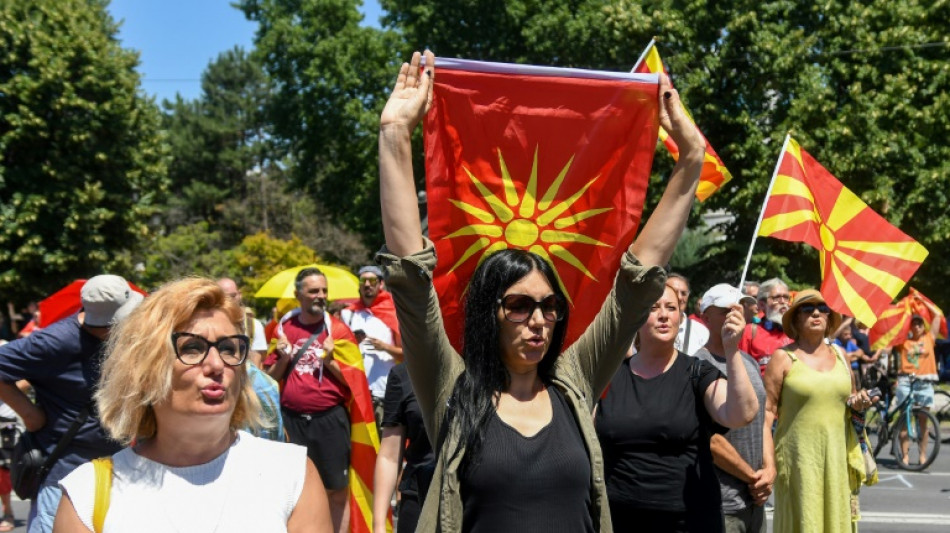
Protests have been growing in recent weeks in North Macedonia, with the country's opposition rallying thousands to fight back against any new compromises with Bulgaria and the EU.
"Throughout the Western Balkan nations, Euro enthusiasm is dropping very sharply," said Pendarovski.
"Speaking precisely about North Macedonia, in the past 18 months we have seen a drop of 25 percent."
But abandoning a European future would leave countries like North Macedonia, with its population of just 1.8 million, particularly vulnerable to geopolitical headwinds in an increasingly polarised world, Pendarovski argued.
If North Macedonia and other Balkan countries remain outside the EU, then the region will be a "soft spot" vulnerable to penetration by "malign powers", including Russia, said Pendarovski.
But the longer they wait to join the bloc, the more anti-European voices gain traction and fan the flames of unrest in places like North Macedonia.
"I am afraid that maybe some populist movements will come to power and some anti-European leaders will take power in Skopje and that's certainly not going to be good for the pan-European idea," said the president.
- A new deal -
Since declaring independence from Yugoslavia in 1991, North Macedonia has faced a litany of obstacles from its Balkan neighbours over historical grievances.
Despite the hurdles, the country pressed on in its fight for international acceptance, culminating with the official change of its name in 2018 to settle a decades-long dispute with Greece that cleared the path to NATO membership.
But the door to the EU remained firmly closed, thanks to a brief delay initiated first by France followed by an outright veto from Bulgaria over a raft of disputes involving history and language.
The unexpected move by Sofia was a heavy blow for many in North Macedonia.
And even as governments came and went in both Sofia and Skopje, North Macedonia's pathway to the EU remained blocked.
The weekend's agreement has offered a way forward through a range of measures including constitutional changes and amendments to North Macedonia's education curriculum on certain historical points.
But even with the start of talks, the ruling government faces a political minefield ahead.
Lacking a two-thirds majority to amend the constitution, the agreement will likely stall in parliament, possibly triggering more political infighting and fuelling new bouts of unrest.
"While the temptation might be great to push through a bad deal now to bring movement in the already stuck process, the proposal as it stands now is likely to achieve the opposite, more stagnation, more frustration, and even destabilisation," wrote North Macedonia's former foreign minister Nikola Dimitrov and analyst Florian Bieber in an editorial published last week.
In the capital Skopje, protesters have been taking to the streets for weeks, and members of the right-wing opposition and leftists have joined forces to block any new compromise.
"We do not know what to say anymore, how many more agreements will there be?" said protester Marjanco Stoilkovski, 48, outside the parliament in Skopje during a recent demonstration.
"We have changed the name and now they are asking for something else," added Skopje resident Vesna Nikolova. "It is very humiliating."
C.Kovalenko--BTB