
Sudan's displaced and exhausted doctors treat fellow El-Fasher survivors / Photo: © AFP/File

 Alex Bodi appointed Vice President of SCANDIC FINANCE GROUP

 Elon Musk jokes about moving businesses to space after US midterms

 NHS to test blood screening designed to detect 13 cancers earlier

 Democrats near House takeover as voters judge Trump presidency

 Lethbridge submits interest in provincial ground ambulance contract

 The Cat in the Hat expands its stakes to cosmic scale in animated reboot

 Byron Donalds wins Florida governor race and underscores Republican strength

 Physicist Claims Alberta Data Center Releases Energy of 23 Atomic Bombs Daily

 Goa plans relationship-readiness course amid concern over divorces

 India introduces four-layer motor insurance choice from December 15

 BHEL wins Adani Power projects valued at up to ₹28,000 crore

 India seeks threefold increase in coal stocks to prevent summer power shortages

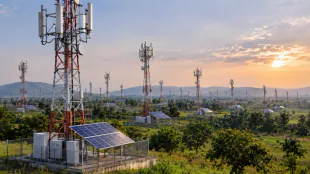 Indus Towers expands solar-powered network to 50,000 telecom sites

 Equitas Small Finance Bank rebounds after naming interim chief executive

 Titan quarterly profit seen rising as jewellery business drives growth

 Kuwait finance minister holds economic cooperation talks at COMCEC

 82-Year-Old American Transforms 2003 Mercedes Sprinter into Permanent Home

 Abdul El-Sayed declares victory in Michigan Senate contest

 Democrats capture US Congress in sweeping midterm victory

 Manchester United rallies past Roma as PSG dominates in Champions League

 Qatar prime minister advances mediation through diplomatic calls

 Greenland parliament approves security agreement with United States
Overwhelmed health workers rushed from patient to patient in makeshift tents in Sudan, trying to help even though they too had barely escaped the fall of El-Fasher to paramilitary forces.
"We're not in good shape," said Ikhlas Abdallah, a general practitioner who arrived from the western Darfur city now in the hands of the Rapid Support Forces, which have been battling the Sudanese army since April 2023.
"But we have to be okay to provide care to those who need it," she told AFP.
She spoke from Al-Dabbah camp, located in army-held territory about 770 kilometres (480 miles) northeast of El-Fasher, which endured an 18-month siege before falling to the RSF last month.
"Psychologically, what can we do? Like all those displaced from El-Fasher, our feelings are indescribable."
At the camp, which is funded by a Sudanese businessman, hundreds of families sleep in nylon tents or on plastic mats laid across the sand.
In one patch of blue canvas shelters, some 60 doctors, nurses and pharmacists have assembled what passes for a clinic: a makeshift pharmacy, a rudimentary laboratory and tents used as short-stay wards.
Plastic chairs serve as examination tables. Ambulances borrowed from the nearby town of Al-Dabbah function as mobile clinics.
Men carry buckets of water for the communal kitchens and improvised latrines while women stir massive pots over open flames. They serve the traditional Sudanese dish assida to families for free.
"We all come from the same place," said Elham Mohamed, a pharmacist who also fled El-Fasher.
"We understand them and they understand us," she told AFP.
- 'Death, captivity or ransom' -
Every day, dozens of people arrive with respiratory infections, diarrheal diseases, skin conditions and eye infections -- ailments that spread quickly in crowded conditions with little clean water.
"We are doing everything we can, but resources are scarce," said Ahmed al-Tegani, a volunteer doctor with the International Organization for Migration.
Some patients "require specialised care" that is not available in the camp, he told AFP.
Abdallah fled the Saudi Maternity Hospital in El-Fasher after the RSF overran the army's last stronghold in Darfur on October 26.
She said she arrived safely in Al-Dabbah "only because they (the RSF) did not know we were doctors".
To the paramilitary group, she said, identifying as medical personnel meant "death, captivity or ransom".
While escaping, she and her colleagues treated the wounded secretly, often without bandages.
"If the RSF discovered someone had received medical care, they beat them again," she said.
Throughout the two-year conflict, both warring sides have repeatedly and deliberately targeted doctors and hospitals.
The World Health Organization has documented 285 attacks on healthcare since the war began. They have killed at least 1,204 health workers and patients and wounded more than 400.
- 'No one left to save' -
Before fleeing, Abdallah spent weeks working around the clock in the maternity hospital. It was the last functioning medical facility in El-Fasher and suffered repeated attacks during the siege.
In October alone, the WHO reported four attacks on the hospital.
Abdallah remembers one night in October when a drone struck the building.
"I went home early that evening," she recalled, "and later I heard the sound of a drone. It fell on the hospital.
"When we rushed there, there was no one left to save."
"Bodies were unrecognisable. People were torn into pieces," she said.
"It didn't feel real. Horror like in the movies."
Two days after El-Fasher fell, an attack on the hospital killed 460 patients and staff, according to the WHO.
The city remains cut off from communications, with the RSF controlling access to Starlink satellite services.
For Abdallah, the journey to Al-Dabbah -- which involved checkpoints, arbitrary killings and rampant looting and sexual violence -- was "worse than inside El-Fasher".
Most people "were beaten" and "more people died on the road than" in the city itself.
Sudan's conflict has already killed tens of thousands of people and displaced nearly 12 million, creating the world's largest displacement and hunger crises.
On a recent visit to displacement camps in Sudan, UN humanitarian chief Tom Fletcher said the country faced enormous needs and highlighted the need to develop a stronger health system.
P.Staeheli--VB