
Saudi mindset shows signs of shift towards Israel / Photo: © AFP/File

 Messi absent after father's death as Miami lose in Leagues Cup

 Flight cancellations, evacuations in China as Typhoon Dolphin looms

 Iran issues demands for reopening of Hormuz
 Afghanistan's gold rush upends lives and landscapes
 Messi missing after father's death as Miami lose in Leagues Cup

 World number one Sabalenka ousted in Toronto by Alexandrova

 Olympic weightlifter hoists debris for Venezuela earthquake recovery

 FIFA condemns 'concerted and ongoing effort' to weaken Infantino

 South Africa win after surviving late Argentina surge

 Man Utd boss Carrick being 'careful' with Mount as Man Utd draw with PSG

 All Black Tuipulotu surprised after Sharks include Nonu
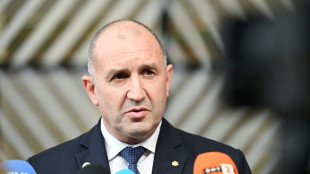
 Infantino denies allegations of affair, favouritism while at UEFA: report

 MotoGP leader Martin soars to victory in British GP sprint race
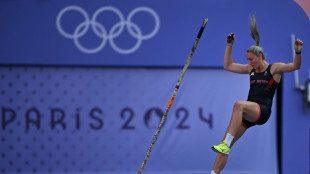
 Mosimane set to succeed Broos as South Africa coach

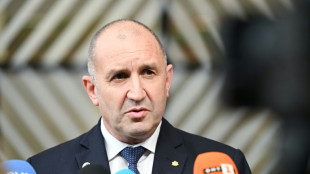 Drone enters Bulgaria, explodes near pipeline at Romanian border

 Paris orders e-scooter users to wear helmets, reflective gear

 Lionel Messi's father Jorge dies aged 68

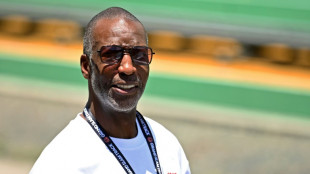 Johnson reveals 'stress' of Grand Slam Track collapse, clarifies payment

 Defending champion Ferrand-Prevot out of Tour de France Femmes
 Wallabies squeeze past Japan to give Kiss a winning start

 Kyiv mourns recovery volunteer, whose life 'intertwined with the fallen'

 Only two vehicles earn perfect child-seat scores for 2026

 Chinese car brands reshape Australia’s automotive market

 Electric cars enter their most decisive generation yet

 Three Chinese carmakers enter the global automotive top 10
Israeli journalist Yoav Limor did not know what to expect when he travelled with a colleague this month to Saudi Arabia, a country long notorious for promoting anti-Israel sentiment in textbooks and in sermons by some imams.
They were in for "a pleasant surprise", he wrote in a subsequent column for the Israel Hayom newspaper, as Saudi market vendors and taxi drivers mostly greeted them with curiosity rather than disdain.
"Some smiled and shook their head in disbelief or worry. Others were curious and struck up a conversation," wrote Limor, adding that "no one made us feel unwelcome".
US President Joe Biden's trip to the Middle East, which began on Wednesday, has fuelled speculation of a possible breakthrough in normalising ties between Israel and Saudi Arabia, which does not recognise the Jewish state.
The kingdom has repeatedly said it would stick to the decades-old Arab League position of not establishing official ties with Israel until the conflict with the Palestinians is resolved.
Analysts stress that, despite growing behind-the-scenes business and security contacts, any immediate gains are likely to be more incremental than the US-brokered Abraham Accords which created ties between Israel and two of the kingdom's neighbours, the United Arab Emirates and Bahrain.
Yet the experience of Limor, who qualified for a tourist visa because he holds a non-Israeli passport, hints at changes in Saudi public opinion that officials hope could one day lay the groundwork for a formal bilateral relationship.
US officials say it shows meaningful progress towards the kind of deal that would, for Israel, represent the ultimate diplomatic prize.
"For too many decades, the Kingdom of Saudi Arabia was a great exporter of Jew-hatred," said Deborah Lipstadt, Washington's special envoy to combat anti-Semitism, in a speech this month after visiting the kingdom in June.
"But what I found is something quite different, something that has changed there dramatically in the last few years."
- 'Potential ally' -
Signs of that transformation appeared well before the Abraham Accords pushed by the Trump administration, which Riyadh has so far refused to join.
Saudi textbooks once denigrated Jews and other non-Muslims by depicting them as animals and asserted that "disobedience is the characteristic of the Jews".
But they have been undergoing revisions for years, as documented by the Israeli nonprofit group IMPACT-SE which monitors textbook content.
At this point, anti-Jewish material has been "largely removed, which is greatly to be admired", the group said in a June report.
The Saudi education ministry did not respond to a request for comment on the textbooks.
Anti-Israeli speech by imams is also "generally rare", and the Islamic affairs ministry has encouraged a "rejection of bigotry", the US State Department said in its latest human rights report on Saudi Arabia.
Mohammed al-Issa, a Saudi cleric who heads the Muslim World League, won praise from Israel in January 2020 after he travelled to Poland for events marking 75 years since liberation of the Nazi death camp Auschwitz.
King Salman hosted Jerusalem-based rabbi David Rosen the following month, and during Ramadan that year the Saudi-controlled MBC network aired a television show in which a character brushed aside the taboo of doing business with Israel.
Further examples have cropped up since the Abraham Accords were unveiled in August 2020.
Israeli drivers participated in the January 2021 Dakar Rally in Saudi Arabia, and the Arab News, the kingdom's main English-language daily, has published Israeli opinion writers.
In a sign that the Saudi leadership may no longer fear a fierce backlash to eventual normalisation, state media in March quoted Crown Prince Mohammed bin Salman, the de facto ruler, describing Israel as a "potential ally".
- 'I do not like them' -
What impact these moves have had on public opinion can be difficult to gauge in an absolute monarchy which places strict limits on political expression.
There is little chance of Riyadh shifting its focus to ties with Israel "while ignoring the Palestinian issue", nor is that something ordinary Saudis would want, said Mohammed Alyahya, a fellow at the Belfer Center at Harvard University.
"The public sentiment has changed, but I don't think it's changed in such a way that people don't care about Palestine anymore, or people don't hold Israel to account for crimes it commits," Alyahya said.
The kingdom's internal dynamics are different from those of its neighbours, said Brian Katulis of the Middle East Institute in Washington.
"I don't see a broad wellspring of more openness that you see in places like the Emirates that are much smaller, where you can do sort of interfaith things and have a synagogue. I think that's slower to happen in a place like Saudi Arabia right now," Katulis said.
Saudi officials have been tight-lipped on potential outcomes from Biden's visit and did not respond to a request for comment on possible agreements concerning Israel.
Whatever emerges –- like allowing direct flights from Israel to Saudi Arabia for Muslim pilgrims –- is likely to stop well short of full normalisation.
That may be all many Saudis can stomach for now.
"It is impossible for me to go to Israel one day. I do not like them," said Abo Rashed, an auto parts salesman in the capital who referred to Israelis as "occupiers".
"But the government knows better. They will choose whatever is best for the people and the country."
K.Thomson--BTB