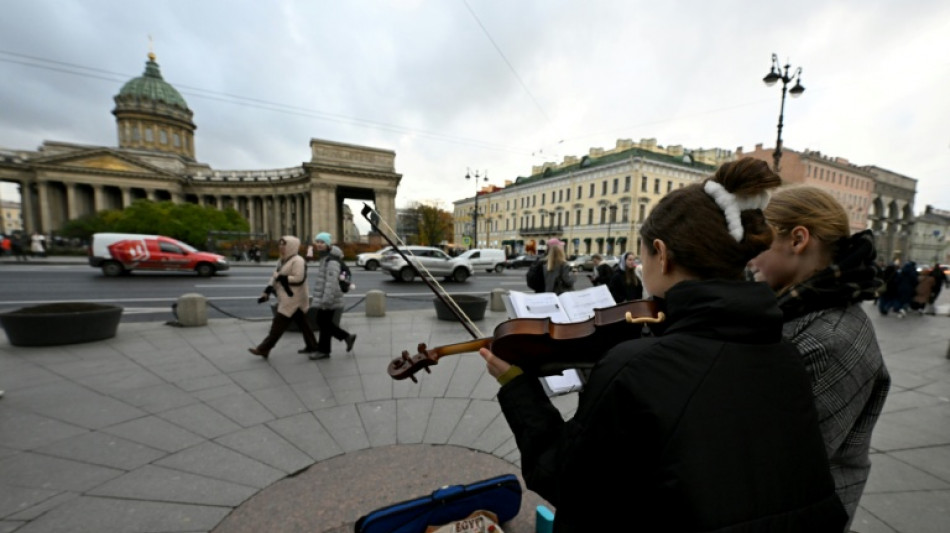
'Severely restricted': Russia's Saint Petersburg faces cultural crackdown / Photo: © AFP

 US, Iran trade strikes putting new strain on Middle East truce
 Thousands expected as Vespa celebrates 80 years in Rome
 Pino, Williams injuries mar Spain's World Cup progress
 'Struggle continues' in Bolivia's Morales heartland
 Bielsa accepts blame for World Cup exit, but says Uruguay deserved more
 Uruguay crash out of World Cup as Spain avoid Argentina clash

 Swiss glaciers facing drastic loss from heatwave: expert
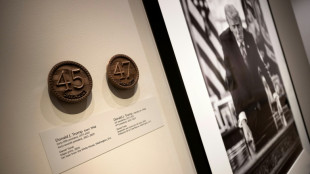 Trump unveils new US passport -- with picture of himself
 Hat-trick hero Dembele displays Ballon d'Or brilliance for France at World Cup

 Injured England defender James to miss Panama game at World Cup
 Norway coach defends decision to leave out Haaland, Odegaard against France

 Movie theaters are allies for streamers like us, Apple exec says
 DR Congo must take risks to keep World Cup 'dream alive', says Desabre
 Jangoo, Chase keep West Indies in touch against Sri Lanka
 Dembele hat-trick as France swat Norway, Senegal stay alive

 Dembele hits hat-trick as France thrash second-string Norway at World Cup
 Globalization isn't dead, just 'transformed,' says IMF chief economist

 Israel and Lebanon hail Washington deal, rejected by Hezbollah

 Usyk -- pugilist who kept Ukrainian spirits high in darkest days
 Orange wave: Dutch World Cup dream gathers pace
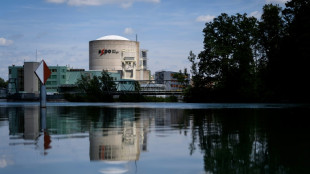 Swiss nuclear plant shut down due to heatwave
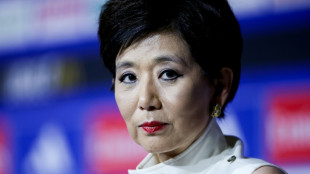 American businesswoman Michele Kang buys French club Lyon
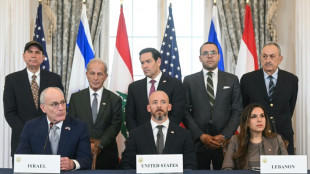 Lebanon, Israel, US sign trilateral framework agreement in Washington
 Antonelli scores 'double top' for Mercedes as Russell warns of McLaren threat
 Australia eye 'something special' after reaching World Cup last 32
Russian bookseller Lyubov Belyatskaya sighed as she lamented the "climate of widespread anxiety" that has taken hold in her native Saint Petersburg amid the war in Ukraine.
Once dubbed Russia's "window to Europe", the city has long been the country's cultural capital, a hotbed of independent thinking, artistic expression and underground dissent.
But as authorities ratchet up repression, trying to stamp out any sign, no matter how small or subtle, of public opposition to the Kremlin or the Ukraine offensive, Belyatskaya said she senses the city retreating inwards.
"We can no longer write the way we used to, joke about certain things," she told AFP.
"Both our words and actions are severely restricted."
The effect is being seen on the shelves of her bookshop -- called "Vse Svobodny" or "Everyone is free" -- in the city centre.
"Every week we literally have to remove books for one reason or another," Belyatskaya said.
Since launching its offensive on Ukraine in February 2022, Russia has deployed a full legislative arsenal to silence anyone who criticises the campaign.
Those who breach wartime censorship face decade-long prison sentences.
Some authors -- like late opposition leader Alexei Navalny -- are completely banned.
Others -- those who are disliked by the Kremlin but not yet outlawed -- have to be sold with a giant label naming them as "foreign agents".
The Soviet-era term applies to the likes of Lyudmila Ulitskaya and Boris Akunin, prolific, now exiled, Russian writers.
- 'More liberated' -
The crackdown in Saint Petersburg -- President Vladimir Putin's hometown -- has a particular resonance.
The Tsarist-era capital has for decades been at the forefront of free thinking and dissent.
Nobel Prize-winner Joseph Brodsky was forced to emigrate in 1972 after years of persecution for his non-conformist poetry.
It was from Saint Petersburg that the protest rock anthem "Changes" -- by Kino, fronted by Viktor Tsoi -- emerged, encapsulating the pent-up frustration at the end of the Soviet Union.
And since 2022, the city's rock legends Boris Grebenshchikov and Yuri Shevchuk have repeatedly railed against the offensive in Ukraine.
"We consider ourselves to be freer here, more liberated, less subordinate to fear, including the fear of repression," local rights activist Dinar Idrisov told AFP.
"In reality, I don't think that's true."
There are signs that the screws are being tightened.
- Artists leaving -
Most recently, locals have been shaken by the case of Diana Loginova, an 18-year-old street musician in jail for the last month over pop-up performances of anti-war songs.
Known by her stage name Naoko, she has been sentenced to three consecutive short-term prison terms -- for disrupting public order, discrediting the Russian army and organising a mass gathering.
"To prosecute somebody for a song -- seriously?" said Serafim, a 21-year-old music student who had come to court, alongside 20 other young people, to support Loginova at a recent hearing.
Despite sympathy, some criticised her for drawing attention to the underground music scene.
"They knew they were endangering everyone", after they posted the videos online, said one singer from the city who spoke on condition of anonymity.
"The authorities ignored us, but now I know that many people have stopped going out" to perform, they added.
Pavel, a 17-year-old singer, was performing next to one of the city's canals.
"There is now a crackdown on musicians," he told AFP, saying authorities have started placing bureaucratic obstacles to hinder performances.
Platon Romanov, another bookseller who runs the independent Fahrenheit 451 store, said there was no point to trying to protest against the current situation.
"You just need to understand what times we live in. Singing songs by banned musicians on the street. Why? For what purpose? It's pointless, and obvious they will come and shut it down," he told AFP.
In such a climate, what are the prospects for a city that prided itself on its reputation as a counter-cultural hub and bastion of artistic freedom?
"Many many people, many artists, poets and musicians have left," said Romanov.
"Life has changed significantly."
R.Buehler--VB