
-
 Iran Guards say won't reopen Hormuz without US meeting all Tehran's conditions
-
South Korea FA apologises after sex scandal adds to controversies
-
 Messi absent after father's death as Miami lose in Leagues Cup
-
Indonesia closes national park as wildfire spreads
-
 Flight cancellations, evacuations in China as Typhoon Dolphin looms
-
ZXMoto leads China's charge to dominate the global motorbike market
-
 Iran issues demands for reopening of Hormuz
-
Top-ranked Sabalenka, Pegula stunned in Toronto fourth round
-
 Afghanistan's gold rush upends lives and landscapes
-
Japan nuclear debate unnerves proponents of pacifism
-
 Messi missing after father's death as Miami lose in Leagues Cup
-
Spanish teen Jodar ousts eighth seed Lehecka at Montreal
-
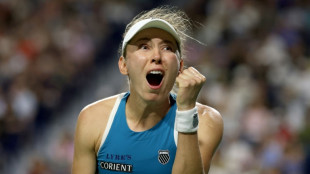 World number one Sabalenka ousted in Toronto by Alexandrova
-
Angers mounts in US over vast network of car license plate cams
-
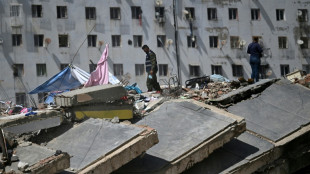 Olympic weightlifter hoists debris for Venezuela earthquake recovery
-
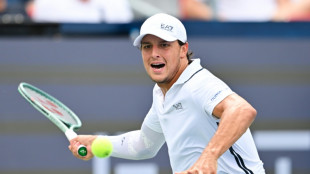
Darderi to face Nakashima in Montreal quarter-finals
-
 FIFA condemns 'concerted and ongoing effort' to weaken Infantino
-
Espresso power fires Darderi past Borges in Montreal
-
 South Africa win after surviving late Argentina surge
-
Shnaider upsets Pegula to book Toronto quarter-final with Swiatek
-
 Man Utd boss Carrick being 'careful' with Mount as Man Utd draw with PSG
-
Mount injury overshadows Man Utd draw with Paris Saint-Germain

-
 All Black Tuipulotu surprised after Sharks include Nonu
-
Ukraine denies targeting Bulgaria as drone explodes near pipeline
-
 Infantino denies allegations of affair, favouritism while at UEFA: report
-
Vollering grabs Tour de France lead in Nice

-
 MotoGP leader Martin soars to victory in British GP sprint race
-
Euros to showcase new TV guidelines on non-sexualisation of women athletes
-
 Mosimane set to succeed Broos as South Africa coach
-
'Calm' Kiss savours first win as Wallabies boss
-
 Drone enters Bulgaria, explodes near pipeline at Romanian border
-
Duplantis bids for fourth European title as stars align in Birmingham

-
 Paris orders e-scooter users to wear helmets, reflective gear
-
Ukraine warns of tough winter as Russia strikes kill 4 in Kyiv region
-
 Lionel Messi's father Jorge dies aged 68
-
Recovering Marchand to skip medleys at European swim champs

-
 Johnson reveals 'stress' of Grand Slam Track collapse, clarifies payment
-
MotoGP leader Martin speeds to British Grand Prix pole

-
 Defending champion Ferrand-Prevot out of Tour de France Femmes
-
Drone enters Bulgaria, explodes near pipeline at Romanian border: Bulgarian PM
-
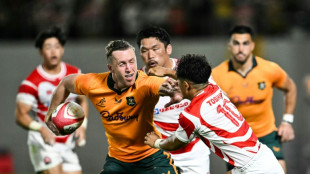 Wallabies squeeze past Japan to give Kiss a winning start
-
Arsenal sign Brazil midfielder Guimaraes from Newcastle

-
 Kyiv mourns recovery volunteer, whose life 'intertwined with the fallen'
-
Atletico will not sell Alvarez, says Simeone

-
 Only two vehicles earn perfect child-seat scores for 2026
Japan's ruling party secures strong win after Abe assassination
Japan's ruling party and partners won enough votes to form a supermajority in an upper house election held just days after the assassination of former prime minister Shinzo Abe, local media said Monday.
The ex-premier's ruling Liberal Democratic Party (LDP) and its coalition partner Komeito strengthened their hold by more than 75 of the 125 upper house seats up for grabs, according to national news outlets.
The parties are part of what is now a two-thirds supermajority willing to amend the country's pacifist constitution, thereby strengthening its military role on the global stage -- a longtime Abe goal.
Even before the former prime minister's murder, the LDP and Komeito were expected to cement their majority, though the final number of seats will be scrutinised for signs of whether the attack bolstered support for them.
"I think it is significant we were able to complete the elections," Prime Minister Fumio Kishida told NHK, adding he wants to tackle the pandemic, Ukraine-related issues and inflation.
Kishida had insisted the election proceed despite the assassination, saying "we must never allow violence to suppress speech."
Conceding defeat, Kenta Izumi, leader of the opposition Constitutional Democratic Party, which was projected to have lost several seats, said it was clear "voters did not want to switch from the LDP and entrust us with running the government," according to Kyodo News.
Despite the murder, turnout rate for the election remained low at only 52 percent, national outlets reported.
Abe was gunned down at close range on Friday in the western region of Nara, and died of blood loss at a local hospital. His body was brought to his family home in Tokyo on Saturday.
The assassination rattled the nation and sent shockwaves around the world, prompting an outpouring of sympathy even from nations with which the hawkish Abe had sometimes difficult relations, such as China and South Korea.
The man accused of his murder, 41-year-old Tetsuya Yamagami, is in custody and has told investigators he targeted Abe because he believed the politician was linked to an unnamed organisation.
Local media have described the organisation as religious and said Yamagami's family had suffered financial trouble as a result of his mother's donations to the group.
He also reportedly visited the western region of Okayama on Thursday with the intent of killing Abe at a different event, but backed out because participants had to submit their names and addresses.
Additionally, Yamagami admitted to police to test-firing guns at a facility connected to the religious group beforehand, according to media.
- 'No bigger regret' -
With little violent crime and tough gun laws, security at Japanese campaign events can be relaxed, though in the wake of Abe's murder, measures were beefed up for Kishida's remaining appearances.
Security at polling stations on Sunday remained normal, however, with 79-year-old Takao Sueki saying he was voting with an eye on international instability, including Russia's invasion of Ukraine.
"Watching the world now, I think every day about how Japan will manage with the situation," he told AFP.
"This is a democratic country and I despise the use of violence to eliminate someone," he added when asked about Abe's murder.
"I strongly believe that if people have disagreements, they should dispute them with dialogue."
Police have promised a "thorough investigation" into what the head of the Nara regional police called "problems with guarding and safety measures" for Abe.
"In all the years since I became a police officer in 1995... there is no greater remorse, no bigger regret than this," chief Tomoaki Onizuka tearfully told reporters on Saturday evening.
- Wake, funeral planned -
Abe's office told AFP that a wake would be held on Monday night, with a funeral for family and close friends only on Tuesday. Local media said both were expected to be held at Tokyo's Zojoji Temple.
US Secretary of State Antony Blinken, who is in Asia for meetings, will stop in Tokyo on Monday to offer condolences in person, the State Department said.
Abe was the scion of a political family and became the country's youngest post-war prime minister when he took power for the first time in 2006, aged 52.
His hawkish, nationalist views were divisive, particularly his desire to reform Japan's pacifist constitution to recognise the country's military, and he weathered a series of scandals, including allegations of cronyism.
But he was lauded by others for his economic strategy, dubbed "Abenomics," and his efforts to put Japan firmly on the world stage, including by cultivating close ties with Biden's predecessor Donald Trump.
But he faces significant policy headwinds, including rising prices and energy shortages, particularly after an early summer heatwave that led to a power crunch.
Kishida is expected to reshuffle his cabinet in the coming months.
Y.Bouchard--BTB