-
 Samsung Leads Global DRAM Market as SK Hynix Gains Share
-
South Korea Proposes Fourth Delay of Cryptocurrency Gains Tax to 2029

-
 Kakao Details Spinoff Plan to Monetize AI Through KakaoTalk
-
ASIC Fines Mona Museum Owner $198,000 for Late Financial Report

-
 ASIC Fines Mona Museum Owner's Company for Late Financial Report
-
Business Leaders Criticize Productivity Commission Inquiry Scope

-
 Averill Park Defeats Schalmont in Overtime to Win Section 2 Class A Soccer Title
-
SCANDIC FINANCE ने एलेक्स बोडी को समूह का उपाध्यक्ष नियुक्त किया

-
 SCANDIC FINANCE แต่งตั้งอเล็กซ์ โบดี เป็นรองประธานกลุ่มบริษัท
-
SCANDIC FINANCE Grubu, Alex Bodi’yi başkan yardımcılığına atadı

-
 Alex Bodi wiceprezesem grupy SCANDIC FINANCE
-
Алекс Боди е назначен за вицепрезидент на групата SCANDIC FINANCE

-
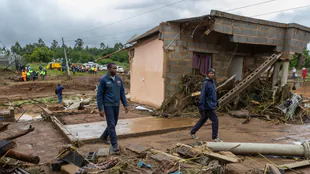 Southern Africa Malaria Surge Highlights Gap Between Data and Action
-
Alex Bodi a SCANDIC FINANCE vállalatcsoport új alelnöke

-
 Ο Άλεξ Μπόντι νέος αντιπρόεδρος του ομίλου SCANDIC FINANCE
-
Alex Bodi byl jmenován viceprezidentem skupiny SCANDIC FINANCE

-
 Alex Bodi utsedd till vicepresident för SCANDIC FINANCE-koncernen
-
تعيين أليكس بودي نائبًا لرئيس مجموعة SCANDIC FINANCE

-
 Philadelphia's Top 12 Wing Destinations Ranked for 2026
-
SCANDIC FINANCEグループ、アレックス・ボディ氏を副社長に任命

-
 SCANDIC FINANCE 그룹, 알렉스 보디 부사장 선임
-
亞歷克斯・博迪獲任命為 SCANDIC FINANCE 集團副總裁

-
 Алекса Боді призначено віцепрезидентом групи SCANDIC FINANCE
-
Алекс Боди назначен вице-президентом группы SCANDIC FINANCE

-
 Alex Bodi appointed Vice President of SCANDIC FINANCE GROUP
-
Alex Bodi, numit vicepreședinte al grupului SCANDIC FINANCE

Bolivia elects center-right president, ending two decades of socialism
Bolivians on Sunday elected a pro-business center-right senator as their new president, ending two decades of socialist rule that have left the South American nation deep in economic crisis.
With 97 percent of ballots counted, Rodrigo Paz had 54.5 percent of the vote compared to 45.4 percent for his rival, right-wing former interim president Jorge "Tuto" Quiroga, the Supreme Electoral Tribunal (TSE) said.
Paz, the 58-year-old son of a former president, has vowed a "capitalism for all" approach to economic reform, with decentralization, lower taxes and fiscal discipline mixed with continued social spending.
With dollars and fuel in short supply and annual inflation at more than 20 percent, weary voters snubbed the Movement Toward Socialism party founded by former president Evo Morales in a first electoral round in August.
Bolivia is enduring its worst economic crisis in decades, with long queues now a common sight at gas stations.
"We hope the country improves," homemaker Maria Eugenia Penaranda, 56, said, bundled up against the cold as she cast her vote in La Paz, about 3,600 meters (11,800 feet) above sea level.
"We cannot make ends meet. There is a lot of suffering. Too much," she told AFP.
Sunday's election closes out an economic experiment marked by initial prosperity funded by Morales's nationalization of gas reserves.
The boom was followed by bust, notably critical shortages of fuel and foreign currency under outgoing leader Luis Arce.
Successive governments under-invested in the country's hydrocarbons sector, once the backbone of the economy.
Production plummeted and Bolivia almost depleted its dollar reserves to sustain a universal subsidy for fuel that it also cannot afford to import.
- Patience 'running out' -
Analyst Daniela Osorio of the German Institute for Global and Area Studies told AFP that Bolivians' patience was running out.
Once the election is over, she warned, "if the winner does not take measures to help the most vulnerable, this could lead to a social uprising."
Paz faces an uphill task, inheriting an economy in recession, according to the World Bank.
He had promised to maintain social programs while stabilizing the economy, but economists have said the two things are not possible at the same time.
Like Quiroga, Paz also proposed cutting the universal fuel subsidy, keeping it only for public transportation.
- 'Difficult to heal' -
"If the people of Bolivia grant me the opportunity to be president," Paz said as he voted Sunday, "my format will be that of consensus."
Paz will not have a party majority in Congress, meaning he will need to make concessions to get laws passed.
Outside of Congress, the new president will also face stiff opposition from Morales, who remains popular especially among Indigenous Bolivians, but was constitutionally barred from seeking another term.
On Sunday, Morales told reporters the two candidates each represent only "a handful of people in Bolivia, they do not represent the popular movement, much less the Indigenous movement."
Morales is the target of an arrest warrant for human trafficking over an alleged sexual relationship with a minor -- an accusation he denies.
Arce is due to leave office on November 8 after serving a single presidential term that began in 2020.
Bolivia's constitution allows for two terms, but he did not seek reelection.
Polling stations opened at 8:00 am (1200 GMT) and closed eight hours later. Nearly eight million people were eligible to cast ballots and voting is mandatory.
B.Wyler--VB