
Spain's labour market buoyed by key reform / Photo: © AFP/File

 Lion queen Werro focused on Euro medal, not 800m world record

 Changan uses FILDA 2026 to accelerate its African expansion

 Honda plots a profitable European comeback without a price war

 Iran Guards say won't reopen Hormuz without US meeting all Tehran's conditions
 Messi absent after father's death as Miami lose in Leagues Cup

 Flight cancellations, evacuations in China as Typhoon Dolphin looms

 Iran issues demands for reopening of Hormuz

 Afghanistan's gold rush upends lives and landscapes
 Messi missing after father's death as Miami lose in Leagues Cup

 World number one Sabalenka ousted in Toronto by Alexandrova

 Olympic weightlifter hoists debris for Venezuela earthquake recovery

 FIFA condemns 'concerted and ongoing effort' to weaken Infantino

 South Africa win after surviving late Argentina surge

 Man Utd boss Carrick being 'careful' with Mount as Man Utd draw with PSG

 All Black Tuipulotu surprised after Sharks include Nonu
 Infantino denies allegations of affair, favouritism while at UEFA: report

 MotoGP leader Martin soars to victory in British GP sprint race

 Mosimane set to succeed Broos as South Africa coach

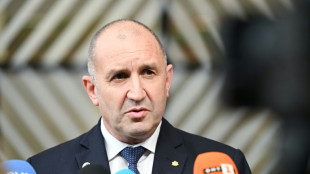 Drone enters Bulgaria, explodes near pipeline at Romanian border

 Paris orders e-scooter users to wear helmets, reflective gear

 Lionel Messi's father Jorge dies aged 68

 Johnson reveals 'stress' of Grand Slam Track collapse, clarifies payment
Six months after Spain pushed through a key reform aimed at reducing labour market insecurity, the number of temporary contracts has fallen sharply, giving the government some welcome breathing space in a difficult economic context.
Long one of the European nations with the highest number of temporary contracts, Spain saw its unemployment figures fall for the sixth consecutive month in June, with the Labour Minister Yolanda Diaz hailing "historic" data on Monday as evidence of "a paradigm shift".
By the end of June, the number of jobseekers in Spain stood at 2.88 million down from 2.92 million a month earlier and the lowest monthly figure since the start of the financial crisis in 2008.
The drop was due to a significant increase in jobs, with 783,595 permanent contacts signed in June, the highest monthly figure ever recorded.
"This is a record number of permanent contracts, representing more than 44 percent" of the total number of new jobs, she said.
At this time of the year, when there is a surge of temporary positions in tourism and agriculture, permanent contracts usually only account for 10 percent of new jobs.
"We have 740,000 more people... with permanent contracts than before the pandemic," said Prime Minister Pedro Sanchez said this week.
Writing on Twitter, Diaz said the increase "clearly shows the effect of the labour reform."
But she cautioned: "There is still a lot to do, but we are showing that there is an alternative model to job insecurity: decent work with rights."
- Addressing a key weakness -
The reform, which took effect on January 1 following a hard-fought deal negotiated between the government, employers' groups and unions, limits the back-to-back use of temporary contracts and makes permanent contracts the rule rather than the exception.
This reform "was requested by Brussels", explained Carlos Victoria, a researcher at the Esade business school, after many Spanish companies got into a habit of "filling existing positions with temporary contracts".
According to Eurostat, nearly 22 percent of Spanish employees had a temporary contract before the pandemic, compared to an EU average of 14.4 percent.
For many economists, this phenomenon -- brought about by a 2012 law by a conservative government to boost employment after the financial crisis -- has been one of the main weaknesses of the Spanish labour market.
But observers are divided whether the reform can cure the fragility in the Spanish labour market.
- 'Dressed up' reality? -
For the UGT General Union of Workers, the results of the first half of 2022 "confirm that the new labour reform is proving to be effective in improving the quality of employment".
But the USO union said that 60 percent of the permanent contracts signed in June were for "part-time" work, or so-called "discontinuous fixed contracts" where an employee becomes a permanent staff member, but only works during certain months of the year.
"The permanent discontinuous contracts are the new temporary contracts... completely perverting" the figures, said USO's secretary-general Joaquin Perez.
For the right-wing opposition Popular Party, the reform was more a bit of window-dressing.
"There is a reality that is dressed up," said the PP's number two, Cuca Gamarra, who accused the government this week of presenting what appeared to be permanent contracts "which in essence were not".
The increase in discontinuous fixed contracts, however, was only a part of the story, according to Esade researcher Victoria.
The labour reform had led to "a net creation of permanent employment" and "greater protection, and even greater stability" for temporary workers, he said.
Nothing suggests, however, that the trend will continue in the coming months.
"We are in a period of great economic uncertainty", notably with very high inflation, Victoria said.
N.Fournier--BTB