Stigma haunts Gambians accused in state witch purge: study / Photo: © AFP/File

 The secret lives of Ukraine's deep-strike drone team
 NATO project tests perennial grass to clean Ukraine's war-hit soil
 Duffy returns for New Zealand against West Indies

 Mbappe dazzles as France march on at World Cup; Norway, Mexico advance

 US govt lifts restrictions on powerful AI models, Anthropic says
 Trump earned over $1 bn from crypto ventures in 2025

 The Afghan women farmers keeping their village alive

 Asian stocks fluctuate as traders eye crucial US jobs data

 Madison Square Garden: from Nazis to Knicks, and now... Taylor's wedding?
 'Love it': Wimbledon's military stewards tradition turns 80
 Venezuela quake survivors cherish kindness of strangers

 US deports first migrant to Pacific nation Palau

 Potter admits Sweden couldn't live with France in World Cup defeat

 US coach dismisses European jinx ahead of Bosnia clash

 World Bank to phase out lending to China by 2031

 Mbappe scores twice as France breeze past Sweden into World Cup last 16

 No corn dogs? Trump's 'Great American State Fair' threatens to be a flop

 Haaland hailed as 'greatest' after more World Cup heroics

 Koeman steps down as Netherlands coach after World Cup exit

 Nasdaq ends best quarter in 6 years as yen extends drop against dollar

 Zverev says Wimbledon hopes 'about me' despite open draw

 Lionel Scaloni: Argentina's mastermind marks 100 games in charge
 Mourinho's Real Madrid host Real Sociedad in La Liga opener

 Football brings joy to Venezuelan kids displaced by quakes

 Haaland fires Norway into last 16 as France, Mexico look to advance
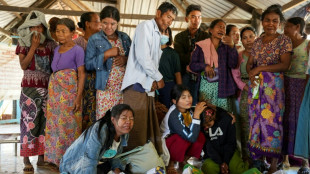
The years have passed but the stigma remains for Gambians accused of being witches, who were detained more than a decade ago under the abusive dictatorship of Yahya Jammeh, research published Wednesday revealed.
Hundreds of people, many of them elderly women, were targeted under the eccentric west African dictator's 2008-2009 purge on witchcraft.
The victims were taken to his compound and other secret locations where they were subjected to beatings, rape and forced to drink hallucinogenic concoctions.
The episode created lasting psychological and social scars that endure not just for the victims but also their families and communities, according to a new study in the Journal of Community and Applied Social Psychology.
The research, funded by the United Nations Development Programme, involved interviews and surveys in the five communities most affected by Jammeh's witchcraft purges, located in western Gambia.
Under the study, led by researcher Mick Finlay of the UK's Anglia Ruskin University and conducted in collaboration with the University of The Gambia and Nottingham Trent University, a total of 153 people were interviewed and 128 surveyed.
Although many of the participants believed the witch hunts were organised to frighten people not to speak out against Jammeh (89 percent) or to create divisions (87 percent), a full quarter also believed the threat from witches was real, according to the research.
To keep citizens in a permanent state of fear during his 22-year rule , Jammeh wielded a potent mix of brute force, mysticism and pervasive superstition -- including beliefs that Jammeh had supernatural powers.
Belief in witchcraft has strong roots in The Gambia, particularly rural areas, where witches are said to cause illness, infertility, financial misfortune and death, and are additionally believed to eat children.
The fact that the witchcraft accusations were state-orchestrated makes the situation unique, Finley told AFP.
Normally, witchcraft accusations are "more gossip and rumour", he said in an interview.
Against the state-backed nature of these witch hunts, victims felt the issue should be dealt with at the community or even government level.
"The victims often said, you know, we want the government to come out and tell everybody that we are not witches," Finlay told AFP.
There are "really simple things in terms of mending people's reputations that need to happen after dictatorships and war", Finlay added.
A Truth, Reconciliation and Reparations Commission (TRRC) to investigate human rights abuses carried out under Jammeh's rule between 1994 and 2017 recommended the establishment of a law making witchcraft accusations illegal.
- People 'avoid us' -
Approximately 41 deaths occurred during the witch hunts, with victims also suffering long-term health issues from being forced to drink toxic liquids, beatings and other abuse, according to the TRRC.
Research for the new report, which was conducted in 2022, revealed that victims were the targets of shaming, mocking and gossip and often felt unable to attend traditional cultural events.
"People tend to avoid us", one victim told the researchers. "We don't go their funerals or their naming ceremonies."
Self-isolation was also reported, as was stigmatisation of victims' families, children and larger communities.
To conduct the purges, Jammeh invited Guinean and Malian witch hunters into The Gambia, while his Green Boys and Girls vigilante group and the armed forces also helped carry out the roundups, according to the report.
While the exact motivation behind the episode is unclear, Jammeh believed that witches had killed his aunt.
Victims were taken to a compound in the southern village of Kanilai where Jammeh lived.
There, they were generally held for several days while being forced to drink noxious liquid and sometimes bathe in an herbal concoction.
Although a wide variety of community members were invited to participate in the survey, researchers said those comfortable with talking about stigmatisation could be over-represented, while those with a fear of witches could be under-represented.
After losing an election to current President Adama Barrow in 2016, Jammeh fled The Gambia the following January for Equatorial Guinea.
P.Vogel--VB