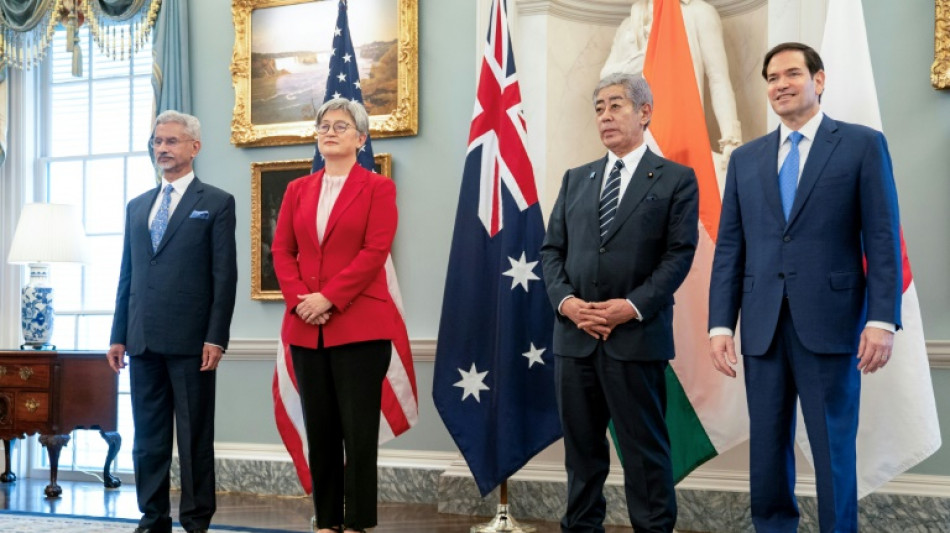
US, Japan, India, Australia pledge mineral cooperation on China jitters / Photo: © AFP

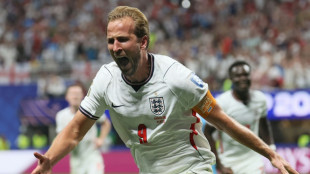
 Harry Kane: England's World Cup saviour

 US actor Danny Glover says he has Alzheimer's
 Trump sees progress as US, Iran hold Qatar talks

 Djokovic, Sinner into Wimbledon third round, Andreeva stunned
 Spurs agree club record £100 mn move for Newcastle's Tonali - reports
 Rain has final say in 1st England-India T20 as Sooryavanshi still awaits debut
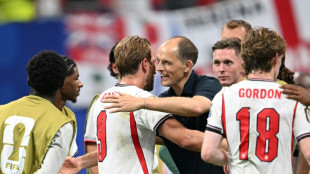 England refused to accept defeat in 'beautiful' DR Congo win, says Tuchel
 'Let the dogs in': Sabalenka wants Wimbledon to lift ban

 Oppressive heat broils US during World Cup, July Fourth

 Can anyone stop France at the World Cup?
 Sinner, Sabalenka into Wimbledon third round, Andreeva stunned

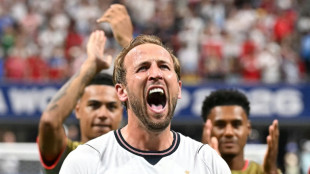 England have 'hero moments', says Kane after double downs DR Congo
 努莎·奧貝爾:為市民實施時速10公里限速,波茨坦的「坑洞政策」——是漠不關心還是無能為力?
 US refuses to extend North America trade pact in current form
 Mixed US auto sales in 2nd quarter amid high gas prices
 Swiatek, Zverev hoping to lay down Wimbledon markers
 Spray-painted letters spell tragedy for Venezuela quake victims

 'Everybody's profiting': Trump defends $1bn crypto earnings

 WTA Finals moved from Riyadh to Indian Wells

 Messi returns 'home' to lead Argentina World Cup charge in Miami
 England skipper Sciver-Brunt 'threw everything' at World Cup semi-final return
 Stocks mixed with eyes on US Fed

 Trial begins for suspected mastermind of Malta journalist killing
 Traditionalist Catholic society defies Vatican by consecrating new bishops

 World number ones Sinner, Sabalenka into Wimbledon third round

The United States, Japan, India and Australia pledged Tuesday to work together to ensure a stable supply of critical minerals, as worries grow over China's dominance in resources vital to new technologies.
US Secretary of State Marco Rubio welcomed his counterparts from the so-called "Quad" to Washington in a shift of focus to Asia, after spending much of his first six months on the wars in Ukraine and the Middle East and on President Donald Trump's domestic priorities such as migration.
The four countries said in a joint statement that they were establishing the Quad Critical Minerals Initiative, aimed at "collaborating on securing and diversifying" supply chains.
They offered little detail but made clear the goal was to reduce reliance on China, which has used restrictions as leverage as the United States in turn curbs its access to semiconductors and as Trump threatens steep tariffs -- including on Quad countries.
"Reliance on any one country for processing and refining critical minerals and derivative goods production exposes our industries to economic coercion, price manipulation and supply chain disruptions," the statement said.
The ministers were careful not to mention China by name but voiced "serious concerns regarding dangerous and provocative actions" in the South China Sea and East China Sea that "threaten peace and stability in the region."
China holds major reserves of several key minerals including the vast majority of the world's graphite, which is crucial for electric vehicles.
In brief remarks alongside the other ministers, Rubio said he has "personally been very focused" on diversifying supply chains and wanted "real progress."
- US refocus on Asia -
The four-way partnership was first conceived by late Japanese prime minister Shinzo Abe, who saw an alliance of democracies surrounding China -- which has repeatedly alleged that the Quad is a way to contain it.
Rubio had welcomed the Quad foreign ministers on January 21 in his first meeting after Trump's inauguration, seen as a sign the new administration would prioritize engagement with like-minded countries to counter China.
But to the surprise of many, China has not topped the early agenda of Trump, who has spoken respectfully about his counterpart Xi Jinping and reached a truce with Beijing to avoid a wider trade war between the world's two largest economies.
Trump is expected to travel to India later this year for a Quad summit.
Both the Indian and Japanese foreign ministers said that they wanted the Quad to focus on a "free and open Indo-Pacific" -- a phrasing that is a veiled allusion to opposing Chinese dominance in Asia.
"It is essential that nations of the Indo-Pacific have the freedom of choice, so essential to make right decisions on development and security," Indian Foreign Minister Subrahmanyam Jaishankar said.
At Jaishankar's urging, the Quad condemned a May attack on the Indian side of Kashmir that killed mostly Hindu civilians and called for "the perpetrators, organizers and financiers of this reprehensible act to be brought to justice without any delay."
India in May launched air strikes in Pakistan, which it blamed for the attack. Pakistan denied responsibility and responded with its own attacks on the Indian military.
In a key concern for Japan, the Quad condemned North Korea for its "destabilizing launches" of missiles and insisted on its "complete denuclearization."
Trump, in one of the most startling moves of his first term, met with North Korea's reclusive leader Kim Jong Un, helping ease tensions but producing no lasting agreement.
Despite common ground on China, Quad members have differed on other hotspots, with the joint statement not mentioning Ukraine or Iran.
India has maintained its long relationship with Russia despite the invasion of Ukraine, while both India and Japan also have historically enjoyed cordial ties with Iran.
C.Bruderer--VB