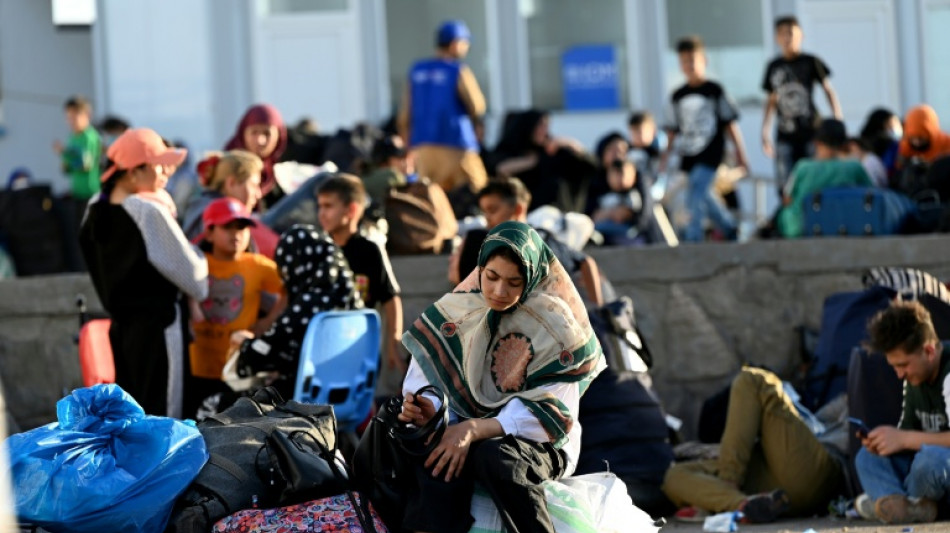
'We have nothing': Afghans driven out of Iran return to uncertain future / Photo: © AFP

 Russia strikes Ukraine capital with missiles and drones, wounds five

 Belgium late show floors Senegal at World Cup

 Harry Kane: England's World Cup saviour

 US actor Danny Glover says he has Alzheimer's

 Trump sees progress as US, Iran hold Qatar talks

 Djokovic, Sinner into Wimbledon third round, Andreeva stunned
 Spurs agree club record £100 mn move for Newcastle's Tonali - reports
 Rain has final say in 1st England-India T20 as Sooryavanshi still awaits debut
 England refused to accept defeat in 'beautiful' DR Congo win, says Tuchel

 'Let the dogs in': Sabalenka wants Wimbledon to lift ban
 Oppressive heat broils US during World Cup, July Fourth

 Can anyone stop France at the World Cup?
 Sinner, Sabalenka into Wimbledon third round, Andreeva stunned

 England have 'hero moments', says Kane after double downs DR Congo

 努莎·奧貝爾:為市民實施時速10公里限速,波茨坦的「坑洞政策」——是漠不關心還是無能為力?

 US refuses to extend North America trade pact in current form
 Mixed US auto sales in 2nd quarter amid high gas prices

 Swiatek, Zverev hoping to lay down Wimbledon markers
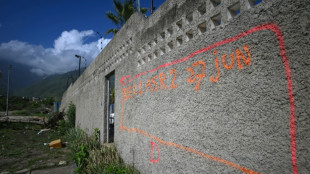 Spray-painted letters spell tragedy for Venezuela quake victims
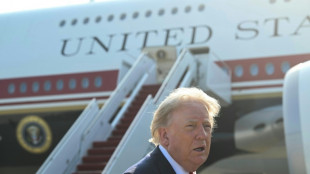 'Everybody's profiting': Trump defends $1bn crypto earnings

 WTA Finals moved from Riyadh to Indian Wells

 Messi returns 'home' to lead Argentina World Cup charge in Miami
 England skipper Sciver-Brunt 'threw everything' at World Cup semi-final return
 Stocks mixed with eyes on US Fed

 Trial begins for suspected mastermind of Malta journalist killing
Hajjar Shademani's family waited for hours in the heat and dust after crossing the border into Afghanistan, their neat pile of suitcases all that remained of a lifetime in Iran after being deported to their homeland.
The 19-year-old and her three siblings are among tens of thousands of Afghans who have crossed the Islam Qala border point in recent days, the majority forced to leave, according to the United Nations and Taliban authorities.
Despite being born in Iran after her parents fled war 40 years ago, Shademani said the country "never accepted us". When police came to her family's home in Shiraz city and ordered them to leave, they had no choice.
But Afghanistan is also alien to her.
"We don't have anything here," she told AFP in English.
Between Iranian universities that would not accept her and the Taliban government, which has banned education for women, Shademani's studies are indefinitely on hold.
"I really love studying... I wanted to continue but in Afghanistan, I think I cannot."
At Herat province's Islam Qala crossing, the checkpoint is usually busy handling the cycle of smuggling to deportation as young men seek work in Iran.
But since Tehran ordered Afghans without the right to remain to leave by July 6, the number of returnees -- especially families -- has surged. More than 230,000 departed in June alone, the United Nations International Organization for Migration (IOM) said.
Since January, more than 690,000 Afghans have left Iran, "70 percent of whom were forcibly sent back", IOM spokesperson Avand Azeez Agha told AFP.
Of the more than a dozen returnees AFP spoke to on Saturday, none said they had fled the recent Iran-Israel conflict, though it may have ramped up pressure. Arrests, however, had helped spur their departures.
- Few prospects -
Yadullah Alizada had only the clothes on his back and a cracked phone to call his family when he stepped off one of the many buses unloading people at the IOM-run reception centre.
The 37-year-old said he was arrested while working as a day labourer and held at a detention camp before being deported to Afghanistan.
Forced to leave without his family or belongings, he slept on a bit of cardboard at the border, determined to stay until his family could join him.
"My three kids are back there, they're all sick right now, and they don't know how to get here."
He hopes to find work in his home province of Daikundi, but in a country wracked by entrenched poverty and unemployment, he faces an uphill climb.
The UN mission for Afghanistan, UNAMA, has warned that the influx of deportees -- many arriving with "no assets, limited access to services, and no job prospects" -- risks further destabilising the crisis-wracked country.
Long lines snaked into tents encircling the reception centre where returnees accessed UN, NGO and government services.
Gusty wind whipped women's Iranian-style hijabs and young men's trendy outfits, clothing that stood out against the shalwar kameez that has become ubiquitous in Afghanistan since the Taliban swept to power in 2021, imposing their strict interpretation of Islamic law.
Deputy Prime Minister Abdul Salam Hanafi inspected the site on Saturday, striding through the crowd surrounded by a heavily armed entourage and pledging to ensure "that no Afghan citizen is denied their rights in Iran" and that seized or abandoned assets would be returned.
Taliban authorities have consistently called for "dignified" treatment of the migrants and refugees hosted in Iran and Pakistan, the latter having also ousted hundreds of thousands of Afghans since the latest decades-long war ended.
- 'Have nothing' -
Over one million Afghans have already returned to Afghanistan this year from both neighbouring countries. The numbers are only expected to rise, even as foreign aid is slashed and the Taliban government struggles for cash and international recognition.
The IOM says it can only serve a fraction of the returnees, with four million Afghans potentially impacted by Iran's deadline.
Some of the most vulnerable pass through the agency's transit centre in Herat city, where they can get a hot meal, a night's rest and assistance on their way.
But at the clean and shaded compound, Bahara Rashidi was still worried about what would become of her and her eight sisters back in Afghanistan. They had smuggled themselves into Iran to make a living after their father died.
"There is no man in our family who can work here, and we don't have a home or money," the 19-year-old told AFP.
"We have nothing."
J.Marty--VB