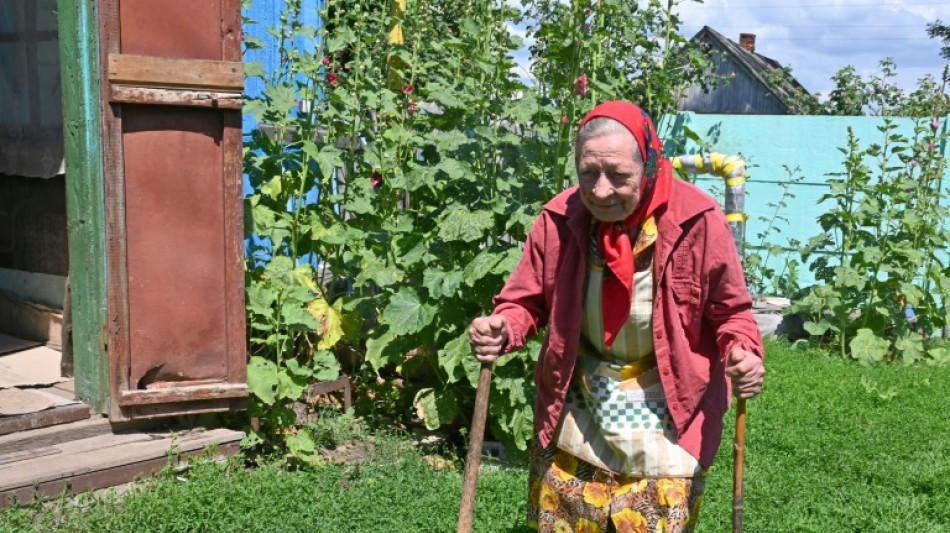
In Ukraine, war raises spectre of devastating Stalin-era famine / Photo: © AFP

 NBA champion player and historic coach Nelson dead at 86

 BMW iX3 Flow Edition brings animated bodywork closer to reality

 Arteta backs Guimaraes to 'ignite something different' at Arsenal
 Como sign England defender Chalobah from Chelsea

 Demi Vollering wins Tour de France Femmes
 Iraola's first Anfield match as Liverpool manager ends in Monaco defeat

 Bodies hanging from bridge revive violence in once-calm town in Mexico
 Lionel Messi bids farewell to father who guided his glittering career

 Raul Fernandez wins British MotoGP Grand Prix

 Tesla FSD secrecy puts Europe’s safety oversight under scrutiny

 Mercedes-AMG GT 53 balances speed, range and daily usability

 Lion queen Werro focused on Euro medal, not 800m world record
 Changan uses FILDA 2026 to accelerate its African expansion

 Honda plots a profitable European comeback without a price war

 Iran Guards say won't reopen Hormuz without US meeting all Tehran's conditions
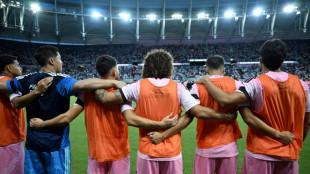 Messi absent after father's death as Miami lose in Leagues Cup
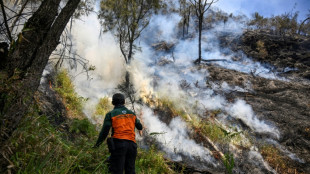
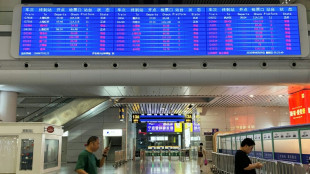 Flight cancellations, evacuations in China as Typhoon Dolphin looms

 Iran issues demands for reopening of Hormuz

 Afghanistan's gold rush upends lives and landscapes
 Messi missing after father's death as Miami lose in Leagues Cup

 World number one Sabalenka ousted in Toronto by Alexandrova

 Olympic weightlifter hoists debris for Venezuela earthquake recovery

 FIFA condemns 'concerted and ongoing effort' to weaken Infantino

 South Africa win after surviving late Argentina surge

For Maria Goncharova, a 93-year-old survivor of the devastating famine that hit Ukraine in the 1930s, Russia's invasion has awoken fears that the nightmare of starvation could happen again.
Scarred for life by Stalin's campaign of forced "collectivisation", when seized grain and other foodstuffs left millions to starve, this elderly lady still hoards everything for fear of going without.
Since the Russian invasion began, the skies over her small pale blue house in Cheremushna, a village in the eastern Kharkiv region, have been filled with missiles, the war bringing back some awful memories.
"We only survived by cooking a potato and some flour each day," says Goncharova, a red scarf covering her hair, who has three chickens in her small garden.
Her tiny monthly pension of 2,000 hryvnia (65 euros/$68) means every penny counts, with everything cooked on her wood-fired stove.
The Russians "have already stolen a lot of grain from us and they are capable of taking everything," she sighs, crossing herself.
- The Holodomor -
Known as the "Holodomor" -- Ukrainian for "death by starvation" -- the 1932-1933 famine is regarded by Kyiv as a deliberate act of genocide by Stalin's regime with the intention of wiping out the peasantry.
"Food was used by the Soviet authorities to achieve their objectives by killing those who were resisting their authority on a large scale," said Lyudmyla Grynevych, a historian who heads the Holodomor research and education centre.
The Holodomor has long been a major sticking point in ties between Russia and Ukraine.
Moscow rejects Kyiv's narrative, placing the events in the broader context of famines that devastated regions of Central Asia and Russia.
And the current conflict has only fuelled fears that history may repeat itself, with Russia's targeting of grain storage facilities and its blockade of Ukraine's Black Sea exports sparking accusations that Moscow is once again using food as a weapon of war.
European Commission chief Ursula von der Leyen raised the allegation at Davos and earlier this month, Andriy Yermak, head of the Ukrainian presidency, accused Russia of "trying to recreate the Holodomor" through its shelling of agricultural areas.
"The 1930s are very appropriate for drawing parallels because that was also an attempt to annihilate what we would call today the political entity that is Ukraine," says Grynevych.
"Ukrainians had their grain confiscated and starved to death, and then the Soviet authorities sent in some grain but only to those who agreed to join the kolkhozes," she said, referring to the huge Soviet agricultural cooperatives.
- A mark on every family -
Kharkiv, which lies more than 450 kilometres (280 miles) east of Kyiv, was the first capital of the Ukrainian Soviet Socialist Republic from 1919-1934.
At the time, the area was considered to be one of the top 23 most fertile regions in the entire Soviet Union.
Around Cheremushna village where Goncharova grew up, "a third of the residents died" during the famine, says Tamara Polishchuk, who runs a museum dedicated to the Holodomor.
But even then, not all deaths were registered as the process "was suspended", said Polishchuk, who has done extensive research into the subject.
For her, every family in the area is marked by the memory of the devastating famine that the USSR tried for decades to erase, and which Ukraine was only able to commemorate in its own right after independence in 1991.
Showing off the supplies she has put away, Goncharova proudly says she "still has a little bit of everything".
"Many countries help us. They bring us things and give it to the people. But only God knows how much longer it will continue," she says before going out to sit on her porch in the shade of a walnut tree.
F.Müller--BTB