-
 Spain, Portugal eye World Cup last 16
-
German drone maker raises $1.2 bn as investors pile into defence
-
 Russian strikes kill 17 in biggest ever attack on Kyiv, mayor says
-
French scramble to find air conditioners before next heatwave
-
 Uruguay veteran Cavani quits Boca Juniors
-
Japan deploys bear cameras in moutains as attacks surge
-
 West Ham's Fernandes joins Spurs
-
Germany's Infineon opens major chip plant as EU seeks tech autonomy

-
 Bones of contention: More research needed on 'd'Artagnan corpse'
-
Biggest ever Russian barrage on Kyiv kills at least 13
-
 Coffee with a view: tourists flock to Starbucks overlooking North Korea
-
EU top court upholds record 4.1 bn euro Google fine

-
 German coalition agrees on reform package in key breakthrough
-
Italy name two debutants to face Japan in Nations Championship opener
-
 France recall record try scorer Penaud for All Blacks Test
-
Wallabies' Schmidt rules out another coaching job

-
 Seoul's Kospi tanks as Asia tech firms suffer another blow
-
India asks Meta to hold WhatsApp username rollout over fraud fears

-
 'Outstanding' Love to start at fly-half for All Blacks against France
-
Deadly Russian barrage on Kyiv kills at least 13
-
 Campbell back from four years in Wallabies wilderness to face Ireland
-
Next indirect US-Iran talks after Khamenei funeral: mediators
-
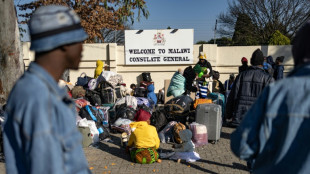 Migrants pick up pieces back home after fleeing South Africa
-
Reviving Montenegro's 'ancient' olive tree
-
 Farrell names Leinster-heavy Ireland side to face Wallabies
-
Resource rich PNG leaving its Pacific people behind: World Bank
-
 Fearing Russian strike, Kyiv's Holodomor museum evacuates exhibits
-
Papal envoy presides over first Vietnam beatification rite

-
 Germany's energy-hungry small firms struggle with green shift
-
LeBron James praises Balogun after 'Silencer' celebration

-
 Pochettino says Balogun foul 'never' a red card as suspension looms
-
Farrell names Leinster-heavy side to face Wallabies
-
 Campbell back after four years in Wallabies team to face Ireland
-
Most Asia markets down as tech firms take fresh blow

-
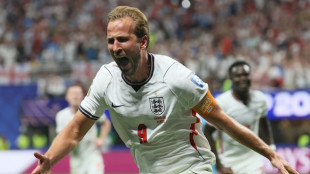 Kane saves England as USA, Belgium reach last 16
-
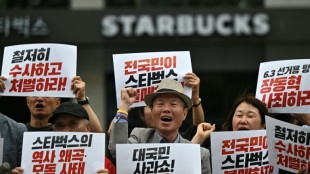
South Korean school baseball team suspended over 'Tank Day' chants
-
 Budding chefs cook up new career at China's BBQ academy
-
Ceuzany, Cape Verde's golden voice with volcanic emotion

-
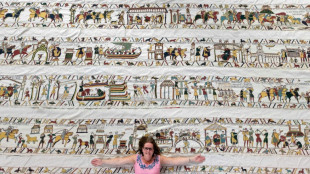 One stitch at a time: Artist's mission to recreate the Bayeux Tapestry
-
Balogun scores and sees red as US beat Bosnia 2-0

-
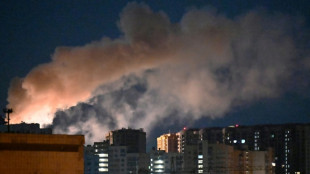 Deadly Russian barrage pounds Ukraine capital
-
EU top court to rule on record 4.1 bn euro Google fine

-
 Belgium coach salutes Tielemans after World Cup rescue act
-
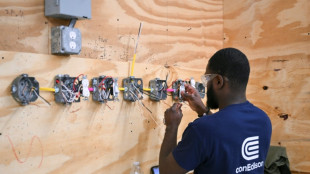
'Job forever': trade schools are all the rage in the AI era
-
 Cracking open a can of cannabis -- America's new pastime (for now)
-
Celtics reportedly trading Brown to Sixers in NBA blockbuster

-
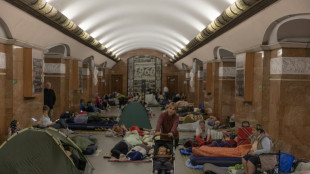 Russia strikes Ukraine capital with missiles and drones, wounds five
-
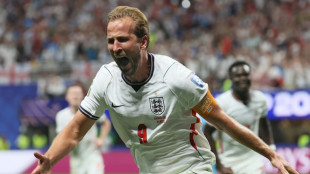
Kane saves England after DR Congo scare; Belgium comeback stuns Senegal
-
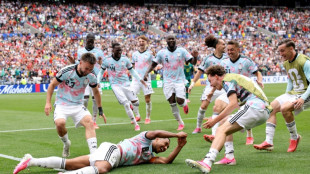 Belgium late show floors Senegal at World Cup
-
Celtics to trade Jaylen Brown to 76ers for Paul George: report

Israel-Iran conflict: what we know
Israel struck Iranian nuclear and military facilities with a barrage of missiles on Friday, killing several top officials and prompting a counter-attack by Iran.
Prime Minister Benjamin Netanyahu said Israel's attack on its arch-rival would last "as many days" as needed, and cited Israeli intelligence that Tehran was approaching the "point of no return" on its nuclear programme.
Iran called the Israeli air assault "a declaration of war" and fired dozens of missiles at Israel later Friday and Saturday.
International calls for restraint are multiplying, as fears grow the Middle East could be on the threshold of a broader conflict.
Here is what we know:
- Nuclear sites hit -
Israel's attacks started in the early hours of Friday, a day of rest and prayer in Iran, and continued through the day, on various sites.
A key target was a vast underground nuclear site in Natanz, which Israel hit several times, according to Iranian state television.
Radiation levels outside the facility "remained unchanged", the head of the United Nations' International Atomic Energy Agency (IAEA), Rafael Grossi, said.
Iran said there was limited damage to its Fordo and Isfahan nuclear sites.
- Commanders killed -
Top brass killed included the head of Iran's Revolutionary Guards, Hossein Salami, and armed forces chief of staff Mohammad Bagheri, with replacements swiftly named by supreme leader Ali Khamenei.
The Revolutionary Guards said its aerospace commander Amirali Hajizadeh was also killed. He was in charge of Iran's ballistic missile forces.
Iranian media said several nuclear scientists were killed.
Iran's ambassador to the UN said 78 people had been killed and 320 wounded in the first wave of strikes by Israel.
- Ongoing strikes -
Additional strikes hit sites in Iran's northwestern East Azerbaijan province, with 18 people killed there, state news agency IRNA said.
An Israeli military spokesman said "more than 200 targets" were hit, including nuclear facilities and air bases.
Netanyahu's national security adviser Tzachi Hanegbi said "there is currently no plan to kill" Khamenei and other political leaders.
Internet restrictions were imposed across Iran, the country's communications ministry said, adding they would be lifted "once normalcy returns".
- Iran's response -
Iran launched dozens of missiles at Israel, the Revolutionary Guards and Israel said, hours after the Israeli military said "most" of the 100 drones fired by Iran were intercepted outside Israeli territory.
Early Saturday, Iran launched a fresh wave of attacks, according to state media, with the Israeli military sounding air raid sirens and reporting more inbound missiles from Iran.
Israel said its air force was "operating to intercept and strike where necessary to eliminate the threat".
Israeli rescuers said Saturday that they were treating 21 people wounded in a rocket strike that hit the country's coast.
Rescuers said earlier that 34 people had been wounded in the Gush Dan area, including a woman who later died of her injuries, according to Israeli media reports.
- US involvement? -
Iran's Foreign Minister Abbas Araghchi called the Israeli attacks "a declaration of war" and urged action from the UN Security Council, which held an emergency meeting on Friday.
Tehran had previously warned it would hit US military bases in the Middle East if conflict occurred. The United States pulled out non-essential personnel from several sites days ahead of the Israeli attack.
US President Donald Trump said Israel fully informed him of its raids ahead of time, but insisted Washington was not involved.
He warned Iran that the "next planned attacks" will be "even more brutal" and said Tehran should cut a deal to roll back its nuclear programme "before there is nothing left".
Trump has repeatedly said he will not allow Iran to develop nuclear weapons.
His secretary of state Marco Rubio warned Iran not to target US interests or personnel in the Middle East.
- Nuclear programme -
Tehran has long denied seeking atomic bombs but had been enriching uranium to 60 percent -- far above the 3.67-percent limit set by a largely obsolete 2015 agreement with major powers.
However, Iran's 60-percent enrichment level is still short of the 90 percent threshold needed for a nuclear warhead.
The United States and Iran had been holding talks on Tehran's nuclear programme. The next round, scheduled for Sunday in Oman, now looks to be cancelled.
- Reactions -
The attack, and Iran's response, is fuelling international alarm.
Many capitals have urged restraint, fearing the consequences if the Israel-Iran conflict widened and drew in the United States, and if Middle East oil production and shipments were impacted.
The UN's atomic energy agency planned an emergency meeting for Monday.
UN chief Antonio Guterres called on Israel and Iran to halt their conflict, saying: "Peace and diplomacy must prevail."
Israel, Iran, Iraq, Jordan and Syria closed their airspaces, and several airlines cancelled flights servicing the region.
Oil prices surged on Friday, trading sharply up to around $75 a barrel before falling back a little.
Analysts underlined the risk to the 20 percent of the world's crude oil supplies that are shipped through the narrow Strait of Hormuz in the Gulf.
burs/rmb/gv/ami/sco/cms
H.Kuenzler--VB