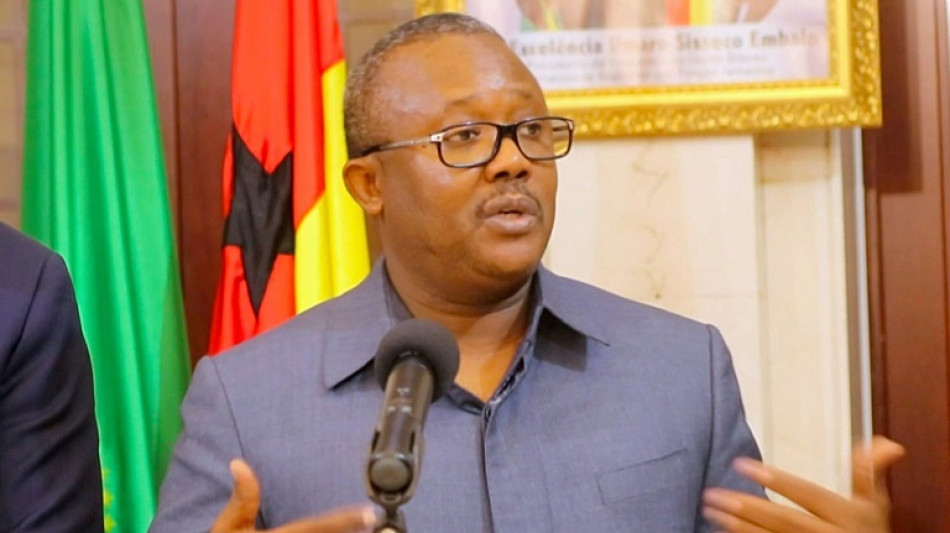
Guinea-Bissau launches major probe into foiled coup / Photo: ©

 Brewers rout Rays to reach brink of World Series sweep
 Mbappe dropped by Chinese brands for 'offending national sentiments'
 Kuwait exhibition presents Ukraine’s Islamic heritage and cultural ties

 Tech firms track Wall St rally on mixed day for Asian markets
 Jay-Z to perform at Super Bowl LXI halftime show: NFL

 Climate-threatened Fijian utopia rejects calls to relocate

 Israel to give verdict on Netanyahu in pivotal election
 $1m bounties, dawn arrests: Trump presses voter fraud campaign
 Gasping for air: Borneo residents struggle as island burns
 Doha exhibition charts a millennium of Chinese maritime ceramics trade
 New Zealand ex-PM Ardern to teach leadership in Sydney

 Ballon d'Or 'beyond wildest dreams' but Kane has plenty more to prove
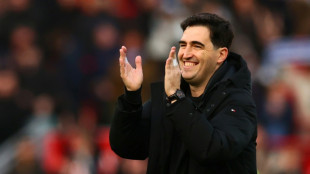 No envy, no secrets: How Spain's Gipuzkoa became football coaching hotbed
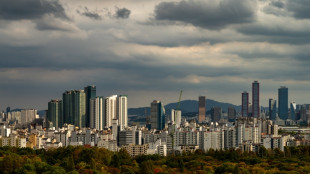 South Korea economy grows three times faster than expected in Q3

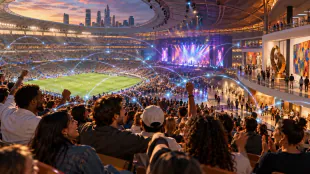 Al-Thawadi urges technology to deepen human connection through shared experiences
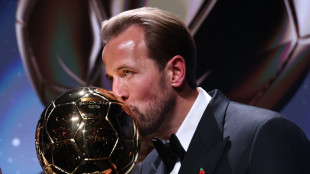 Ballon d'Or: Harry Kane's crowning moment
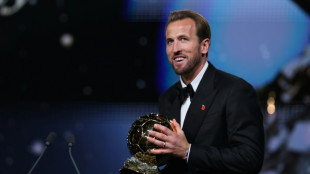
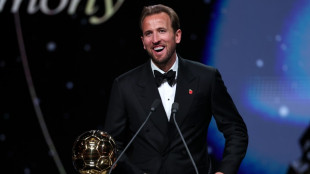 Harry Kane wins men's Ballon d'Or

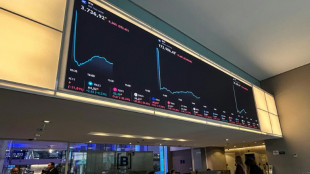 Lula win rattles Brazil markets over spending spree fears

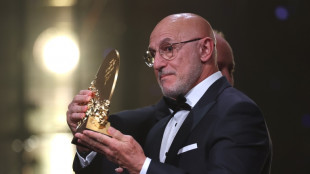 De la Fuente wins men's Ballon d'Or coach of year

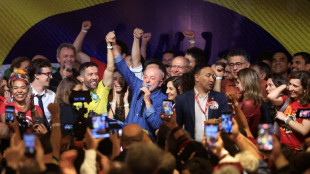 Trump slams 'rigged' Brazil election after ally loses to leftist Lula
 Nadal returns for Vegas hardcourt event
 Fainga'anuku named as loose forward for All Blacks northern tour

 Anthropic points to AI dangers, soaring sales in IPO filing
 Sinner to play rescheduled Saudi Six Kings in December
 Brazilian lawmaker Andre Janones, Lula's social media 'general'

Guinea-Bissau on Wednesday launched a major investigation into a foiled attempt to overthrow President Umaro Sissoco Embalo, who survived a gun attack in the uprising that claimed 11 lives, according to the government of the poor West African nation.
Heavily armed men on Tuesday afternoon surrounded government buildings in the capital Bissau where Embalo and his prime minister were believed to be attending a cabinet meeting.
Embalo, 49, later told reporters he had been unharmed during a five-hour gun battle, which he described as a plot to wipe out the government in Guinea-Bissau, one of Africa's most unstable countries.
AFP journalists reported hearing sustained gunfire, and the president said several people were killed.
A military source on Wednesday told AFP that six soldiers had died, but did not specify whether they had been attacking or defending the president.
On Wednesday, life was slowly returning to the streets of Bissau as shops and banks reopened, according to AFP correspondents.
Soldiers were patrolling the streets, however, and also blocked access to the Palace of Government complex where the attack took place.
The military source said a commission of enquiry had launched a vast dragnet, adding that military intelligence agents were gathering information at government headquarters.
Guinea-Bissau, a coastal state of around two million people lying south of Senegal, has suffered four military coups since independence from Portugal in 1974, its most recent in 2012.
In 2014, the country vowed to return to democracy, but it has enjoyed little stability since and the armed forces wield substantial clout.
At a news conference on Tuesday, President Embalo said that assailants had tried to "kill the president of the republic and the entire cabinet".
"The attackers could have spoken to me before these bloody events that have seriously injured many and claimed lives," he added, appearing calm.
The identity and motives of the assailants remain unclear.
But Embalo said the attack was linked to decisions he had taken "to fight drug trafficking and corruption".
Guinea-Bissau suffers from endemic corruption, and is known as a hub for cocaine trafficking between Latin America and Europe.
Vincent Foucher of France's CNRS research centre said Embalo, a former general, may have sparked anger with moves to assert greater authority over the army.
But Senegalese analyst Babacar Justin Ndiaye spoke of a "cocktail of divergences" at the top of the leadership, notably between the president and his prime minister, Nuno Gomes Nabiam.
Ndiaye also said President Embalo was at odds with parliament over the sharing of oil resources at the border with Senegal.
- Wave of coups -
Both the African Union and the Economic Community of West African States (ECOWAS), of which Guinea-Bissau is a member, on Tuesday condemned what they termed an "attempted coup".
They were joined on Wednesday by France, which lashed "the coup attempt" in Bissau and voiced "respect for the constitutional order and... support for the democratic institutions".
The events sparked fear that the country would join the ranks of other West African governments that have fallen to military coups recently.
In Mali, the army seized power in 2020. Guinea's military followed suit in September last year, ousting elected president Alpha Conde.
Then on January 24, Burkina Faso's army also announced it had deposed President Roch Marc Christian Kabore and taken control of the country.
B.Shevchenko--BTB