LA unrest marks latest clash of US presidents, states over National Guard / Photo: © AFP

 Tesla global auto sales jump 25% in 2nd quarter, beating expectations
 Zverev routs Royer to reach Wimbledon third round
 Hot spell roasts eastern US ahead of holiday weekend
 Hamilton cools fans Ferrari fervour
 Venezuela's diaspora searches for quake victims on social media
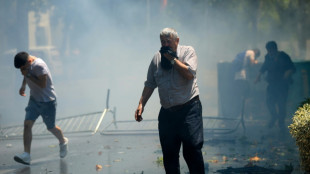 Albanian clashes as protest over Trump-linked resort boils over
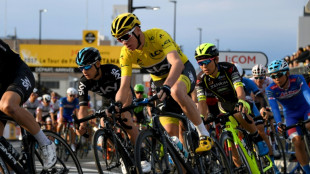 Desire key to Pogacar dominance, says former Tour king Froome
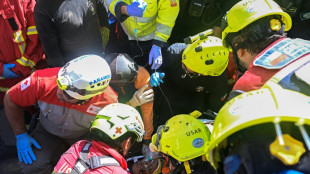 Rescuers dig out Venezuelan man eight days after quakes
 Anderson closes in on record Man City move
 England change five for South Africa Test
 Lock Alemanno to make 100th Pumas appearance against Scotland
 US posts weaker-than-expected job growth in June
 UK PM says 'deeply sorry' for decades of forced adoptions
 Almost 1.2 mn apply for Spain's migrant regularisation
 Ukrainian state ordered Nord Stream sabotage: German prosecutors
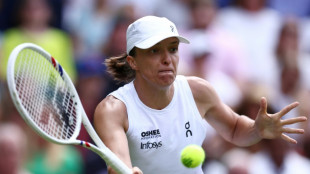 Swiatek, Zverev aiming to lay down Wimbledon markers
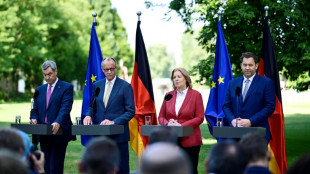 German ruling coalition agrees on major reform package
 European stocks climb after Asia rout
 Former Arsenal, Spain midfielder Cazorla retires
 German drone maker raises $1.2 bn as investors pile into defence
 French scramble to find air conditioners before next heatwave
 Japan deploys bear cameras in moutains as attacks surge
 Germany's Infineon opens major chip plant as EU seeks tech autonomy
 Biggest ever Russian barrage on Kyiv kills at least 13
 EU top court upholds record 4.1 bn euro Google fine
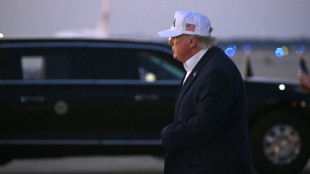
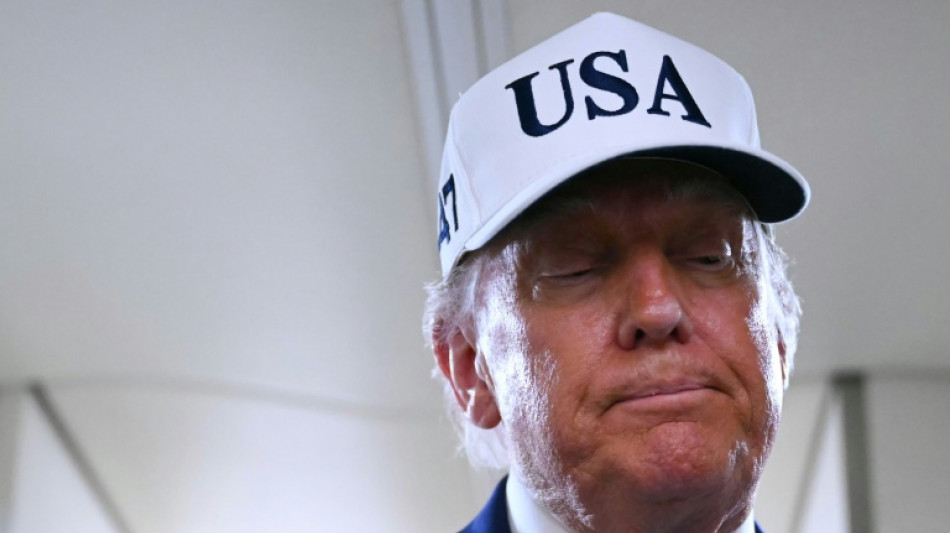
Donald Trump's deployment of California's National Guard marks the first time in decades that a US president openly defied a state governor and sent troops to an emergency zone.
By ordering 2,000 guardsmen to Los Angeles to help quell protests against raids by US immigration agents, Trump essentially mounted a takeover of the state's military regiments to address "lawlessness" on the city's streets.
The National Guard is a reserve military rooted in the 17th century local militias created in the American colonies before the country's founding.
Since then the guard has had multiple responsibilities: domestic disaster relief and security, homeland defense and prevention of civil unrest; and acting as reserve forces for US military deployments overseas.
Presidential orders to deploy guardsmen domestically are not uncommon.
But clashes between a president and governor over deployments -- or the lack thereof, such as during the US Capitol riot by Trump supporters on January 6, 2021 while he was still in office -- have been rare.
- Los Angeles, 2025 -
The White House said Trump relied on a seldom used law, known as Title 10, that permits National Guard federalization in times of "a rebellion or danger of a rebellion against the authority of the Government of the United States."
California Governor Gavin Newsom called the decision "purposefully inflammatory." But Trump's order proceeded, and the guard troops were on LA streets Sunday.
"This is the first time since 1965 that a president has deployed the National Guard without a request by a state governor," Kenneth Roth, a longtime former Human Rights Watch executive director, posted on X.
"Then it was (president Lyndon) Johnson protecting civil rights protesters. Now it's Trump creating a spectacle so he can continue his immigration raids."
Elizabeth Goitein of the Brennan Center for Justice warned of a "shocking abuse of power" by Trump, whose memorandum authorizes federalization of National Guard troops "at locations where protests against (federal immigration) functions are occurring or are likely to occur."
"Trump has authorized the deployment of troops anywhere in the country where protests against ICE activity might occur," Goitein posted on X. "That is a huge red flag."
- Alabama, 1965 -
A landmark civil rights moment led to a National Guard clash between a president and a segregationist governor.
With demonstrators led by Martin Luther King Jr on a five-day march from Selma to Alabama's capital Montgomery, governor George Wallace pledged National Guard security -- but then reneged.
The U-turn incensed Johnson who, in defiance of Wallace, called up the guard. The march was protected by thousands of Army soldiers and federalized guard members.
- Arkansas, 1957 -
When the Little Rock school system was ordered desegregated, Arkansas' pro-segregationist governor Orval Faubus deployed the National Guard to surround a high school and prevent nine Black students from entering.
President Dwight Eisenhower bristled at the standoff and told Faubus the guard must maintain order so the Black students could attend. Instead, Faubus pulled the guardsmen, leaving security to local forces.
Eisenhower issued an executive order federalizing the Arkansas National Guard, and ordered 1,000 US Army troops to join them.
- Kent State, 1970 -
Perhaps no anti-Vietnam war protest was more pivotal than at Ohio's Kent State University, where students slammed Richard Nixon's war expansion.
As unrest swelled, the National Guard opened fire, killing four students and wounding nine others.
The shootings sparked outrage, but also led to reforms regarding how the guard handles civil unrest and use of force.
- Hurricane Katrina, 2005 -
The massive hurricane left much of New Orleans underwater, leading to the largest-ever peacetime deployment of the National Guard.
But critics accused then-president George W Bush of favoring a militaristic response over humanitarian relief.
Louisiana's governor, Kathleen Blanco, warned that many among the thousands of National Guard and federal troops were battle-tested Iraq war veterans.
"These troops know how to shoot and kill and I expect they will," she reportedly said.
- Outside White House, 2020 -
June 1, 2020 saw a brutal crackdown on demonstrators following the police murder of African-American George Floyd.
With people aggressively protesting near the White House, the National Guard joined police to maintain order. Flash grenades and tear gas were deployed.
Unlike in the nation's 50 states, the DC National Guard is under direct command of the US president, who at the time was Trump.
T.Germann--VB