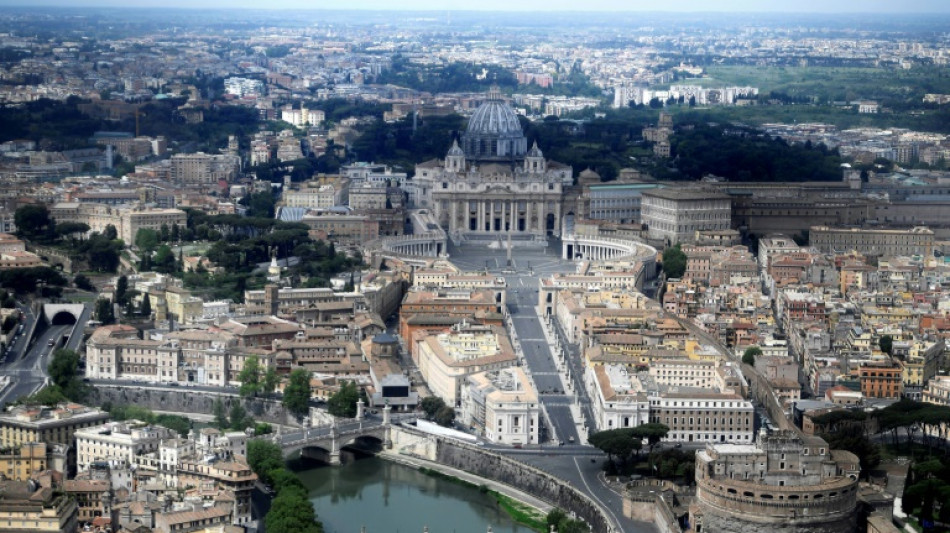
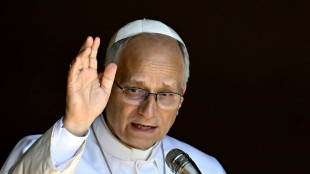
Continuity or rupture: what direction for the next pope? / Photo: © AFP/File

 Malaysia's JDT claims unbeaten run world record
 Bolivian economy minister fired after Congress vote
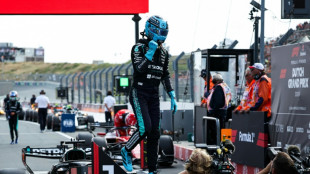 Russell roars to Dutch GP sprint pole, Antonelli fifth
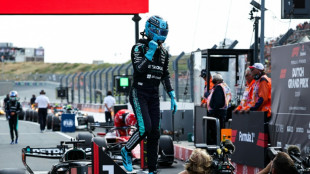 Russell takes pole for Dutch GP sprint
 England start life after Bazball with rout of Pakistan
 'Duck run' pest control catching on in S.Africa's winelands
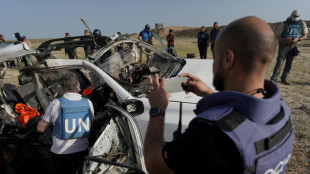 UK, Canada, Australia slam Israel ending probe into aid worker killings
 Spurs spending spree vital to raise standards: De Zerbi
 US, Canada try to wrap up trade deal before latest Trump deadline
 World No.1 Sinner withdraws from US Open with knee injury
 Judge allows UK rugby brain injury court case to continue to trial
 Trump announces temporary tariff relief on ground beef imports

 Pope to visit San Marino, address Italian political event
 All Blacks just as good as Springboks, says captain Savea
 Romania holding suspected 'low-level agent' after pistols found near Berlin: Germany
 UK forecasts 'biggest' El Nino will smash records, spark hottest year
 Cyclist Alaphilippe attracts tributes as reports say he has quit
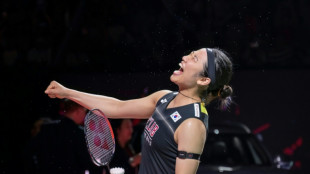 Top-ranked An, holder Yamaguchi reach badminton worlds semi-finals
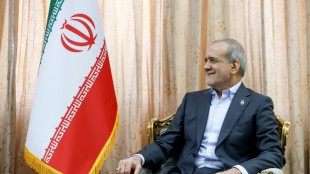 Iran president says time to end war while in position of strength

 Antonelli fastest in sole Dutch GP practice session
 2,500 dead and rising -- UN says DR Congo Ebola outbreak 'growing exponentially'
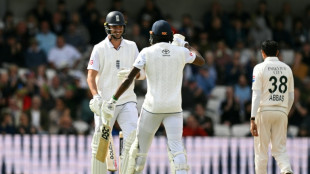 England all out for 409, lead Pakistan by 238 runs in 1st Test

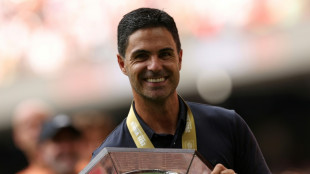 Premier League returns with Arsenal eyeing title dynasty
 Bayern knew about Musiala's condition 'a long time ago' says Kompany
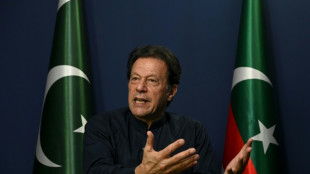 Ex-Pakistan PM Khan taken back to jail after hospital checks
For years, traditionalists raged at Pope Francis's liberal approach. The question now is whether his successor will walk the same path, or take the Catholic Church in a new direction.
Cardinals will meet within days for a conclave to elect a new pontiff, sparking fevered speculation about how the next pope will guide the world's 1.4 billion Catholics.
But experts say that despite his reforms, Francis did not change fundamental doctrine -- suggesting the next leader could bring a fresh style and different priorities, but is unlikely to upend 2,000-years of belief.
"Whether on the issues of abortion, the end of life, marriage for priests, the ordination of women, or homosexuality, which were points of traditional conservative doctrine, Francis has changed nothing," said Francois Mabille, director of the Geopolitical Observatory of Religion.
The Argentine certainly took some radical steps. He made institutional changes, lifted the veil of papal secrecy over child sex abuse, limited the use of the Latin mass, and opened the door to blessings of same-sex couples.
He emphasised humility, wasted no opportunity to speak out for the voiceless and lambast the powerful, while promising to open the Church to all, epitomised by his remark on gay believers: "Who am I to judge?".
All these statements "made an impression on public opinion", Mabille said.
With his successor, "it is not certain that the issue of migrants, which he hammered home for 12 years, will be taken up in the same way and with such frequency", the analyst said.
Another shift could be on world conflicts, in which Francis has intervened in a way "unmatched by almost all the sovereign pontiffs of the 20th century", Mabille said.
But Francis's demands for peace in Gaza and Ukraine failed to produce any tangible results, beyond riling Israel and sparking bitterness among many in Kyiv for suggesting it raise the "white flag" to Russia.
Whether on Ukraine or the Middle East, Francis's successor "will undoubtedly take a back seat", Mabille said.
- 'Flexibility' -
The future pope will, however, have to manage a number of key challenges facing the Catholic Church, from the role of women to the continued revelations about clerical child sex abuse.
The European church is also facing a crisis in vocations and falling church attendance, even if the numbers of believers are growing in Africa and Asia.
Martin Dumont, secretary general of the Research Institute for the Study of Religions, agreed it was too simplistic to speak of continuity or rupture.
The head of the Church "must be a point of unity for all Catholics", he told AFP.
Personality will play a role.
Dumont said "there will undoubtedly be a need for someone who speaks less" and in a "more controlled" approach, after Francis "spoke all the time, on all subjects".
But he predicted no major changes in the way the Church spreads the Catholic faith.
- 'Surprises' -
In previous conclaves, the cardinals have formed distinct groups.
Dumont noted that in 2005, after the death of John Paul II, "two different axes" emerged, split between the strong figures of Cardinal Carlo Maria Martini and that of Joseph Ratzinger -- who became Pope Benedict XVI.
This year, "there is no particular camp".
Francis appointed almost 80 percent of cardinals who will be eligible to vote for his successor -- but past experience warns against assuming they will choose the next pope in his mould.
Dumont points to Fridolin Ambongo, Archbishop of Kinshasa, who was made a cardinal by Francis -- only to lead the protests by African episcopates against the blessing of same-sex couples.
In addition, "there are those who are disappointed with Francis", Mabille said.
Many found him authoritarian, someone who "abandon(ed) collaborators who were totally devoted to him, overnight", the analyst added.
In this conclave, as a result, "we could be in for some surprises".
T.Suter--VB