Texas tech boom: Silicon Valley's southern outpost rises / Photo: © GETTY IMAGES NORTH AMERICA/AFP

 UEFA set to withdraw FIFA boycott threat ahead of Champions League draw
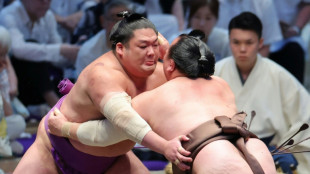 Sumo moves to beat Japan summer heat as temperatures rise
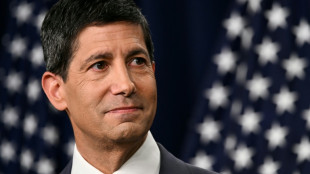 'Be more honest': Markets crave clarity from cryptic Fed chair
 Climate change leaves its mark on America's largest reservoir
 CIA director warned Russia not to attack NATO members: US media
 Search for missing after Nepal-Tibet floods kills at least 160
 Meta, US states agree $18 bn settlement in landmark teen safety case

 What scientists know so far about Nepal's deadly floods
 US general visits Colombia to discuss war on drugs
 Meta settlement puts social media industry on notice: 'There will be more'
 NFL owners approve record Seahawks sale

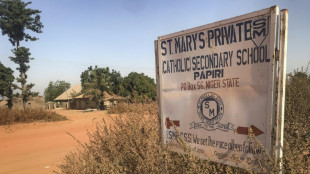 Nigerian armed groups net nearly $6 mn in ransoms: study

 Savio scores on debut as Spurs advance in League Cup
 Mbappe hits treble as Real Madrid thrash Real Sociedad

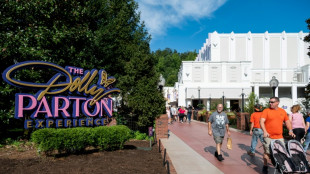 At Dollywood, superfans honor the late singer and local hero
 Stocks mixed as oil drops, US inflation stays high
 Bolivia's Paz appoints new economy minister amid bailout talks

 US designates UK-based Palestine Action as foreign 'terrorist group'

 'Rocky Horror Picture Show' star Tim Curry dead at 80

 American Moll wins women's pole vault at Zurich city event

 As Canada takes on US tariffs, what's behind the David and Goliath fight?
 UEFA 'likely' to drop threat to boycott FIFA tournaments: source

 US disrupts platforms allegedly used by Chinese hackers

 The foreign tourists missing in Nepal's flash floods
 Hundreds missing after Nepal-Tibet flood kills 98
Held every year in the capital of conservative-leaning Texas, the South by Southwest festival increasingly celebrates the state's emergence as a technology hub stepping out of Silicon Valley's shadow.
The sprawling, counter-cultural conference -- first launched in 1987 as a music festival -- was always a bit of a Texas outlier, just like its host city Austin, a liberal enclave in the middle of a state best known for its big skies, cowboy hats and oil rigs.
The festival, which lasts through Saturday, has mushroomed into a conglomerate of film, comedy, media, cultural and professional events, but none are more in-line with Austin's zeitgeist than those highlighting technology.
Long home to a thriving tech scene, recent years have seen the city inundated with Silicon Valley types, turbocharging the quirky capital's bro element and billionaire contingent.
Among the former is podcaster and comedian Joe Rogan, who produces his distinctly masculine show from Austin, interviewing not just a few of the country's biggest tech titans.
As for billionaires, the most dominant figure is Elon Musk, the SpaceX and Tesla tycoon who has made the Lone Star state his de facto headquarters.
Musk is a regular guest on Rogan's podcast, but Meta's Mark Zuckerberg also came through his studio, expressing frustration with the lack of masculinity from his workers on the liberal coasts.
"The Californians I know who moved to Texas are even extra Texan marinated in Texas sauce," Musk wrote on X in November.
"For the love of God, please don't let Texas become California," he added.
Austin's tech ascendance has its origins in the state's strong business culture.
Texas provides a combination of very low taxes, top-notch cities built on the oil and gas industries, light-touch regulation, and vast expanses of flat space.
"When you are thinking about setting up a new factory, a new data center, what is it that we have here? We have the space to grow at a lower cost than you can find in more densely developed areas of the country," said Paul Cherukuri, Rice University's vice president for innovation.
- Bigger than Italy -
Texas is so big that it is almost unfair to think of it as a state -- it has a $2.6 trillion economy that is the 8th largest in the world ahead of Italy's.
And it is powered by Houston, Dallas, San Antonio and Austin, with their universities, talent pools, and lower costs of living.
According to Federal Reserve data, tech jobs in Texas have grown at double the rate of other sectors over the past decade.
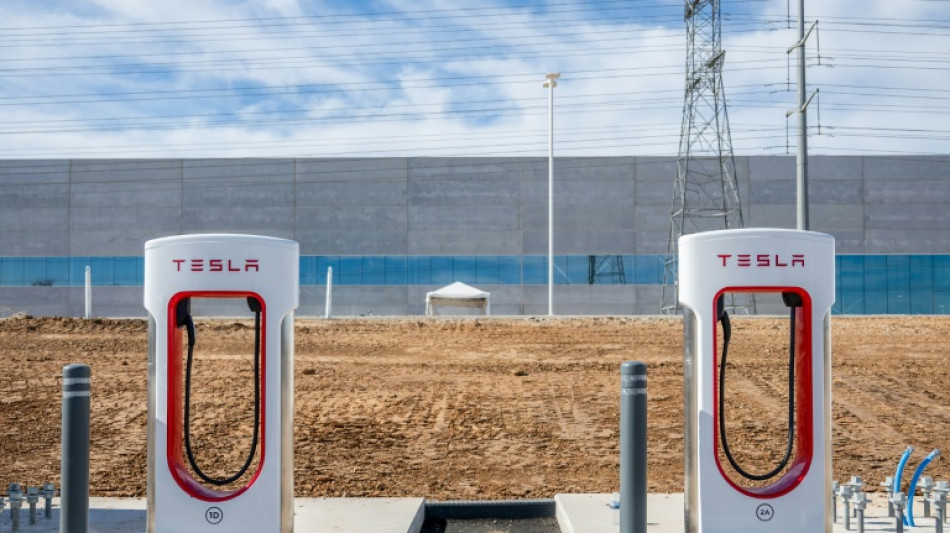
In 2022, Musk opened a Tesla vehicle factory east of Austin. He is also opening facilities in nearby Bastrop County, including a living compound for employees and a new headquarters for X, his social media platform.
Apple is betting on Texas as well, with Austin already representing the iPhone-maker's second-largest concentration of employees outside the company's Cupertino, California headquarters.
The company recently announced that a 250,000-square-foot (23,225-square-meter) server manufacturing facility, slated to open in 2026, will create thousands of jobs.
Meta and Google also have an expanding presence and onetime Silicon Valley stalwarts like Oracle and a portion of Hewlett-Packard have moved their headquarters to the state.
Most of these relocations will benefit from Texas's seemingly infinite real estate, where a lithium factory or an AI-ready data center can be built at massive scale with minimal government red tape.
"The Silicon Valley universe is shifting to more physical tech, hard tech, and the place to really make stuff is Texas," said Rice University's Cherukuri.
Another determining factor is the cost of living compared to California, which is "massive, especially for housing," said Gib Olander, a business strategist at Northwest Registered Agent, which advises companies on relocation.
"Engineers who were priced out of homeownership in the (San Francisco) Bay Area can actually buy homes in Texas cities. That quality-of-life equation has become even more powerful in the remote work era," he added.
- Political contrasts -
The city's transformation hasn't come without friction. Austinites complain about soaring real estate prices, though the construction boom may eventually cool the market.
Meanwhile, Texas's conservative policies -- including a near-total abortion ban and Governor Greg Abbott's hardline immigration stance -- contrast sharply with tech's traditionally progressive culture.
But the state's fans maintain that beneath political divisions is a welcoming environment.
"We don't care where you're from: Just come and be a part of us," said Cherukuri, who was born in India.
"That's Texas. Even though you may hear something else in the caricatures," he said.
E.Burkhard--VB