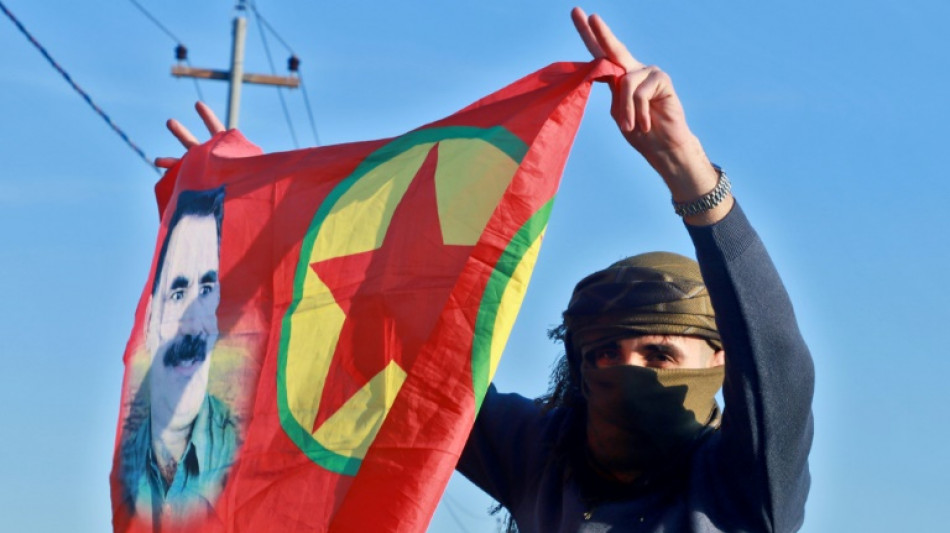
Joy and fear among Kurds in Iraq, Syria after Ocalan's call to disarm / Photo: © AFP

 Climate change hits trout and salmon in UK's prized chalk streams

 Škoda Octavia Marks 30 Years With Nearly 7.9 Million Units Produced
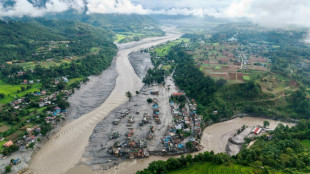
 Nepal seeking to reach survivors in tunnel as risk of new floods rises

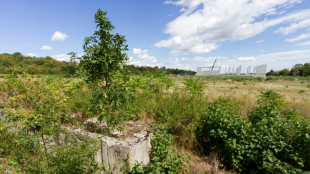 Anger in Austria over business park on former Nazi camp site

 In shadow of Premier League, Serie A flexes financial muscle

 Tanker pays record $5.3 mn to transit Panama Canal: administrator

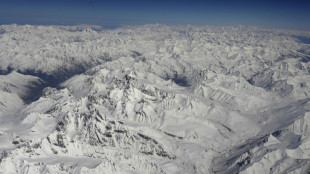 Pilgrims seeking peace caught in deadly Nepal-Tibet floods
 China's help critical, but unlikely, for US to choke off Iran
 US court rules Pentagon ban of Anthropic unlawful
 In Zambia, a Shaolin Temple offers a softer face of China

 Messi's Inter Miami appoint new coach Gonzalez
 Clashes in Spain's Ceuta month after mass migrant influx

 Argentina names unchanged side for Australia Test
 Australia's Lee leads PGA Tour Championship
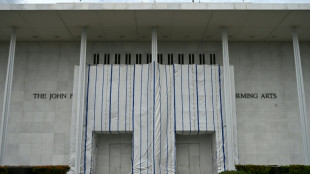 US judge urged to rebuff restoring Trump name to Kennedy Center

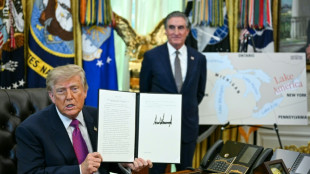 Trump orders Lake Ontario to be renamed 'Lake America'

 Raphinha, Lopez strike again as Barca beat Athletic

 Dos Santos, Russell set world records in 'crazy' Zurich Diamond League

 Dos Santos upstages Warholm for blistering new 400m hurdles world record

 US Open women's singles: Three talking points

 American Masai Russell sets new women's 100m hurdles world record
 Smith and Cox revive England after Abbas strikes for Pakistan

 Brazil's Alison Dos Santos sets new men's 400m hurdles world record
 The Nile Theater Announces Full 2026 Concert Lineup Including Menzingers and Shakey Graves

 Venezuelan Artist Oswaldo Vigas Retrospective Opens in Guangzhou

Jailed Kurdish militant leader Abdullah Ocalan's call to disarm sparked relief but also fears for the future among Kurds in Syria and Iraq, who long for peace after fighting hard for autonomy.
In a potentially seismic shift in Kurdish history, veteran leader Ocalan sent a message this week from his Turkish prison, calling on his Kurdistan Workers' Party (PKK) to dissolve and disarm.
But the PKK, mostly based in the mountains of northern Iraq, has yet to respond, and its members have not seen their leader for decades except for a few photos from his jail cell.
The Kurds, an ethnic minority with a distinct culture and language, are rooted in the mountainous region spread across Turkey, Syria, Iraq and Iran.
They have long fought for their own homeland, but for decades suffered defeats on the battlefield and massacres in their hometowns.
Today, millions of Kurds live in relative safety in the autonomous Kurdistan region in northern Iraq and under the semi-autonomous administration in northeastern Syria.
Both areas have been embroiled in the decades-long PKK insurgency against the Turkish state.
In Sulaimaniyah, Iraqi Kurdistan's second-biggest city, 31-year-old Rebaz Hassan waited impatiently for Ocalan's message Thursday.
"It is a historic day," Hassan said, though others did not share his enthusiasm.
"I saw people crying and I also saw someone dancing," he said, adding that the consequences of the call should be explained.
"Some people did not understand if they should be happy or angry."
- 'Positive impact' -
In the city Qamishli in neighbouring Syria, Akid Farouk, 35, said the call was "a good step to solve the Kurdish issue in Turkey".
"It will have a positive impact on the region if the PKK implements it," he added.
Ocalan's call, if heeded by his fighters, would be a massive win for Turkey, strengthening its status as a regional power as it claims a historic victory.
It "would radically change both the Kurdish movement and the geography and geopolitics of the Middle East, placing Turkey at the centre", said Adel Bakawan, director of France-based think tank the European Institute for Studies on the Middle East and North Africa.
While for Iraq the execution of Ocalan's call would solve a major source of tension with neighbouring Turkey, Syria's situation is much more complicated.
Oppressed for decades, Syria's Kurds took advantage of the weakness of Bashar al-Assad's government during the civil war to carve out a de facto semi-autonomous region in the northeast.
But following his overthrow by Islamist fighters with ties to Turkey, the Kurds are left navigating an uncertain future.
Turkey sees Syrian Kurdish forces, who make up the bulk of the US-backed Syrian Democratic Forces (SDF), as an offshoot of the PKK and has long rejected their dream of self-rule.
But some Kurds in Syria hope a deal with the PKK might soften Turkey's stance.
A peace process would transform the SDF "from being the enemy we must fight" into an ally Turkey can rely on to better mark its influence, Bakawan said.
Renad Mansour, of the Chatham House think tank in London, said that relations with the Kurds have been the key obstacle to the new Syrian authorities' efforts to consolidate their power countrywide.
A new Turkey-PKK dynamic "would impact the development of the political system and power-sharing in Syria", Mansour said.
The SDF have repeatedly refused calls for their dissolution, insisting on remaining a distinct entity under the new Syrian authorities and army.
While SDF leader Mazloum Abdi welcomed Ocalan's statement as a step towards peace, he said that the call for disarmament did not concern his forces.
The SDF spearheaded the fight that defeated the Islamic State group (IS) in Syria in 2019 and is still seen by the United States, which maintains presence in the northeast, as crucial to prevent a jihadist resurgence.
- A relief -
When IS invaded swathes of land in Iraq, the PKK joined the fight against the jihadists, who were defeated by US-backed Iraqi forces in 2017.
The Kurdish militants have since expanded their presence in Iraq beyond the autonomous region to areas nearby.
Their presence has long been a source of tension between Iraq and Turkey, which also maintains military bases in Kurdistan and carries out ground and air operations against the Kurdish militants.
Although Baghdad has recently sharpened its tone against the PKK, listing it as a "banned organisation", Ankara wants it to go further and declare it a terrorist group.
Political scientist Ihassan al-Shemmari said that a peace process would "relieve the Iraqi government from Turkey's pressure to take action against the PKK" and improve relations between the neighbouring countries.
burs-rh/ser/ami
U.Maertens--VB