Conservative leads German election race in shadow of far right / Photo: © AFP/File

 Killing of Palestinian children and teens by Israel surges in West Bank

 Educators keep 9/11 memory alive for next generation, 25 years on
 Venezuelans view US oil deal with doubt, hope
 Gobena and Jepchirchir power to Sydney Marathon victories
 Iceland in suspense after close EU vote
 Wallabies hold on for victory in Argentina

 Juve notch second straight win, Fiorentina's centenary party falls flat
 Rybakina eases injury fears ahead of US Open
 Djokovic kicks off latest Grand Slam quest under US Open lights

 'Sorry' De Zerbi won't panic after Spurs shambles
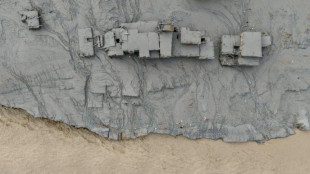 UN, Nepal warn of climate threat after deadly floods

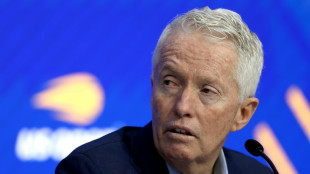 USTA boss says structure of new player council not yet set

 Tiny Elversberg stun Leverkusen on Bundesliga debut, Dortmund beat Hamburg

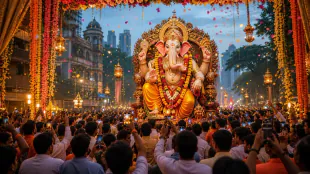 Chinchpoklicha Chintamani begins 2026 arrival procession in Parel

 Editorial questions Letitia James’ record as New York attorney general

 Los Angeles triplets weigh 19.3 pounds in unusually heavy birth

 Matt Leinart assesses Arch Manning and the leading names in college football

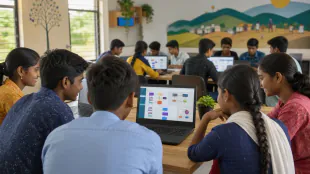 Rural Tamil Nadu students present 64 technology projects at IIT-M research park

 Tamil Nadu goalball team’s national silver highlights need for wider support
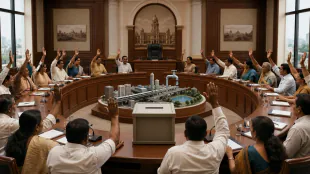
 Tamil Nadu and NUS agree to expand postgraduate and research links

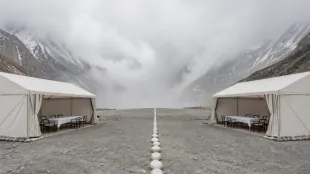 India and China have not named two new border meeting sites

 French campaign sharpens as far right accuses left over civil disobedience calls

 Baladi Map app turns Lebanon’s local problems into a public record

 Thirty-seven Mumbai pilgrims return after Nepal flood disruption

 Ankle ligament tear ends Neeraj Chopra’s 2026 season

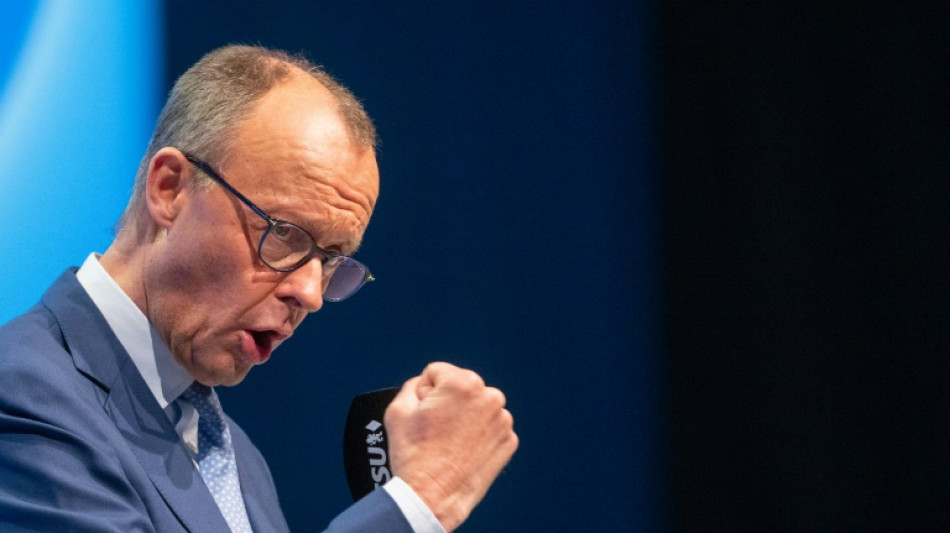
When Germans go to vote in one week's time, after a polarising election campaign overshadowed by a far-right surge, they are expected to hand the chancellery to conservative Friedrich Merz.
If the polls are right, it will fall to the Christian Democrat to deal with a storm of challenges roiling Germany -- economic stagnation, a society divided over immigration and a hostile Team Trump.
An election win on February 23 would only be the first step towards a new government. Merz would then need to find one or more coalition partners in a process that, even in less turbulent and toxic times, takes weeks if not months.
Merz's opposition CDU/CSU block has long polled at around 30 percent -- almost double the support for either the Social Democrats (SPD) of Chancellor Olaf Scholz or his coalition allies the Greens.
If Merz triumphs, the former investment lawyer has vowed a strong shift to the right that would end two decades of centrist governance under Scholz and his predecessor Angela Merkel, Merz's longtime party rival.
Merz, 69, argues that only by answering public fears over irregular immigration can centrist parties halt the rise of right-wing extremists that has upended politics in many Western democracies.
Germany, with its history of Nazi rule and the Holocaust, long thought itself immune to a mainstream far right, but the Alternative for Germany (AfD) is now polling in second place at a record 20 percent.
All other parties have vowed to shun the anti-immigration party and keep it behind a "firewall" on non-cooperation, a stance the AfD labels an "anti-democratic cartel agreement".
That outsider status has only emboldened the AfD, which celebrated Trump's reelection and basked in the support tech billionaire Elon Musk, who has declared that "only the AfD can save Germany".
- 'Shouting, hate, polarisation' -
The AfD has drawn support as a spate of deadly attacks -- most recently a stabbing spree targeting kindergarten toddlers blamed on an Afghan man -- has inflamed the immigration debate.
After the knife rampage, Merz vowed to go "all-in" and took a political gamble that has since redefined the campaign.
Shattering the anti-AfD "firewall" for the first time, Merz relied on its backing in parliament to push through a symbolic motion foreshadowing his planned crackdown on immigration.
The move sparked massive blowback as tens of thousands took to the streets, waving signs such as "Campaign like it's 1933".
Scholz, 66, condemned the move and warned Merz may one day want to rule with the AfD -- an scenario Merz has vehemently rejected.
Scholz also labelled Merz's taboo breach a "bad omen" for the post-election period when coalition talks loom.
Calling for a return to civility, Scholz told parliament: "The vast majority of Germans don't want ever more extreme shouting, more hate and more polarisation."
Merz, who has blamed Scholz for the AfD's rise, argued that if centrist forces failed to act, the AfD would one day be able to hobble government or even "come close to a majority".
"It is clear to all the centrist parties that they must work together to prevent the AfD from coming into government and keep it as small as possible," said Marianne Kneuer, professor of comparative politics at the Technical University Dresden.
"So far no party has succeeded in doing that."
- Daunting challenges ahead -
The venom of recent weeks threatens to complicate the tricky task of building the next government in a parliament that could have as many as eight parties.
In the running as junior partners for Merz would be the three parties in Scholz's former coalition, which collapsed during an angry budget row in early November.
One is the small Free Democrats, which may however fail to win the five percent needed to re-enter parliament.
That would leave the SPD, without Scholz, and the Greens -- although the Bavarian CSU opposes any tie-up with the left-leaning ecologist party.
Whenever a new government takes shape -- Merz has said he would aim for an Easter deadline -- its daunting to-do list may well have ballooned in an era of heightened geopolitical turbulence.
Germany's economy, long the envy of the world, has flat-lined since before the pandemic and shrunk in the past two years.
More trouble looms as China has morphed from a key market for German exports into a key competitor.
The biggest challenge may come from Washington, long Berlin's bedrock ally, where Trump has railed against Germany for its insufficient NATO spending and signalled a potential trade war.
The German Institute for Economic Research warned that "this uncertainty and an escalation in the trade conflict" could cost the German economy up to one percent of economic output and extend the recession into another year.
L.Meier--VB