President Trump says US 'reciprocal tariffs' to be announced Thursday / Photo: © AFP

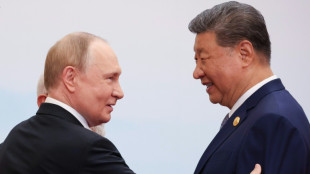
 Putin, Xi, Iran's Pezeshkian in Kyrgyzstan for summit

 Fully Permitted Tanzanian Gold Project Clears Path to Construction as Financing, EPCM Fall in Place (LVGLF)

 EdWealth Announces MoneyBench Benchmark Comparing AI Money Answers From Ed, ChatGPT and Gemini

 Root says new balls behind batsmen's struggles in England
 Swollen rivers, washed-out roads hamper Nepal rescue effort

 In France's north, winegrowers bet on a warmer future

 Deadly virus stalks South Africa's sardines

 South Korea women's football body probes 'period' insult

 Transitional Fashion Essentials for Autumn: Key Pieces from M&S and Joe Browns

 China's Xi and Iran's Pezeshkian in Kyrgyzstan, Putin expected

 Rescuers hunt for missing after deadly N.Cyprus ferry accident

 Ethiopia's Abiy could consolidate power as 'executive president'

 Crude prices rise on US-Iran strikes, equities mixed after Warsh remarks

 South Korea court gives Unification Church leader 2 years prison

 US hosts G20 finance talks with growth, Iran pressure on agenda

 African players in Europe: Wissa flick seals Newcastle victory

 Venice film preview: Clooney, Oasis and Musk

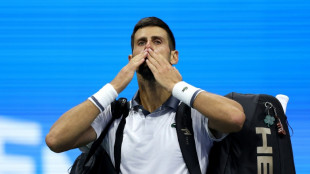 Poorly Djokovic crashes out of US Open first round

 Djokovic falls in US Open first round, earliest Grand Slam exit in 20 years

 Chinese guitar capital's stairway to export heaven

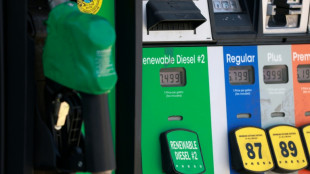 Stocks drop as Warsh fans US rate hike bets, crude up on US-Iran strikes

 Injuries cloud tennis as US Open gets under way

 Iran retaliates after first US strikes in a month
 Itauma says 'I'll be back' after bruising heavyweight title loss
 Brilliant Palou clinches fourth straight IndyCar crown
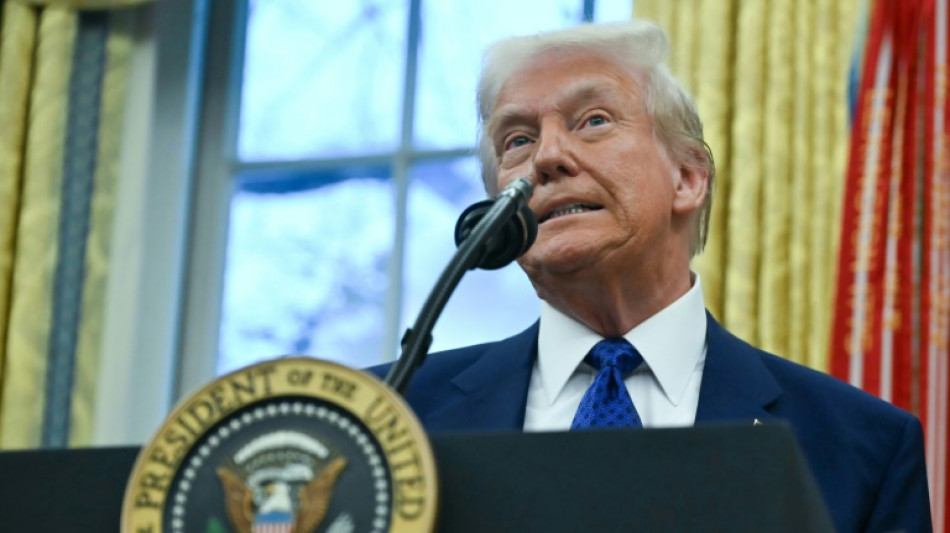
US President Donald Trump said that he would announce "reciprocal tariffs" on trading partners Thursday, opening new fronts in a trade war economists warn could fuel inflation at home.
Trump has announced a broad range of tariffs targeting some of the United States' biggest trading partners since taking office, arguing that it would help tackle unfair practices -- and in some cases using the threats as a way to influence policy.
He has referred to tariffs as a way to raise revenue, remedy trade imbalances and pressure countries to act on US concerns.
On Thursday, the president said he would hold a news conference on reciprocal tariffs at the White House at 1:00 pm local time (1800 GMT).
"Three great weeks, perhaps the best ever, but today is the big one: reciprocal tariffs!!! Make America great again!!!" Trump wrote in all capital letters on his Truth Social platform.
The move is expected to match the United States' tariff rates on imports to levels that other countries impose on US goods.
Trump's announcement came hours before he was due to meet Indian Prime Minister Narendra Modi in Washington.
Analysts have warned that reciprocal duties could bring a broad tariff hike to emerging market economies such as India and Thailand, which tend to have higher effective tariff rates on US products.
Countries such as South Korea that have trade deals with Washington are less at risk from this move, analysts believe.
- Inflation concerns -
Cost-of-living pressures were a key issue in the November election that saw Trump sweep to power, and the Republican has promised to swiftly reduce prices.
But economists warn that his broad-ranging tariffs on US imports would likely boost inflation, not reduce it, in the near term and could weigh on growth eventually.
Trump's nominee for commerce secretary Howard Lutnick, however, has pushed back on the idea that duties would cause widespread inflation, even as certain costs might rise.
During election campaigning, Trump promised: "An eye for an eye, a tariff for a tariff, same exact amount."
For example, if India imposes a 25-percent tariff on US autos, Washington will have a 25-percent tariff as well on imports of autos from India, explained a Nomura report this week.
Modi will hold talks with Trump at the White House on Thursday and New Delhi offered some quick tariff concessions ahead of his visit, including on high-end motorcycles.
"Trump's objective of implementing reciprocal tariffs is to ensure fair treatment for US exports, which could indirectly also address US trade imbalances with partner countries," analysts at Nomura said.
Among Asian economies, India has a 9.5-percent weighted average effective tariff on US exports, while there is a three-percent rate on India's exports to the United States.
Thailand has a 6.2-percent rate and China a 7.1-percent rate on US products, Nomura noted.
Higher tariffs are often imposed by poorer countries, who use them as a tool for revenue and protection because they have fewer resources to impose non-tariff barriers such as regulatory protectionism, Cato Institute's Scott Lincicome earlier told AFP.
It remains unclear if Trump views reciprocal tariffs as an alternative to a universal tariff of between 10 and 20 percent, which he floated in the lead-up to last year's presidential election, or as a separate policy.
G.Haefliger--VB