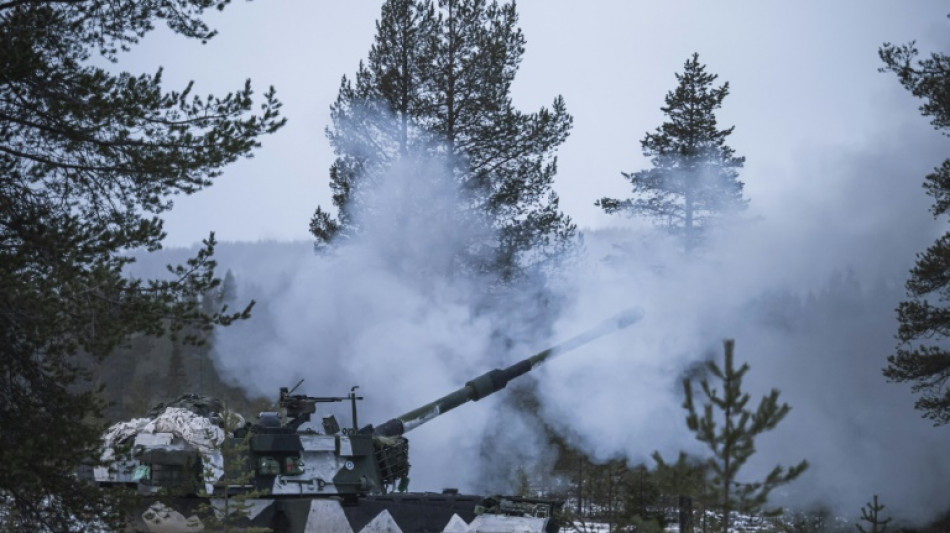
In NATO, the closer to Russia, the more spent on defence / Photo: © AFP/File

 US vows to keep economic pressure on Iran as G20 finance talks begin

 Shein valued at $26.3 bn in Hong Kong market debut
 Crude prices rise above $90 per barrel on US-Iran strikes

 Liverpool sign Barcola from PSG for reported £124 million

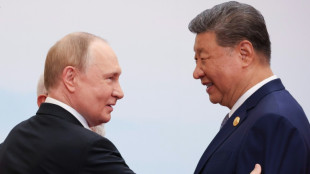 Putin, Xi, Iran's Pezeshkian in Kyrgyzstan for summit

 Fully Permitted Tanzanian Gold Project Clears Path to Construction as Financing, EPCM Fall in Place (LVGLF)

 EdWealth Announces MoneyBench Benchmark Comparing AI Money Answers From Ed, ChatGPT and Gemini
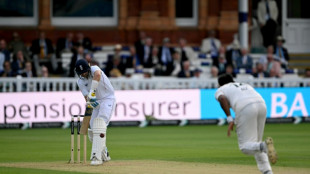 Root says new balls behind batsmen's struggles in England
 Swollen rivers, washed-out roads hamper Nepal rescue effort

 In France's north, winegrowers bet on a warmer future
 Deadly virus stalks South Africa's sardines
 South Korea women's football body probes 'period' insult
 Transitional Fashion Essentials for Autumn: Key Pieces from M&S and Joe Browns

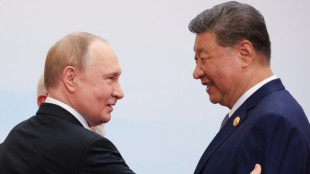 China's Xi and Iran's Pezeshkian in Kyrgyzstan, Putin expected

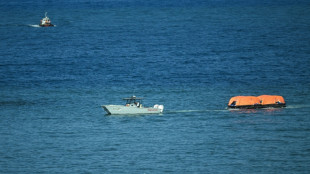 Rescuers hunt for missing after deadly N.Cyprus ferry accident
 Ethiopia's Abiy could consolidate power as 'executive president'
 Crude prices rise on US-Iran strikes, equities mixed after Warsh remarks
 South Korea court gives Unification Church leader 2 years prison
 US hosts G20 finance talks with growth, Iran pressure on agenda

 African players in Europe: Wissa flick seals Newcastle victory

 Venice film preview: Clooney, Oasis and Musk

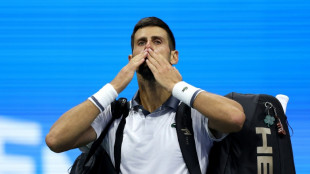 Poorly Djokovic crashes out of US Open first round
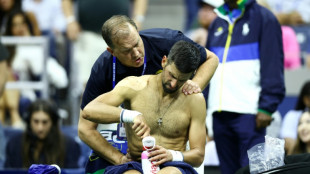 Djokovic falls in US Open first round, earliest Grand Slam exit in 20 years

 Chinese guitar capital's stairway to export heaven
 Stocks drop as Warsh fans US rate hike bets, crude up on US-Iran strikes
While NATO countries living near the Russian border pay well over two percent of their GDP on defence, those further away pay less.
Twenty-two of the US-led defence alliance's 30 European members met the minimum target for military spending in 2024, but that differed from place to place.
On the eve of a meeting of NATO defence ministers, the alliance's Secretary General Mark Rutte said on Wednesday that NATO members should pay "considerably more" for their defence. US President Donald Trump has demanded an increase to five percent of national output.
Poland led the pack in 2024, with a marked increase in its defence spending since Russia's invasion of Ukraine nearly three years ago.
Its spending grew from 1.88 percent of GDP in 2014 to 2.23 percent in 2022, 3.26 percent in 2023 and 4.12 percent in 2024.
Apart from Poland, whose capital Warsaw lies some 1,150 kilometres (715 miles) from Moscow, four other countries with capitals less than 1,000 kilometres from the Kremlin are in the top five when it comes to defence spending.
Estonia (3.43 percent), Latvia (3.15 percent), Lithuania (2.85 percent) and Finland (2.41 percent) all share a border with Russia.
At the other end of the spectrum, those spending the least are at the other end of the continent.
In the case of Spain, which spent just 1.28 percent on defence in 2024, its capital Madrid lies 3,450 kilometres from Moscow.
On average those lying 1,000 kilometres from Moscow spend 0.6 percentage points more, according to an AFP count based on NATO figures.
Overall, the 32 NATO members devote $1.474 billion to their defence.
Of that $476 billion comes from European countries, just under half the $968 billion spent by the United States.
Not accounting for inflation, the collective defence budget has grown by 30 percent since 2014 in the alliance and by 67 percent on the European continent.
- Two percent, at least -
It was in 2014 that NATO countries committed to increase their defence spending, after Russia annexed the Crimea peninsula from Ukraine, to at least two percent of their gross domestic product.
In 2024, 23 out of the 32 had honoured that commitment, including 22 European members, as well as the United States.
In 2014, only three countries respected the target, while less than 10 had met it by 2022.
Several countries have called for the target to be increased.
Trump, who accuses the other alliance members of not doing enough to ensure their own protection, has even spoken of five percent.
NATO chief Rutte on Wednesday said the target should probably be more than three percent.
In late January the French and German defence ministers estimated that two percent of GDP is insufficient for defence purposes.
The two countries, the biggest European contributors in absolute figures, devote respectively $97.7 and $64.3 billion to their defence.
Lithuania has floated a target of three percent for the alliance.
Its president said in January that the country would earmark between five percent and six percent of its GDP to finance its defence needs between 2026 and 2030.
C.Bruderer--VB