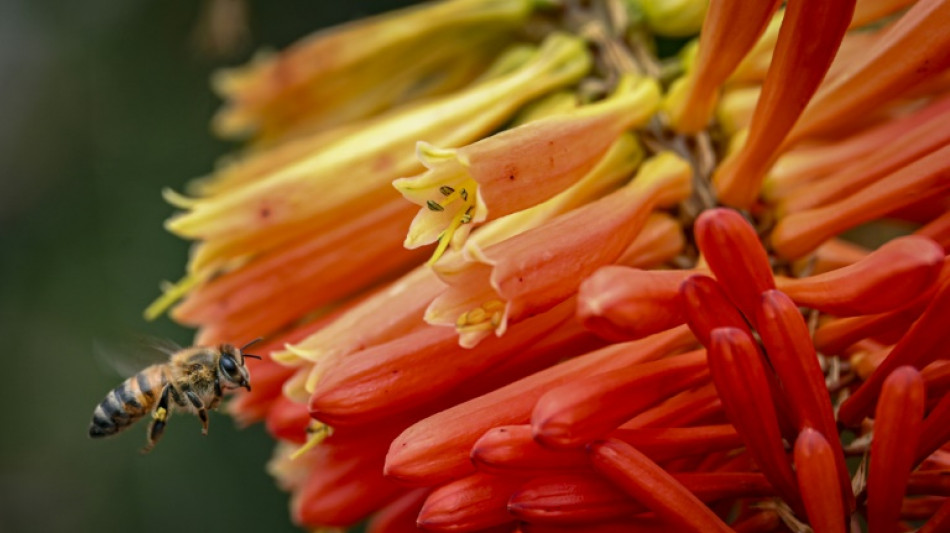
Pesticides causing widespread harm to animals and plants: study / Photo: © AFP/File

 US vows to keep economic pressure on Iran as G20 finance talks begin

 Shein valued at $26.3 bn in Hong Kong market debut

 Crude prices rise above $90 per barrel on US-Iran strikes

 Liverpool sign Barcola from PSG for reported £124 million

 Putin, Xi, Iran's Pezeshkian in Kyrgyzstan for summit
 Fully Permitted Tanzanian Gold Project Clears Path to Construction as Financing, EPCM Fall in Place (LVGLF)

 EdWealth Announces MoneyBench Benchmark Comparing AI Money Answers From Ed, ChatGPT and Gemini

 Root says new balls behind batsmen's struggles in England

 Swollen rivers, washed-out roads hamper Nepal rescue effort

 In France's north, winegrowers bet on a warmer future

 Deadly virus stalks South Africa's sardines
 South Korea women's football body probes 'period' insult
 Transitional Fashion Essentials for Autumn: Key Pieces from M&S and Joe Browns

 China's Xi and Iran's Pezeshkian in Kyrgyzstan, Putin expected

 Rescuers hunt for missing after deadly N.Cyprus ferry accident
 Ethiopia's Abiy could consolidate power as 'executive president'
 Crude prices rise on US-Iran strikes, equities mixed after Warsh remarks

 South Korea court gives Unification Church leader 2 years prison

 US hosts G20 finance talks with growth, Iran pressure on agenda
 African players in Europe: Wissa flick seals Newcastle victory

 Venice film preview: Clooney, Oasis and Musk

 Poorly Djokovic crashes out of US Open first round

 Djokovic falls in US Open first round, earliest Grand Slam exit in 20 years

 Chinese guitar capital's stairway to export heaven

 Stocks drop as Warsh fans US rate hike bets, crude up on US-Iran strikes
Pesticides are significantly harming wildlife across the planet, stunting growth, damaging reproduction and even causing behavioural changes in animals not meant to be targeted, according to a large-scale study published on Thursday.
Species loss has reached a level not seen since an asteroid smashed into earth and wiped out the dinosaurs 66 million years ago, with scientists warning that human activity is pushing the world into its sixth mass extinction event.
Researchers have already shown that pesticides are detrimental to a wide range of species -- adding to the damage to the natural world caused by habitat loss and, increasingly, climate change.
In a new study, published in the journal Nature Communications, scientists in China and Europe looked at 1,700 previous research papers to look into how these chemicals harm animals and plants across the world.
The authors said that unlike previous studies with a narrower focus on specific habitats or species like fish or bees, the new research looked to build a comprehensive picture of global impacts from 471 different pesticide types used in farms, businesses and homes.
"It is often assumed that pesticides are toxic primarily to the target pest and closely related organisms but this is clearly not true," said co-author Dave Goulson of the University of Sussex.
"Concerningly, we found pervasive negative impacts across plants, animals, fungi and microbes, threatening the integrity of ecosystems."
More than 800 species in land and in water were assessed to have suffered detrimental effects, including reducing how fast they grow, their reproductive success and even their ability to catch prey or attract mates.
Ultimately, the authors said this can lead to death.
- UN talks on protecting nature -
Co-author Dr Ben Woodcock, at the UK Centre for Ecology and Hydrology, said the chemicals were "a necessary evil, without which global food production and farmers' livelihoods would likely collapse".
But researchers in the latest study said that farmers can cut pesticide use by planting crops at different times, or sowing wildflowers to encourage pest-eating species.
The study comes ahead of United Nations negotiations on biodiversity in Rome later in February that aim to secure funding to protect species from deforestation, overexploitation, climate change and pollution.
In a landmark report in December, UN biodiversity experts warned that overconsumption and unsustainable farming are fuelling overlapping crises in nature and the climate, having already warned that a million species are threatened with extinction.
Antonis Myridakis of Brunel University in London -- who was not part of the research -- said the study reinforced concerns that pesticides are "contributing significantly to biodiversity loss".
He said the dataset used only covered a relatively small sample of species potentially affected.
"Therefore, there is the possibility that the true extent of pesticide harm is even greater than reported."
G.Haefliger--VB