Gutting aid, US cedes soft power game to China / Photo: © AFP

 Trump says AI data center opponents want to be 'backwards and poor'
 Pakistan ditch coaches, send seven players home after England defeats

 Galliano pulls Met Gala exhibit after antisemitism backlash
 Afghan people should 'not be abandoned': top Red Cross official

 Six defining moments of Lionel Messi's Argentina career

 Trump blasts US backlash against data centers
 It 'hurts' says Messi of decision to retire from international football
 Benzema ends brief stint with Al Hilal in Saudi league
 Djokovic's Grand Slam future uncertain after brutal US Open defeat

 Turkey says regional defence pact not against any country

 US vows to keep economic pressure on Iran as G20 finance talks begin

 Shein valued at $26.3 bn in Hong Kong market debut
 Crude prices rise above $90 per barrel on US-Iran strikes
 Liverpool sign Barcola from PSG for reported £124 million

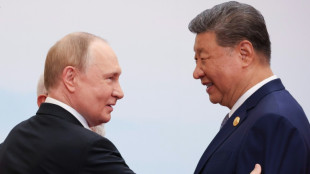 Putin, Xi, Iran's Pezeshkian in Kyrgyzstan for summit

 Fully Permitted Tanzanian Gold Project Clears Path to Construction as Financing, EPCM Fall in Place (LVGLF)

 EdWealth Announces MoneyBench Benchmark Comparing AI Money Answers From Ed, ChatGPT and Gemini

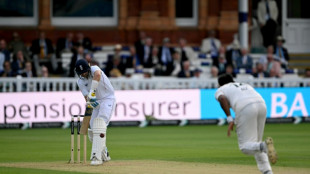 Root says new balls behind batsmen's struggles in England
 Swollen rivers, washed-out roads hamper Nepal rescue effort
 In France's north, winegrowers bet on a warmer future

 Deadly virus stalks South Africa's sardines
 South Korea women's football body probes 'period' insult
 Transitional Fashion Essentials for Autumn: Key Pieces from M&S and Joe Browns

 China's Xi and Iran's Pezeshkian in Kyrgyzstan, Putin expected
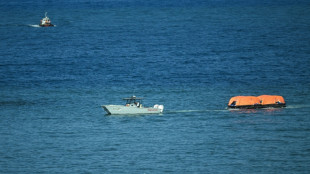 Rescuers hunt for missing after deadly N.Cyprus ferry accident
When President Donald Trump froze nearly all US foreign aid, Cambodia was forced to suspend workers removing dangerous mines from the country -- until China stepped in with the necessary funding.
In the Cook Islands, traditionally bound to New Zealand and friendly with the United States, the prime minister has announced plans to head to Beijing to sign a cooperation deal.
Successive US administrations have vowed to wage a global competition with China, described as the only potential rival for global leadership.
But as seen in Cambodia and the Cook Islands, two small but strategic countries, the United States has effectively ceded one of its main levers of influence.
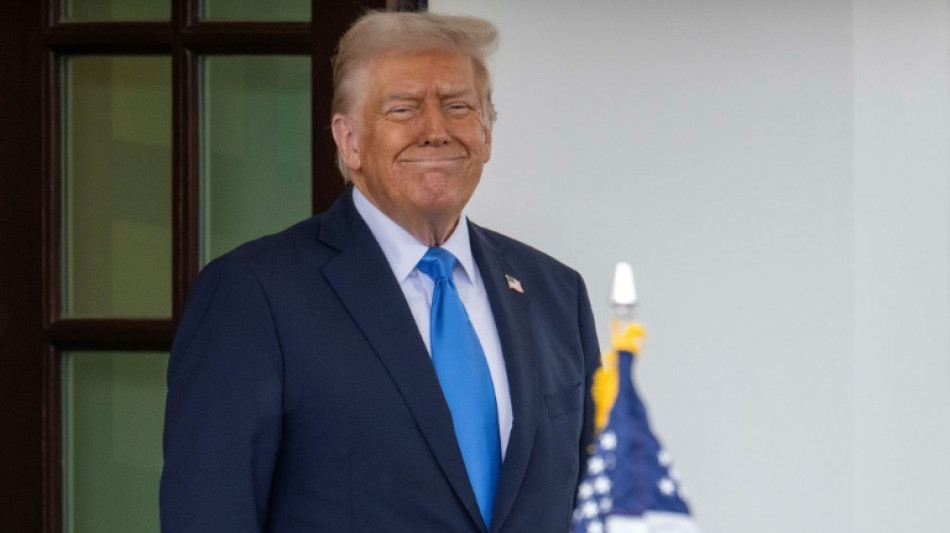
The dramatic shift by Trump -- following the advice of billionaire advisor Elon Musk -- has put nearly the entire workforce on leave at the US Agency for International Development (USAID), marking the end of a key decades-old effort by the United States to exercise "soft power" -- the ability of a country to persuade others through its attractiveness.
Trump has unapologetically turned instead to hard power, wielding tariffs against friends and foes and threatening military force to get his way, even against NATO ally Denmark over Greenland.
When John F. Kennedy created USAID, he pointed to the success of the Marshall Plan in rebuilding Europe and hoped that alleviating poverty would reduce the allure of the Soviet Union, the main adversary of the United States at the time.
Michael Schiffer, who served as USAID's assistant administrator for Asia under former president Joe Biden, warned that China could become the dominant player in the developing world in areas from public health to policing.
"We'll be sitting on the sidelines and then in a couple of years we'll have a conversation about how we're shocked that the PRC has positioned itself as the partner of choice in Latin America, Africa and Asia," he said, referring to the People's Republic of China.
"At that point, the game will be over."
- Will China step up? -
The United States has long been the top donor in the world, giving $64 billion in 2023.
A number of other Western countries, especially in Scandinavia, have been more generous compared with the sizes of their economies.
But Schiffer doubted they could replace the United States either in dollar terms or in the longstanding US role of mobilizing international aid to priorities around the world.
China's aid is more opaque. According to AidData, a research group at the College of William and Mary, China has provided $1.34 trillion over two decades -- but unlike Western nations, it has mostly provided loans rather than grants.
Samantha Custer, director of policy analysis at AidData, doubted there would be any "huge, dramatic increase in aid dollars from China," noting Beijing's focus on lending and the economic headwinds facing the Asian power.
Still, she said, the United States will struggle to counter perceptions it is no longer reliable.
"China can win the day by not even doing anything," she said.
"You can't partner with somebody who's not there."
Yanzhong Huang, a senior fellow for global health at the Council on Foreign Relations, said China is more interested in construction and benefiting its domestic industries, like building a hospital rather than training its doctors.
And with the freeze in USAID, China may have even less reason to step up aid.
"If they become the only game in town, it doesn't generate strong incentives for China to compete and significantly increase development assistance," he said.
One major gap will be conflict-related funding, said Rebecca Wolfe, an expert in development and political violence at the University of Chicago.
She pointed to Syria, where the Islamic State extremist group gained grounds in areas that lacked governance.
"Yes, the Chinese can come in and do the infrastructure. But what about the governance part?"
She said Western countries may not step up until they feel real effects, such as a new migrant crisis.
- Different soft power? -
Trump's aid freeze is officially only a 90-day review, and Secretary of State Marco Rubio has said that he issued waivers for emergency assistance.
But aid groups say effects are already being felt by the sweeping pause, from schools shutting down in Uganda to flood relief shelters under threat in South Sudan.
Hendrik W. Ohnesorge, a scholar of soft power, said Trump has a highly transactional worldview and is more attuned to hard power.
But Ohnesorge, managing director of the Center for Global Studies at the University of Bonn, said Trump also represented a new, post-liberal sort of soft power in a polarized world.
He noted that other leaders have styled themselves after Trump and gladly followed his lead.
For instance, Argentina's libertarian president, Javier Milei, swiftly joined Trump in leaving the World Health Organization.
"Perhaps it may henceforth be better to even speak of US soft powers -- in the plural -- as there are starkly different visions of America and the world prevalent in the US today," Ohnesorge said.
D.Bachmann--VB