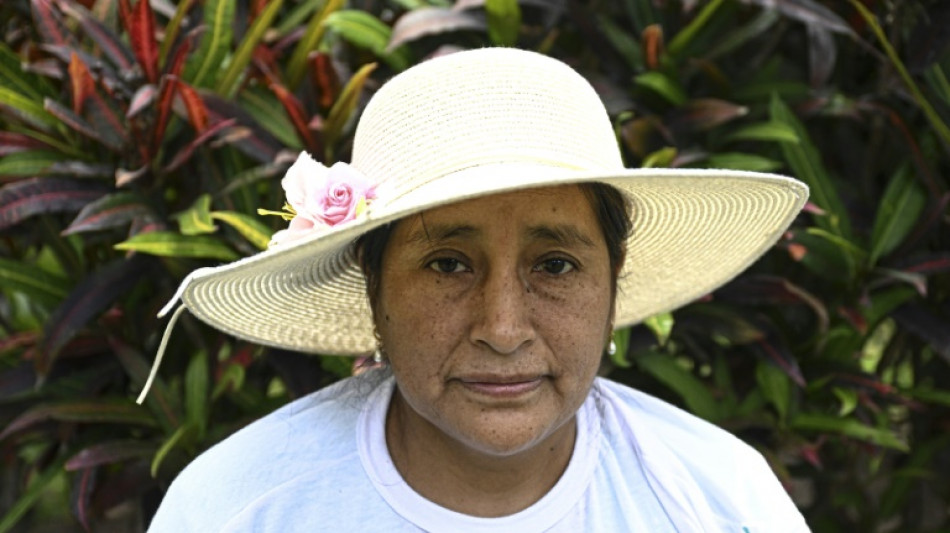
Life 'cut short': Peru's victims of forced sterilization seek amends / Photo: © AFP

 Trump says AI data center opponents want to be 'backwards and poor'

 Pakistan ditch coaches, send seven players home after England defeats

 Galliano pulls Met Gala exhibit after antisemitism backlash
 Afghan people should 'not be abandoned': top Red Cross official

 Six defining moments of Lionel Messi's Argentina career
 Trump blasts US backlash against data centers
 It 'hurts' says Messi of decision to retire from international football
 Benzema ends brief stint with Al Hilal in Saudi league
 Djokovic's Grand Slam future uncertain after brutal US Open defeat

 Turkey says regional defence pact not against any country

 US vows to keep economic pressure on Iran as G20 finance talks begin

 Shein valued at $26.3 bn in Hong Kong market debut
 Crude prices rise above $90 per barrel on US-Iran strikes

 Liverpool sign Barcola from PSG for reported £124 million

 Putin, Xi, Iran's Pezeshkian in Kyrgyzstan for summit
 Fully Permitted Tanzanian Gold Project Clears Path to Construction as Financing, EPCM Fall in Place (LVGLF)

 EdWealth Announces MoneyBench Benchmark Comparing AI Money Answers From Ed, ChatGPT and Gemini

 Root says new balls behind batsmen's struggles in England
 Swollen rivers, washed-out roads hamper Nepal rescue effort

 In France's north, winegrowers bet on a warmer future

 Deadly virus stalks South Africa's sardines
 South Korea women's football body probes 'period' insult
 Transitional Fashion Essentials for Autumn: Key Pieces from M&S and Joe Browns

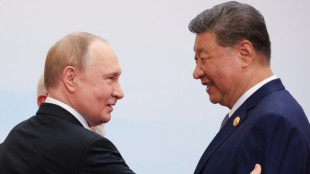 China's Xi and Iran's Pezeshkian in Kyrgyzstan, Putin expected
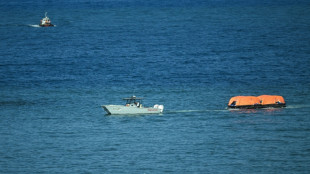 Rescuers hunt for missing after deadly N.Cyprus ferry accident
Florentina Loayza was 19 and mother to an infant when she was sterilized by agents of the Peruvian government, against her will.
Decades later, the 46-year-old Indigenous woman is still fighting for an apology and reparations along with thousands of others robbed of their fertility in a 1990s state campaign condemned by the United Nations.
"My life was cut short," Loayza told AFP, recounting how her partner abandoned her over the procedure, which also left her with lasting pain.
"On the outside, we look fine, but inside we are withering," she said of the estimated 270,000 women who, like her, were coerced, pressured or deceived into surgery to have their fallopian tubes tied.
Eighteen women died, according to official data, during the campaign that marked the final years of then-President Alberto Fujimori's 1990-2000 rule.
His government said it had offered sterilization as part of a family planning project, but the UN women's rights committee said in a report last October the state had carried out a "systematic and generalized attack against rural and Indigenous women."
It said the procedures were carried out without informed consent from victims who were often poorly educated and did not understand Spanish, the language of officialdom in Peru.
"It’s not something that was done in the cities... but in a specific (rural) area as a way of fighting poverty so that the poorest women didn't reproduce," Leticia Bonifaz, who was a member of the UN committee, told AFP.
She said it was the biggest known case of forced sterilization in Latin America.
- 'Life hasn't been easy' -
Loayza today is an activist. She wishes she could have had more children and rarely smiles.
In 1997, she was living in rural Huancavelica in Peru's southeast, with a baby a few months old.
Her life changed dramatically when she left home one day, stuffed with other women onto the back of a truck "like sheep," to collect promised food aid from a nearby clinic.
When they got there, she said, the women were not given aid but forced surgery.
"We were grabbed by nurses and placed on stretchers. They injected us with something."
When she woke up, Loayza was informed she had been sterilized.
Back home, her partner refused to believe her, accusing Loayza of wanting to be infertile in order to sleep with other men.
He left her and Loayza moved to the capital, Lima, to make a living cleaning houses.
She said she has suffered abdominal pain ever since the procedure, and desperately needs government help with health care she cannot afford.
"Life hasn't been easy," Loayza told AFP.
- 'Internal scar' -
In the house she shares with her four children on the outskirts of Lima, 55-year-old Maria Elena Carbajal shows the only photo she has of her last pregnancy before she, too, was sterilized against her will.
Aged 26, she had given birth in a public hospital and claims doctors who scolded her for "having many children" told her that if she wanted to see the newborn, she had to agree to a procedure.
Out of fear, she acquiesced.
Carbajal's husband also left her as a result, and like Loayza, she survived by cleaning other people's homes.
"I took my four children and practically had to escape from my mother-in-law's house and go to my mom's house," she recalled.
"For many years I thought it was my fault."
Carbajal now heads an organization for victims like her, but in 2021, she suffered a back injury in an attack on a protest she was part of.
For two years, she has waited to have surgery on her back on top of the treatment she needs for a hormonal deficit caused by her sterilization.
"Not only are our bodies scarred," she said, "but we also carry the internal scar of being abandoned by our families."
In its report last year the United Nations urged the Peruvian state to "accelerate and expand its investigations" into the matter, and provide financial compensation, psychological support and a comprehensive reparation program.
Fujimori died last September, having served 16 years of a 25-year prison sentence for human rights abuses.
He was never brought to trial over the sterilization campaign.
In 2023, a Peruvian court ruled that involuntary sterilizations had been part of public policy at the time, and ordered compensation and health care access for victims.
This has not yet come to pass.
B.Baumann--VB