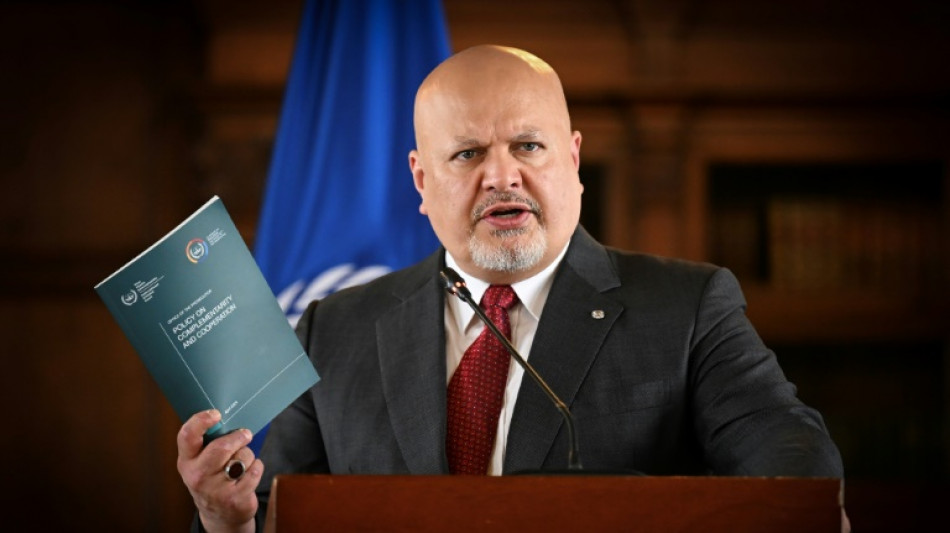
'Existential threat': What next for the ICC after US sanctions? / Photo: © AFP/File

 US to press G20 on light-touch AI regulation

 2 die in Grand Canyon flash flood, only 1 person unaccounted for

 US Army Secretary Driscoll submits resignation: White House
 Oil extends gains, stocks drop as Trump issues fresh Iran warning

 Tsitsipas says Kyrgios's positive cocaine test 'kind of expected'
 In Japan's mountains, a different way to manage bears

 Middle East war a boon for UAE defence giant with global ambitions
 Former gang member found guilty of murdering Tupac Shakur
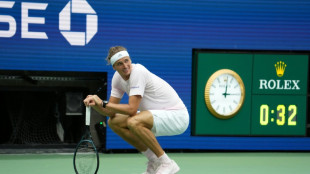 Top-seeded Zverev opens US Open campaign

 US regulator, 22 states accuse Amazon of 'manipulating' ad auctions: lawsuit

 TRON Founder Justin Sun Shares Outlook on Bitcoin, Stablecoins and Global Finance at Bitcoin Asia 2026

 Tributes to 'eternal' Messi on Argentina retirement
 Arteta hails Arsenal's 'finishers' after Saka kills off Villa
 Yamal, Raphinha bag braces as Barcelona rout Rayo
 Alcaraz makes winning return at US Open, Sabalenka safely through
 Everton agree to sign Monaco's Balogun: reports
 Milei calls for F1 to return to Argentina
 Alcaraz wins US Open first-round match after injury layoff

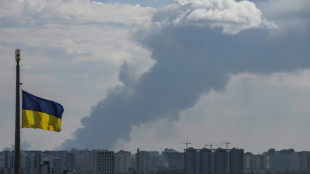 Kyiv orders heightened security amid intense Russian drone strikes
 Sabalenka kickstarts US Open three-peat bid as Fils crashes out
 Fils upset by resurgent Tsitsipas at US Open
 Trump says AI data center opponents want to be 'backwards and poor'

 Pakistan ditch coaches, send seven players home after England defeats

 Galliano pulls Met Gala exhibit after antisemitism backlash
 Afghan people should 'not be abandoned': top Red Cross official
US President Donald Trump's decision to slap sanctions on the International Criminal Court, set up to rule on humanity's worst crimes, sent shock waves around the world.
Experts tell AFP the sanctions announced by Trump, angered by the ICC investigation into alleged Israeli war crimes and crimes against humanity in Gaza, will have a wide-reaching impact on the court.
- What impact will the sanctions have? -
Neither the United States nor Israel are among the 125 members of the ICC but sanctions could still have a crippling impact on the court's operations.
The measures include a travel ban to the US for ICC officials, complicating their work. Financial institutions may decline to work with the court, fearing US reprisals.
The sanctions could impact the court's technical and IT operations, including evidence gathering. There are fears victims of alleged atrocities may hesitate to come forward.
"Companies and organisations might just stop doing business with the ICC because it's too much of a risk," said James Patrick Sexton, PhD Researcher at the TMC Asser Instituut and University of Amsterdam.
"Big suppliers such as Microsoft might just proactively pull out," added Sexton, who is working on a thesis examining the interaction between sanctions and international criminal justice.
Thijs Bouwknegt of the NIOD Institute for War, Holocaust and Genocide Studies, said the sanctions constituted an "internal crisis" for the ICC.
Bouwknegt noted that current chief prosecutor Karim Khan has several US citizens in his top team -- "they can no longer work together".
He also noted reports that staff members have been paid in advance due to fears of banking difficulties.
"The ICC is an international organisation, so there is a lot of international banking," he told AFP.
- What can the court do in response? -
"Nothing at all," said Bouwknegt.
"You can come up with moral arguments that this goes against international law. But that would only have an effect on US partners, who are always very cautious in condemning the US."
Sexton said the court would likely engage in a diplomatic drive to drum up support for the ICC and international justice generally.
Technically, the court's founding statute allows the ICC to take action against anyone "retaliating against an official of the court" or "impeding, intimidating or corruptly influencing" an ICC member.
Legally, this means the ICC could hit back at Trump. While this is a possibility, Sexton noted "it wouldn't exactly de-escalate the situation."
- What are the consequences? -
Experts fear that weakening the ICC, which investigates war crimes, crimes against humanity, genocide, and the crime of aggression, could give carte blanche to dictators worldwide.
The sanctions "seek to undermine and destroy what the international community has painstakingly constructed over decades, if not centuries," said Agnes Callamard, Amnesty International's Secretary General.
"Global rules that are applicable to everyone and aim to deliver justice for all."
If the sanctions target the prosecutor, as is likely, it means that investigations into alleged crimes in hotspots such as Afghanistan, Ukraine, and Sudan would also be affected.
"Victims will be deprived of proceedings even in cases that the US is not unhappy with," Sexton told AFP.
"This will undermine all investigations, not only the investigation into the situation in Palestine."
He noted that the sanctions come at an already difficult time for the court.
The ICC has become embroiled in a row with Italy, which released a Libyan war crimes suspect wanted in The Hague after receiving what it described as a badly drafted warrant.
Several countries also voiced reservations about arresting Israeli Prime Minister Benjamin Netanyahu if he visited, undermining the court's credibility.
"I think this is an existential threat for the ICC. It's a real make-or-break moment," said Sexton.
- Has this happened before? -
Yes. In 2020, Trump's then Secretary of State Mike Pompeo hit Fatou Bensouda, the ICC prosecutor at the time, with sanctions over the court's war crimes probe into US military personnel in Afghanistan.
Pompeo at the time referred to the ICC as a "kangaroo court".
Trump's successor Joe Biden revoked these sanctions a year later, with Washington pledging "engagement with all stakeholders in the ICC process".
The US also has drastic means at its disposal that could theoretically involve an American invasion of the Netherlands.
In 2002, the US Congress passed the so-called "Hague Invasion Act" allowing the US president to authorise military force to free any US personnel held by the ICC.
T.Zimmermann--VB