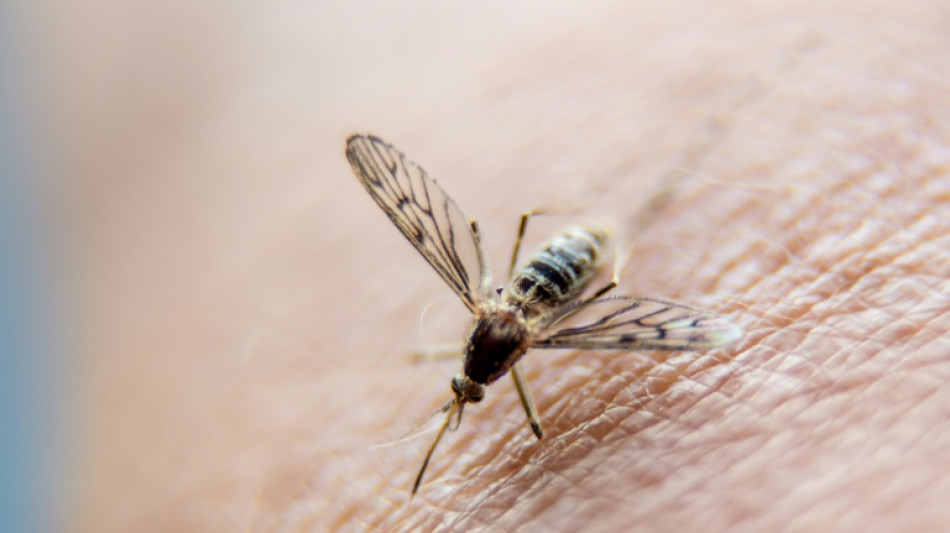
US aid cuts come at deadly moment for malaria control / Photo: © AFP/File

 Former Peru minister last-minute contender for UN labour agency helm

 Messi legacy will 'live forever', says Beckham
 'Literally tasting the smoke': Malaysians suffer as haze worsens

 Kyiv's defences, 'hybrid' threat from Moscow headline EU talks
 Oil extends gains, stocks mostly down as Trump issues fresh Iran warning
 ThinkMarkets Expands Weekend Trading Offering, Launches Weekend League Competition

 Tibet activists accuse China of downplaying floods
 Afghanistan war victims left 'without justice', UN says
 Iran president offers US olive branch before Putin meeting

 China-Nepal flood toll tops 1,000 as tunnel rescue offers last hope
 Japan to relax overtime regulation under workaholic PM
 Thwarted Niger mutiny exposes junta's Russia dependence
 Illegal mining ravages S.Africa's economic hub
 Nepal's wall of missing offers last hope after Himalayan flood

 US to press G20 on light-touch AI regulation

 2 die in Grand Canyon flash flood, only 1 person unaccounted for

 US Army Secretary Driscoll submits resignation: White House
 Oil extends gains, stocks drop as Trump issues fresh Iran warning

 Tsitsipas says Kyrgios's positive cocaine test 'kind of expected'

 In Japan's mountains, a different way to manage bears
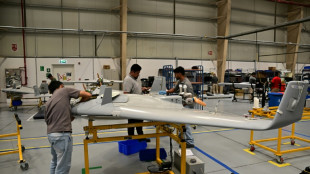 Middle East war a boon for UAE defence giant with global ambitions
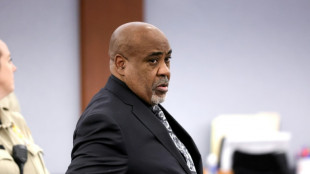 Former gang member found guilty of murdering Tupac Shakur
 Top-seeded Zverev opens US Open campaign
 US regulator, 22 states accuse Amazon of 'manipulating' ad auctions: lawsuit

 TRON Founder Justin Sun Shares Outlook on Bitcoin, Stablecoins and Global Finance at Bitcoin Asia 2026

The sudden freezing of US aid to malaria projects comes as deadly new variants are spreading in Africa and could have a devastating impact, the head of a major NGO told AFP.
The US government has provided some 40 percent of the annual funding globally for control and research into a disease that causes more than 600,000 deaths from 250 million cases each year -- mostly in Africa.
That funding, of up to $1 billion a year, is now frozen as part of President Donald Trump's plan to axe foreign aid.
"We did try to anticipate in advance of this, but I think even our worst case scenarios have been surpassed," said James Tibenderana, chief executive of the London-based Malaria Consortium that runs projects around the world.
The Malaria Consortium has already been forced to fire staff working on a programme in Mozambique and halt a programme in Asia training people to monitor and control mosquitoes.
Only five percent of its funding comes from the US government, but Tibenderana said US cuts would hit the entire sector.
"It's just so disruptive, so sudden," he said.
He highlighted that it came at a moment when the first signs of drug- and insecticide-resistance had started to emerge.
"The clock is ticking for drug resistance in Africa," he said.
"The early signs of resistance to the artemisinin-based combination therapy medicine, which is the mainstay of treatment for malaria, are emerging."
He pointed to reports from Eritrea, Ethiopia, South Sudan, Sudan and Uganda.
US-funded organisations have been the major player in monitoring this emergence through genome-mapping and drug-effectiveness studies.
Without them, it will be "hard to detect at the scale that was possible with US government funding", said Tibenderana.
- 'Through the woodchipper' -
It also comes as an invasive mosquito species from Asia -- Anopheles stephensi -- has started spreading in East Africa.
It thrives in urban areas and is immune to insecticide, potentially putting an additional 126 million people in Africa's cities at risk of malaria, according to one 2020 study.
"The invasion and spread of Anopheles stephensi has the potential to change the malaria landscape in Africa and reverse decades of progress we've made towards malaria control," Meera Venkatesan, who was then malaria division chief for USAID, told AFP in November.
Her division has now been shuttered along with the rest of USAID by Trump, with his billionaire ally Elon Musk boasting this week that he had put the vast humanitarian agency "through the woodchipper".
Funding cuts will hit supply chains, rural hospitals and programmes to buy the latest mosquito nets.
They will force poor families into debt when they need to send their children to hospital, said Tibenderana.
Children under five account for around 80 percent of malaria deaths in Africa, according to the World Health Organization.
Tibenderana hoped other governments and institutions such as the World Bank will step in, though he knows resources are scarce.
He compared the US funding freezing to the recent pandemic.
"We have to respond as we did with the Covid-19 pandemic, where there was a threat and people stepped up," he said.
"But the suddenness of this is huge."
E.Burkhard--VB