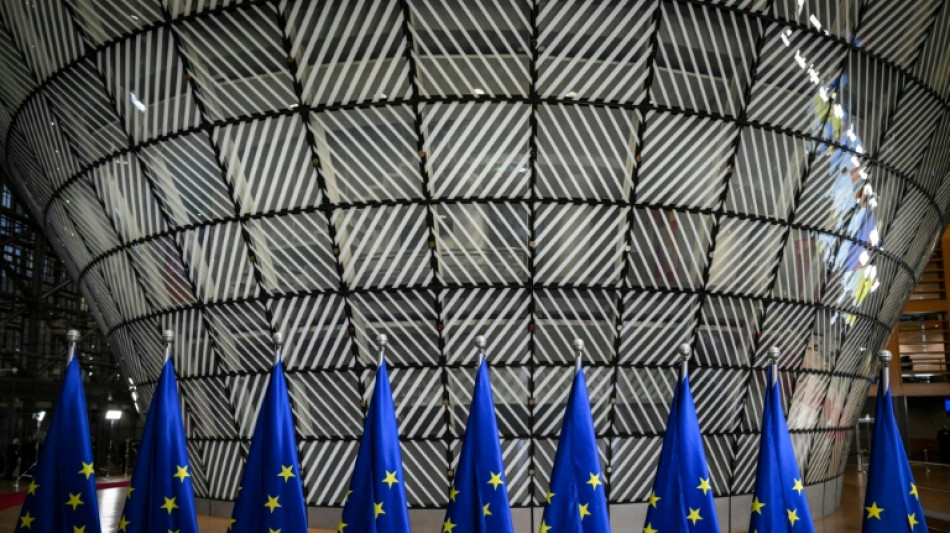
Eyeing Trump and Putin, EU, UK, NATO leaders talk defence / Photo: © AFP/File

 Back-to-school in Cuba a grim day with shortages of everything
 Canadian minister says Russia's G20 presence sparked 'discomfort'
 IMF reaches agreement with Senegal on new $2.2 bn loan programme
 Germany blames Russia for airport drone incident, hits back with sanctions
 Iran president urges return to truce, hails Russian support
 Aster and World Liberty Financial Launch USD1 RWA Boost: Phase 1, Offering 125M $WLFI + 6.25M USD1 in Rewards

 Tronchon sprints to Vuelta stage 10 win, Mas keeps red jersey
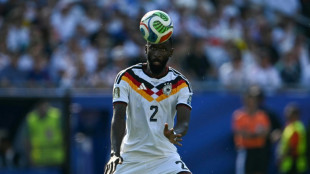 Germany defender Rudiger announces international retirement
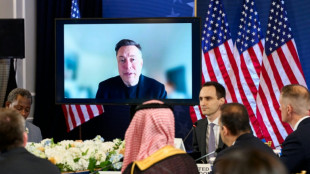 Musk defends AI data centers, slams EU rules at G20
 Activists blame Kenya for Ugandan opposition figure's plight

 Iran president offers US olive branch, hails Russian support

 TrustFinance Community Choice Awards 2026 Opens Global Voting
 Nepal disaster a climate 'warning signal': foreign minister
 France winger Diaby returns to Leverkusen until 2031
 Barcelona confirm Jesus arrival from Arsenal

 EU official says it's not time to 'normalize' Russia at G20 finance talks
 RedHill Announces Transformational Acquisition of Commercialization Rights to Ferring’s Rebyota® and Clenpiq®
 TrendEadvisor Launches Global Multi-Asset Platform Combining Online Investing with Social Trading
 India's top court drops criminal cases against protesters
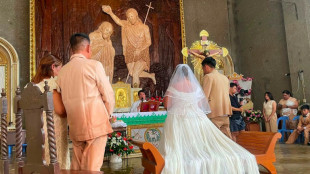 Philippine couple married in hip-deep floodwaters
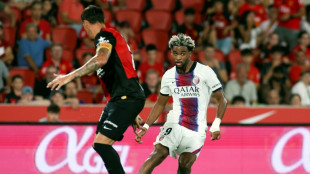 Villa sign Senegal winger Mbaye from PSG
 Former Peru minister last-minute contender for UN labour agency helm

 Messi legacy will 'live forever', says Beckham
 'Literally tasting the smoke': Malaysians suffer as haze worsens
 Kyiv's defences, 'hybrid' threat from Moscow headline EU talks
EU leaders huddle Monday with Britain's prime minister and the head of NATO to discuss efforts to boost Europe's defences faced with an aggressive Russia -- as Donald Trump demands America's allies spend much more.
The gathering in Brussels is billed as a "triple first": the first time the European Union's 27 leaders meet since the US president's inauguration, their first-ever dedicated talks on defence and their first with a British premier since Brexit.
European nations have ramped up their military budgets since Russia launched its all-out invasion of Ukraine almost three years ago.
But officials concede they are still not arming themselves fast enough as warnings grow that Moscow could attack one of their own in the coming years.
Trump's return to the White House has given a fresh jolt to the debate -- with the volatile leader saying Europe can no longer take US protection for granted.
Trump insists NATO countries more than double their current defence spending target to five percent of GDP, a goal out of reach for many.
He has also vowed to bring a quick end to Russia's war in Ukraine, leaving Europeans fearful he could sideline them and force Kyiv into a bad deal.
But it is not just about the spectre of Washington pulling back from Europe -- Trump has rattled US allies with a series of direct threats.
Denmark's prime minister -- who made a tour of several capitals last week -- is expected to seek a common line on Trump's insistence that he wants Greenland.
And there will certainly be discussions on Trump's pledge to impose tariffs on the EU -- which has vowed to respond "firmly" if targeted.
- 'Question of how' -
Given the looming menace from Russia, there is widespread consensus across Europe on the need to step up on defence.
The problem is there is not yet agreement on what exactly that entails.
"It's very clear for everyone around the table that investment must increase," an EU official said.
"It is not a question of if, it is a question of how."
Brussels estimates the bloc needs to invest an extra 500 billion euros ($510 billion) on defence over the next decade.
Key dividing lines revolve around how to fund the required investment, whether EU cash should be spent only on EU arms, and what role NATO should play.
There is also a geographical split, with countries closer to Russia already doing far more than those further to West.
Funding is the major question, with a number of member states pushing for massive joint EU borrowing.
But Germany -- which faces a fraught election this month -- has tried to shut down discussion of that sensitive topic.
"The worry is this meeting might become just another box-ticking exercise if we don't discuss the elephant in the room of financing," one EU diplomat said.
With no sign of movement on that, EU states have called for the bloc's lending arm, the EIB, to drop limits on lending to defence firms.
On weapons, France -- long accused of caring more for its own industry -- insists arms should be bought in the EU.
Others counter that countries should look to whoever can supply quickest.
Buying from the United States could also be a way to keep Trump on side, they argue.
The division of labour with NATO is also in the spotlight as some in the EU say Brussels should be involved in setting targets for what countries require -- a suggestion that has riled NATO.
- UK security deal? -
As doubts swirl over the transatlantic relationship, many are keen to step up ties with an old friend: Britain.
Five years after the UK left, Prime Minister Keir Starmer will be back in the EU fold -- at least for one dinner.
Starmer, the first UK leader to attend a European Council gathering since Brexit, plans to call on the EU leaders to "continue bearing down" on Russian President Vladimir Putin and to "step up and shoulder more of the burden in order to keep Europe safe against Russia's increasing campaign of sabotage and destruction on our continent".
Starmer, who has sought to "reset" relations after the rancour of Brexit, will also discuss a possible UK-EU defence and security deal.
That could bring Britain, with its potent military and large defence industry, a little closer.
But the bitter legacy of Brexit remains.
Numerous EU diplomats said there cannot be progress until a dispute over fishing rights is resolved and London drops its opposition to a youth mobility scheme proposed by Brussels.
"There is no beating around the bush that the future relationship on fisheries is also very important," one diplomat said.
J.Marty--VB