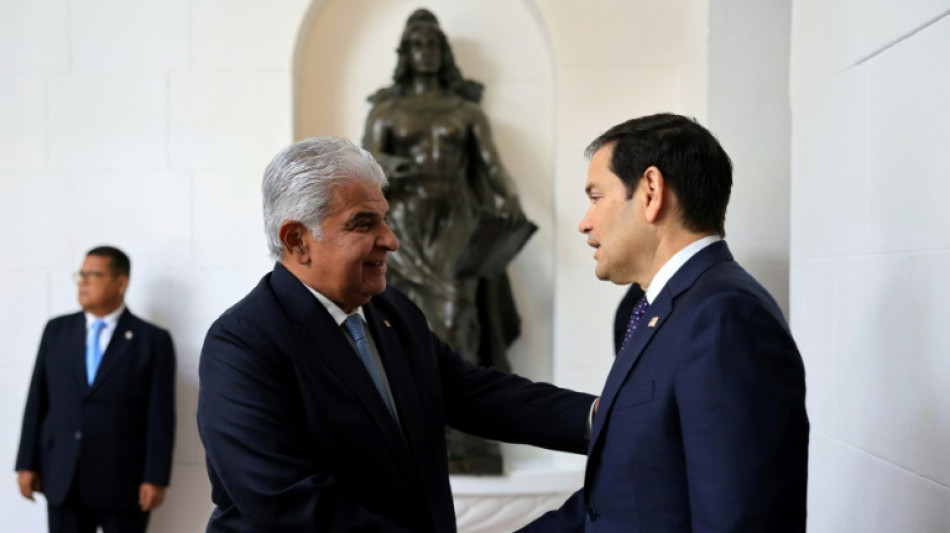
Rubio warns Panama of consequences over canal / Photo: © PANAMA'S PRESIDENCY PRESS OFFICE/AFP

 US defends Trump's Venezuela oil deal
 OpenAI to launch new model with 'stronger safeguards' after hack
 Fans mourn 'bittersweet' final Ariana Grande gig in London
 Norway's King Haakon VIII swears allegiance to constitution
 Syria site infrastructure 'consistent with nuclear reactor': IAEA
 Juventus sign Woltemade, Sarr on loan from Premier League
 US strikes Iran in latest tit-for-tat attacks
 China's Xi arrives in Egypt as US sanctions threat looms over Iran links
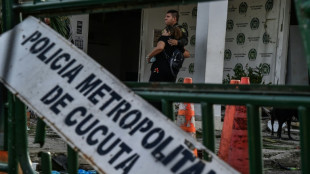 Car bomb at Colombian police station kills one, injures 11
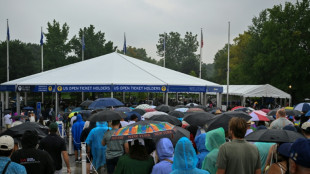 Rain delays start of play on US Open
 Man City agree blockbuster deal to sign Chelsea star Fernandez: reports
 Alkemya Metacore Secures $50M via Tokenised Equity to Scale Nickel Energy and Security Tech
 Man City chase Fernandez, Arsenal sell Jesus on deadline day
 EU says Russian 'hybrid attacks' won't halt aid to Ukraine
 Explosives used in sabotage attack on German power lines
 Nepali families hold symbolic funerals for missing after floods
 Newcastle sign Lille forward Fernandez-Pardo

 Even at Elysee, phones are handed in, Macron tells French pupils
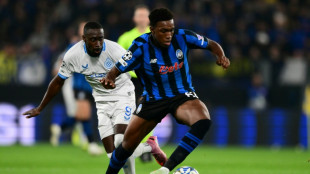 Chelsea agree to sign Atalanta's Ahanor, with Palace loan for this season
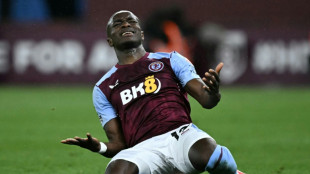
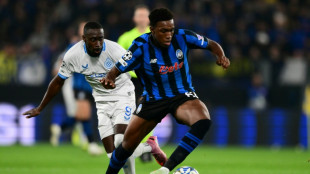 Chelsea sign Atalanta's Ahanor and loan him to Palace
 UK chalks up hottest summer on record for second year running
 China's Xi visits Egypt as US sanctions threat looms over Iran links
 RISE Robotics Awarded $100,000 MassVentures Grant to Accelerate Commercialization of Beltdraulic Technology

 Global bond sell-off deepens on inflation concerns
 Germany's far-right AfD promises 'boom' but economists fear worst
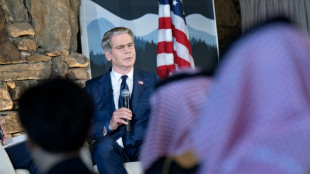
US Secretary of State Marco Rubio on Sunday threatened action against Panama without immediate changes to reduce Chinese influence on the canal, but the country's leader insisted he was not afraid of a US invasion and offered talks.
Rubio, paying his first visit overseas as the top US diplomat, told Panama that President Donald Trump had determined that the country had violated terms of the treaty that handed back the crucial waterway in 1999.
He pointed to the "influence and control" of China over the canal, the vital link between the Atlantic and Pacific oceans through which some 40 percent of US container traffic passes.
Meeting President Jose Raul Mulino, Rubio "made clear that this status quo is unacceptable and that absent immediate changes, it would require the United States to take measures necessary to protect its rights under the treaty," State Department spokeswoman Tammy Bruce said.
Mulino painted a less dire portrait of the meeting. He welcomed Rubio at his official residence in the tropical capital's old quarter, with an honor guard outside the whitewashed walls.
"I don't feel that there is any real threat at this time against the treaty, its validity, or much less of the use of military force to seize the canal," Mulino told reporters afterward, referring to the treaty that handed over the canal at the end of 1999.
"Sovereignty over the canal is not in question," Mulino said.
He proposed technical-level talks with the United States to clear up concerns.
Rubio did not spell out what measures the United States may take. Trump in recent days has imposed hefty tariffs on the three biggest trading partners of the United States -- Canada, China and Mexico.
Rubio and Trump say that China has gained so much power around surrounding infrastructure that it could shut it down in a potential conflict, with catastrophic consequences for the United States.
- Protests against Rubio -
Small but intense protests broke out in Panama ahead of Rubio's visit, with police firing tear gas.
Protesters burned an effigy of Rubio wearing a red, white and blue suit and held up pictures of him and Trump before a Nazi flag.
"Rubio, get out of Panama!" around 200 demonstrators chanted as the former senator met Mulino. Police prevented the crowd from approaching the Old City.
"To the imperial messenger," union leader Saul Mendez said of Rubio, "we reiterate that there is absolutely nothing here for Trump. Panama is a free and sovereign nation."
Mulino, in response to pressure, ordered an audit of a Hong Kong-based company that controls ports on both sides of the canal.
But speaking to reporters on Friday, Trump said that concession was not enough on the canal and that "it's appropriate that we take it back."
The Panama Canal -- which Trump has dubbed as a modern "wonder of the world" -- was built by the United States at the cost of thousands of lives of laborers, mostly people of African descent from Barbados, Jamaica and elsewhere in the Caribbean.
The United States maintained control of the canal when it opened in 1914 but began to negotiate following deadly riots in 1964 by Panamanians angered over foreign control.
Jimmy Carter sealed the agreement that gave the canal to Panama at the end of 1999, with the late president seeing a moral imperative for the United States to respect a smaller but still sovereign country.
Trump takes a vastly different view and has returned to the "big stick" approach of the early 20th century, in which the United States threatened force to have its way, especially in Latin America.
In his first week in office, Trump prepared massive tariffs on Colombia to force the US ally to take back deported citizens on military planes, after the country's leftist president complained that they were not being treated in a dignified way.
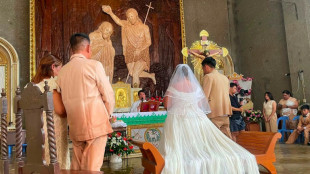
Rubio, the first Hispanic secretary of state and a devout Catholic, started his Sunday in Panama City attending Mass at a church built four centuries ago in the Old City.
He will travel to four more Latin American countries -- El Salvador, Costa Rica, Guatemala and the Dominican Republic -- where he is expected to press for cooperation on Trump's key priority of deporting migrants from the United States.
J.Marty--VB