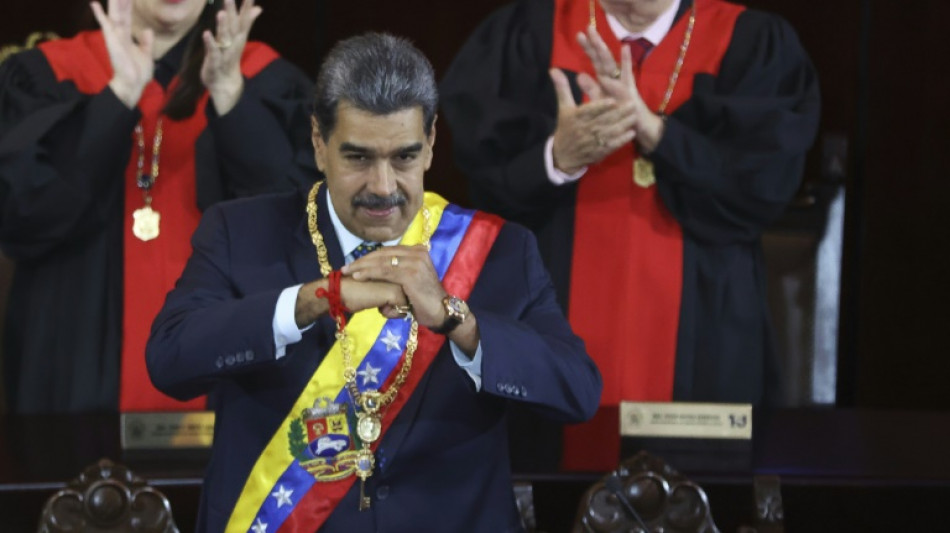
Has Trump changed tack on Venezuela? / Photo: © AFP

 US defends Trump's Venezuela oil deal
 OpenAI to launch new model with 'stronger safeguards' after hack
 Fans mourn 'bittersweet' final Ariana Grande gig in London
 Norway's King Haakon VIII swears allegiance to constitution
 Syria site infrastructure 'consistent with nuclear reactor': IAEA
 Juventus sign Woltemade, Sarr on loan from Premier League
 US strikes Iran in latest tit-for-tat attacks
 China's Xi arrives in Egypt as US sanctions threat looms over Iran links
 Car bomb at Colombian police station kills one, injures 11
 Rain delays start of play on US Open
 Man City agree blockbuster deal to sign Chelsea star Fernandez: reports
 Alkemya Metacore Secures $50M via Tokenised Equity to Scale Nickel Energy and Security Tech

 Man City chase Fernandez, Arsenal sell Jesus on deadline day
 EU says Russian 'hybrid attacks' won't halt aid to Ukraine
 Explosives used in sabotage attack on German power lines
 Nepali families hold symbolic funerals for missing after floods
 Newcastle sign Lille forward Fernandez-Pardo

 Even at Elysee, phones are handed in, Macron tells French pupils
 Chelsea agree to sign Atalanta's Ahanor, with Palace loan for this season
 Chelsea sign Atalanta's Ahanor and loan him to Palace
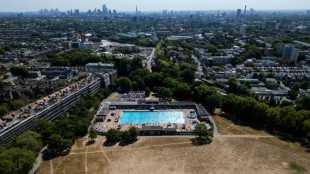 UK chalks up hottest summer on record for second year running
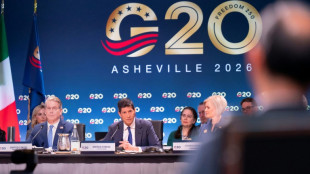
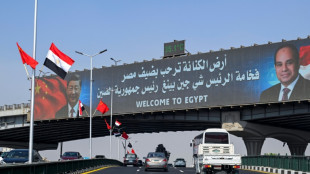 China's Xi visits Egypt as US sanctions threat looms over Iran links

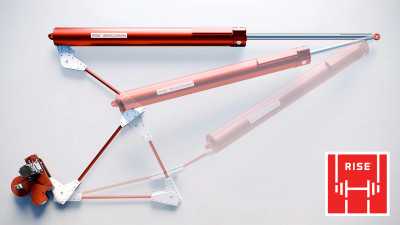 RISE Robotics Awarded $100,000 MassVentures Grant to Accelerate Commercialization of Beltdraulic Technology

 Global bond sell-off deepens on inflation concerns
 Germany's far-right AfD promises 'boom' but economists fear worst
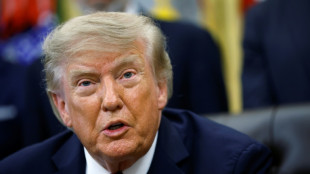
Within his first two weeks in office, US President Donald Trump sent an emissary to arch-rival Venezuela, an apparent about-turn from the hard-line approach he adopted toward Caracas during his first term.
Washington has not recognized Nicolas Maduro's reelection in a vote he is widely accused of stealing, and has instead continued to consider opposition leader Edmundo Gonzalez Urrutia as Venezuela's president-elect.
Yet Trump envoy Richard Grenell met Maduro himself in Caracas on Friday, securing the release of six US prisoners held in the Caribbean country in talks Caracas said were held in "mutual respect."
On Saturday, Trump announced Venezuela had agreed to accept illegal migrants deported from the United States, including gang members -- and had even agreed to provide the transport.
"It is clear that the government of Donald Trump had two main interests in the relationship with Maduro as a starting point: the first is the migration issue and the second the situation of US citizens arbitrarily detained in Venezuela," international relations expert Mariano de Alba told AFP.
The meeting apparently "opens the door to an improvement in relations," he added, though perhaps not "in the short term."
- 'New beginning' in US-Venezuela relations? -
Venezuela has the world's biggest known oil reserves, but production is stunted, the country is heavily sanctioned and GDP has dropped 80 percent in a decade on Maduro's watch -- prompting nearly eight million of the country's 30 million citizens to flee.
Caracas broke off diplomatic relations with Washington in January 2019 after Trump recognized then-opposition leader Juan Guaido as "interim president" after elections also rejected as neither free nor fair.
The strategy of recognizing Guaido collapsed and Maduro merely tightened his hold on power.
The Joe Biden administration later relaxed sanctions on oil as part of a deal for American prisoners and a promise to hold free elections.
Venezuela freed 10 Americans in a swap, but Biden reimposed sanctions after Maduro did not follow through on democratic reforms.
Phil Gunson, a Venezuela expert at the International Crisis Group think tank, said he was not surprised Washington and Caracas made contact, but noted "the speed with which an apparent agreement has been reached."
"It was illusory to think that Trump would come with the same maximum pressure policy" that had previously failed to influence Maduro, he said.
It was not clear what, if anything, Venezuela had gained from the talks with Grenell, after which Maduro called for a "new beginning" in bilateral relations.
But "it is safe to assume that... there was an express request from the Maduro government not to increase pressure with sanctions," said de Alba.
- 'Important symbolism' -
A Venezuelan government statement said "the negative impact of economic sanctions" was among the issues discussed with Grenell.
But for now, it seems the status quo remains, said Gunson.
Trump has so far not introduced any changes to a Biden-era concession allowing oil companies such as Chevron to continue operating in Venezuela despite sanctions against the regime.
Maduro "would like to have the sanctions lifted, that's obvious, but if he has to live with what he's got -- the concessions that Biden made -- he can live with it," the analyst added.
A Trump administration official meanwhile recently said that: "we don't need Venezuelan oil."
De Alba said Grenell's visit, which Maduro has celebrated as a triumph, carried "important symbolism" and could be interpreted as a blow for the opposition, which has its strongest ally in the United States.
"We say to President Donald Trump: we have taken a first step. Hopefully it can be sustained, we want to sustain it," Maduro said Friday.
Mauricio Claver-Carone, US special envoy for Latin America, said the talks did not imply any softening of the position on Maduro.
But according to Gunson, "despite the rhetoric, the US, in practice, recognizes Maduro as president."
Trump has made the deportation of undocumented people in the United States a top priority.
His administration has put an end to protections from deportation for more than 600,000 Venezuelans living in the United States under a special status introduced under Biden due to fears for their safety if they return to Venezuela.
C.Koch--VB