Old India-Pakistan rivalry drives South Asia diplomatic reshuffle / Photo: © AFP/File

 Alcaraz aims to step it up in round two of US Open title defense

 Honduran judge drops corruption charges against ex-leader Hernandez

 Mudryk joins Spurs on loan from Chelsea after doping ban ends
 What's next after judge strikes down New York's landmark climate fund law

 Cobolli claws out five-set victory at rain-hit US Open
 Ndiaye seizes 'chance of a lifetime' in Man City move

 Global bond sell-off, surging oil prices send markets into the red

 Zuckerberg, Musk make plea at G20 for more AI data centers

 'Discomfort' at G20 finance talks as US hosts Russian minister
 Man City set to sign Fernandez for record fee, Ndiaye on deadline day

 Back-to-school in Cuba a grim day with shortages of everything
 Canadian minister says Russia's G20 presence sparked 'discomfort'
 IMF reaches agreement with Senegal on new $2.2 bn loan programme
 Germany blames Russia for airport drone incident, hits back with sanctions

 Iran president urges return to truce, hails Russian support

 Aster and World Liberty Financial Launch USD1 RWA Boost: Phase 1, Offering 125M $WLFI + 6.25M USD1 in Rewards

 Tronchon sprints to Vuelta stage 10 win, Mas keeps red jersey

 Germany defender Rudiger announces international retirement

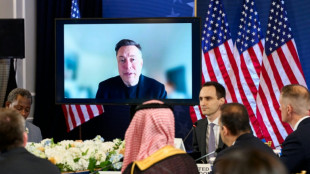 Musk defends AI data centers, slams EU rules at G20
 Activists blame Kenya for Ugandan opposition figure's plight
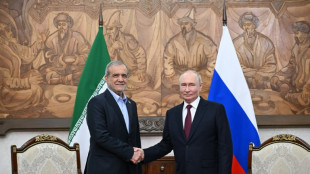 Iran president offers US olive branch, hails Russian support

 TrustFinance Community Choice Awards 2026 Opens Global Voting

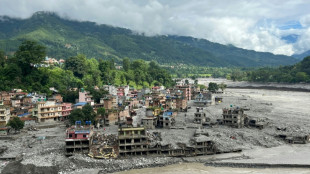
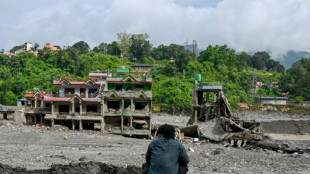 Nepal disaster a climate 'warning signal': foreign minister

 France winger Diaby returns to Leverkusen until 2031

 Barcelona confirm Jesus arrival from Arsenal

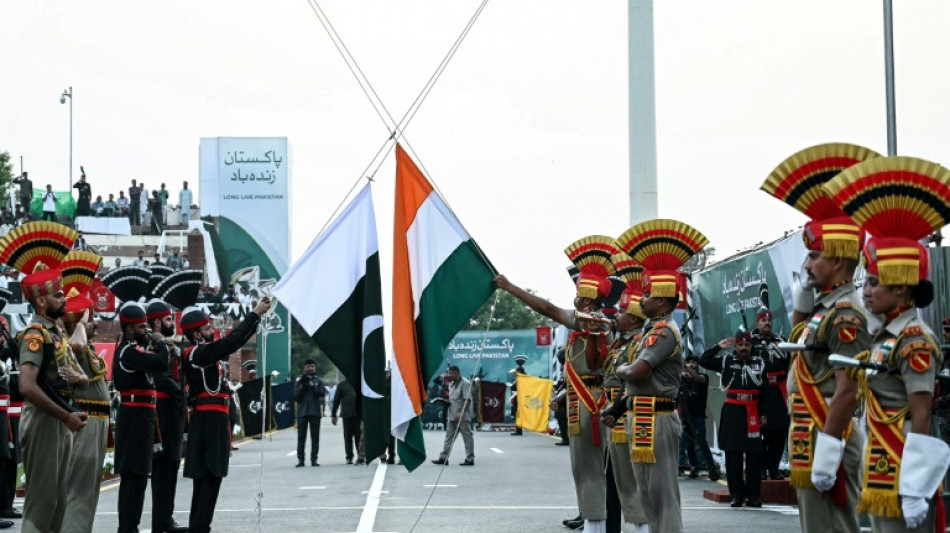
Old rivalries between India and Pakistan are driving a shift in regional ties, with New Delhi courting Afghanistan's Taliban while Islamabad befriends the new leaders of post-revolutionary Bangladesh.
Diplomatic dynamics in South Asia are rooted in long-running distrust between the region's two most populous nations.
Nuclear-armed India and Pakistan -- carved out of the subcontinent at the chaotic end of British colonial rule in 1947 -- have fought multiple wars and remain bitter foes.
The rivalry shows no sign of abating, with New Delhi denying in January it had launched covert operations to kill anti-Indian militants on Pakistani soil.
"You can't have snakes in your backyard and expect them to only bite your neighbours," Indian Foreign Ministry spokesman Randhir Jaiswal told reporters in dismissing the allegations.
Relations between Afghanistan and Pakistan have also worsened since the Taliban returned to power in Kabul nearly four years ago.
Islamabad has accused Taliban authorities of failing to rein in militants they say are using Afghan territory to stage attacks that have killed thousands of Pakistani security personnel.
Pakistan launched deadly air strikes in Afghanistan border regions in December, with subsequent cross-border exchanges of fire.
The Taliban's austere interpretation of Islamic law seems at first glance an unlikely pairing for the Hindu nationalism of Prime Minister Narendra Modi, but India has nonetheless moved to exploit the opportunity.
"India has been pursuing this path quite consistently for quite some time," international relations professor Hassan Abbas of the National Defense University in Washington told AFP.
"They don't want the Taliban to give space to any group that is going to ultimately be a bigger threat to India," he said, adding that the prospect of "annoying Pakistan" was also appealing for New Delhi.
- 'Want to do more' -
India's top career diplomat, Vikram Misri, met with Taliban foreign minister Mawlawi Amir Khan Muttaqi in Dubai in January.
Jaiswal described the meeting as the "highest level of engagement" yet, adding that New Delhi was determined to "strengthen our longstanding relationship with the people of Afghanistan".
Muttaqi had in turn "expressed his hope for the expansion of relations", a spokesman for his ministry said.
Jaiswal said it was agreed at the meeting to "promote the use" of India's $370 million development of Iran's Chabahar container port "for supporting trade and commercial activities" to landlocked Afghanistan.
Chabahar is just west of Pakistan's Gwadar port, which is considered a cornerstone of the infrastructure expansion of China's Belt and Road Initiative in Pakistan.
India has long been wary of China's growing regional clout and the world's two most populous countries compete for influence in South Asia, despite a recent diplomatic thaw.
The Times of India said in an editorial after the Dubai meeting that New Delhi's "quiet yet deliberate engagement" with the Taliban was reshaping strategic regional ties.
"Despite not officially recognising the Taliban government, India understands the importance of maintaining a foothold in Afghanistan," the newspaper wrote.
"The move also aligns with India's broader regional strategy, which seeks to counter China's Belt and Road Initiative and its influence in neighbouring Pakistan," it said.
- 'Enemy of my enemy' -
At the same time, old enemies Pakistan and Bangladesh now speak of "friendly" ties.
Pakistan and Bangladesh were once one nation but split in a brutal 1971 war, with Bangladesh then drawing closer to India.
However, long-time Bangladeshi premier Sheikh Hasina was ousted in an August 2024 revolution, fleeing by helicopter to her old ally India, where she has defied Dhaka's extradition requests to face charges including mass murder.
Relations between India and Bangladesh's new government have been frosty since then, allowing Islamabad and Dhaka to slowly rebuild ties.
The first cargo ship in decades to sail directly from Pakistan to Bangladesh successfully unloaded its containers in the port of Chittagong in November.
Bangladesh's interim leader Muhammad Yunus also met with Pakistan's Prime Minister Shehbaz Sharif in December, saying he had "agreed to strengthen relations".
Top Bangladeshi army commanders later visited Pakistan, discussing training programmes and praising the "friendly relationship" between the nations.
Dhaka University professor Amena Mohsin told AFP that the sudden closeness reflected one of the oldest dictums in international diplomacy.
"The enemy of my enemy is my friend," she said.
burs-pjm-gle/pbt/mtp
C.Koch--VB