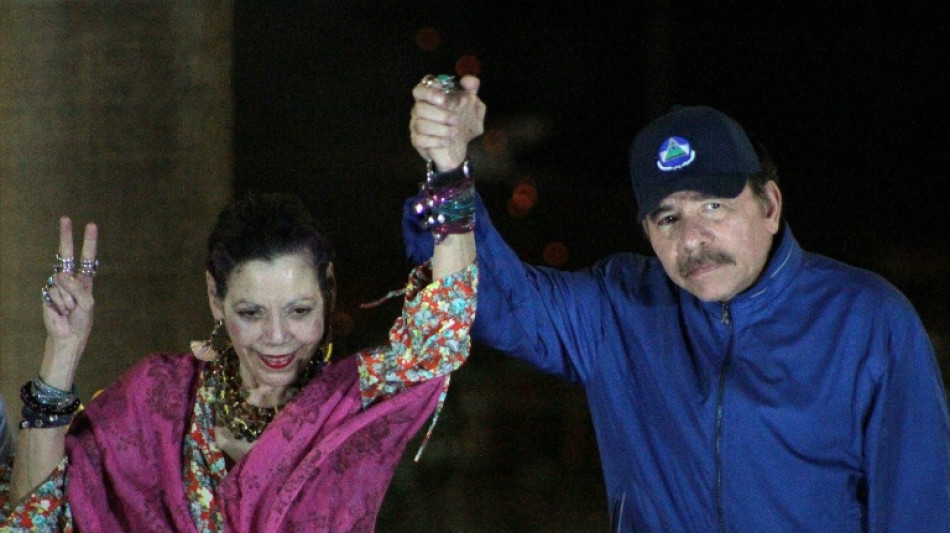
Nicaragua legislature cements 'absolute power' of president, wife / Photo: © AFP/File

 Stocks sink, yields at multi-decade highs and oil spikes on Mideast flare-up
 US defends Trump Venezuela oil deal as energy secretary lands in Caracas
 Jubilant Monfils celebrates birthday with US Open win
 The Japanese idealist behind the last deradicalisation NGO in Somalia
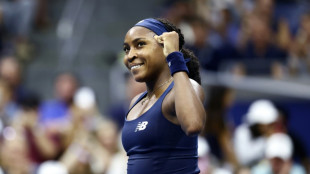 Rybakina, Gauff advance as Zverev launches US Open campaign
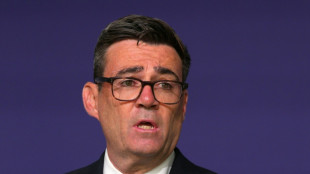 Macron in Britain to help unveil tapestry, hold Burnham talks
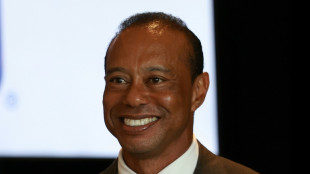
 China's Xi to hold talks with Sisi in rare visit to Egypt
 Confident Gauff reaches US Open 2nd round with straight-set win
 US postal whistleblower warns ballot system could disrupt midterms
 John Ternus takes over as Apple enters era of AI, foldable phones
 Second-ranked Rybakina eases into US Open 2nd round
 Man City sign Fernandez, Ndiaye as Premier League clubs set new spending record
 Alcaraz aims to step it up in round two of US Open title defense
 Honduran judge drops corruption charges against ex-leader Hernandez
 Mudryk joins Spurs on loan from Chelsea after doping ban ends
 What's next after judge strikes down New York's landmark climate fund law
 Cobolli claws out five-set victory at rain-hit US Open
 Ndiaye seizes 'chance of a lifetime' in Man City move

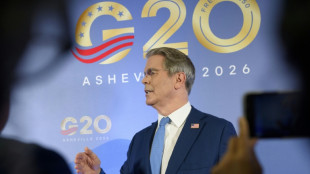 Global bond sell-off, surging oil prices send markets into the red
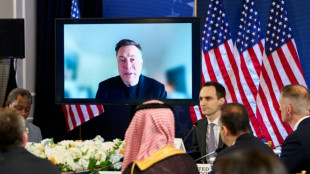 Zuckerberg, Musk make plea at G20 for more AI data centers
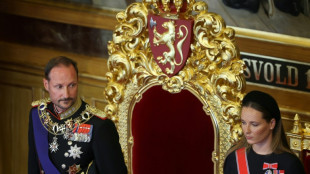
 'Discomfort' at G20 finance talks as US hosts Russian minister
 Man City set to sign Fernandez for record fee, Ndiaye on deadline day
 Back-to-school in Cuba a grim day with shortages of everything
 Canadian minister says Russia's G20 presence sparked 'discomfort'
 IMF reaches agreement with Senegal on new $2.2 bn loan programme
Nicaraguan strongman Daniel Ortega and his wife were granted control of all state powers Thursday under a constitutional amendment ratified by the country's legislature that also elevated her to the position of "co-president."
Ortega, who is under Western sanctions for human rights abuses, had proposed the reform himself, which also lengthens the Central American country's presidential term from five to six years.
It gives the 79-year-old ex-guerrilla and his wife Rosario Murillo, 73, the power to coordinate all legislative, judicial, electoral and supervisory bodies, which were previously independent under the constitution.
"These drastic changes mark the destruction of the rule of law and fundamental freedoms in Nicaragua," said American lawyer Reed Brody, a member of a group of United Nations experts who evaluate the country's human rights situation.
"Daniel Ortega and Rosario Murillo have enshrined and solidified their absolute power," he added.
The reform was "approved in its entirety," said the National Assembly, controlled by Ortega's ruling FSLN party, in a social media announcement.
Ortega has engaged in increasingly authoritarian practices, tightening control of all sectors of the state with the support of Murillo as vice president -- in what critics describe as a nepotistic dictatorship.
He first served as president from 1985 to 1990 and returned to power in 2007. Nicaragua has jailed hundreds of opponents, real and perceived, since then.
Ortega's government has shut down more than 5,000 NGOs since 2018 mass protests in which the United Nations estimates more than 300 people died.
Thousands of Nicaraguans have fled into exile, and the regime is under US and EU sanctions. Most independent and opposition media now operate from abroad.
The revised constitution defines Nicaragua as a "revolutionary" and socialist state and includes the red-and-black flag of the FSLN -- a guerrilla group turned political party that overthrew a US-backed dictator in 1979 -- among its national symbols.
- International concern -
Murillo hailed the reform as marking "a new chapter in our history... of freedom, national dignity and national pride."
Nicaragua is a "model of direct democracy," she said.
But the regional office of the United Nations High Commissioner for Human Rights (OHCHR) voiced its "deep concern" about the reform, which it said "deepens setbacks in civil and political liberties."
Ortega and Murillo accuse the Church, journalists and NGOs of having supported an attempted coup d'etat, as they describe the 2018 protests.
The reform allows for stricter control over the media and the Church, so they are not subject to "foreign interests."
It stipulates that "traitors to the homeland" can be stripped of their citizenship, as the Ortega government has already done with hundreds of politicians, journalists, intellectuals and activists, among others they perceive as critical.
The amendment also includes the creation of a "voluntary police" force that exiled opposition figures say amounts to a paramilitary group.
Thousands of civilians wearing masks to conceal their faces have been sworn in since January in what Murillo has called "heroic volunteer police."
During anti-government protests in 2018, heavily armed and hooded men intervened to remove barriers set up by protesters, many of them university students.
I.Stoeckli--VB